It’s been almost three decades since Scarface was first released in Turkey in December 1985, but the movie is not to be forgotten. It has established itself as a cult classic that captivates new generations as much as the original audience. While you may think you know the story of Tony Montana and Elvira by heart, there are details in the shadows of neon-filled Miami that even longtime fans may have forgotten. Here are some facts about Scarface that you’ve probably never heard.
Improvised hat moment
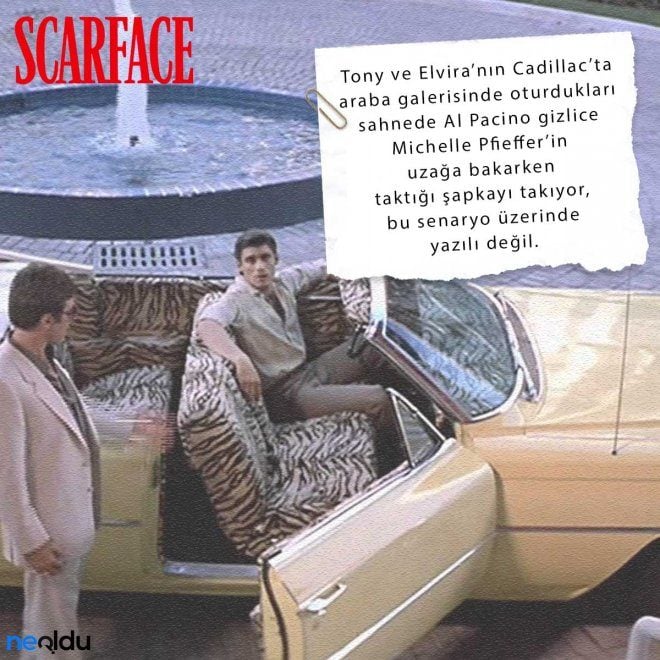
One of the most memorable scenes shows Tony and Elvira sitting in a Cadillac at a car dealership. It looks like a scripted moment, but the interaction between Al Pacino and Michelle Pfeiffer was something completely different.
During the shot, Pacino secretly takes the hat Pfeiffer is wearing and puts it on. This action was not included in the script. Pfeiffer’s reaction – she turned around and noticed the actor was wearing a hat – was a real shock. She wasn’t acting; she was surprised.
The actor later confirmed that his reaction was genuine and kept his character cool while clearly enjoying the moment.
Pfeiffer said she liked the way the scene ended. The improvisation added a layer of spontaneous chemistry that the script alone didn’t intend. It’s a small detail, but it captures the chaotic energy that defines the film.

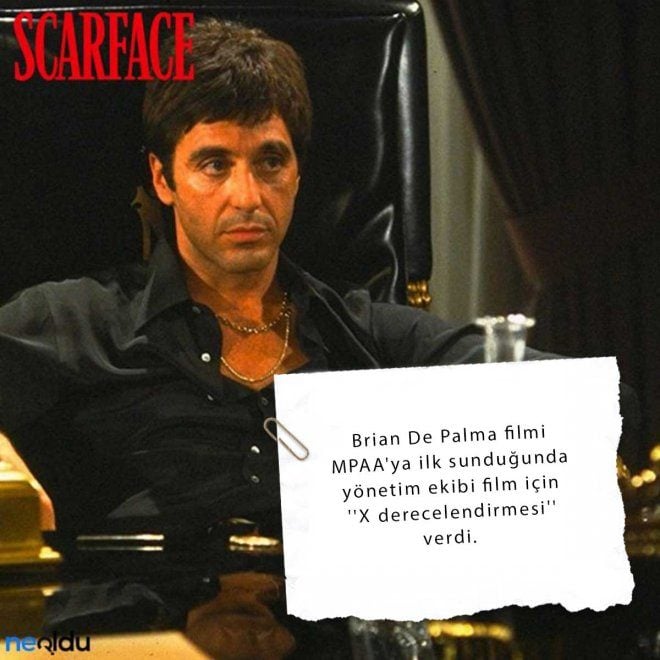
The story of Scarface is not just about Al Pacino’s performance. It was a tough battle with the classification committee. When Brian De Palma first pitched his crime epic, the MPAA didn’t hesitate. They gave it an X rating.
That was a career killer. An X rating means mainstream theaters won’t touch it. Advertisers fled. The public thought it was pornographic.
De Palma does not accept it. He returned to the editing room. He cut scenes. He reduced the violence. He sent the film again.
The board discussed the changes. Then they gave him an X rating.
He tried again. Third cut. Third presentation. result? It’s still X.
At that point, De Palma realized that he couldn’t save the film by cutting more footage. It just disrupts the rhythm. So he changed his strategy. He stopped editing and started arguing. Through a mutual contact, he demanded a meeting with the board members.
His argument was spot on. He does not claim that the film does not contain violence. He claimed it was an “anti-drug” film. He noted that the film portrays the drug trade and underworld life with unflinching honesty. Not glorification. Depiction.
“This is not just a description of the underworld. This is a warning.”
He told the board that everyone needs to see this. sanitizing it would defeat its purpose.
The strategy worked. Board members are influenced by artistic honesty and ethical positions. They voted 18-0 in favor of an R rating.
De Palma won. But he didn’t stop there. He decided to release the film with a little editing. He did not expect the board to notice subtle differences in the surgeries left.
He’s right. The film premieres. The rating stuck. The discussion was heated.
De Palma spoke about the situation in an interview several months later. He revealed the truth behind his release. He is fundamentally smarter than the system trying to capture him. The Scarface rating controversy has become legendary. The film was not banned. But that’s because they were allowed to speak freely.
An X rating would probably ruin this movie. Saved by the R rating. The difference wasn’t in the footage. It was in the argument.
The soundtrack battle that saved Scarface’s soul
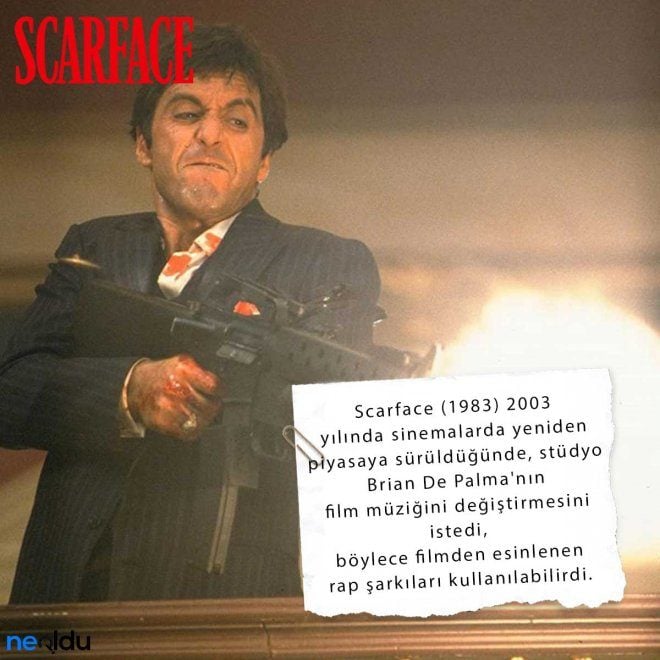
When Brian De Palma’s Scarface hit theaters with a special re-release in 2003, the studio didn’t just want to show the movie; They wanted to change its identity. The plan? Swap out Ennio Morricone’s rousing operatic score for a contemporary hip-hop soundtrack. The logic was cold and commercial: they wanted to take advantage of the movie’s huge impact on rap culture and attract a new generation of fans with songs inspired by the movie.
De Palma didn’t just say no. He tore up the proposal.
To the director, this wasn’t an upgrade. It was an insult. He saw the request as a blatant disregard for the original artistic vision and essentially an attempt to replace a classic film with trendy noise. The offer was rejected with a ferocity that left no room for negotiations. Morricone’s haunting melodies remain the heartbeat of Tony Montana’s descent into madness, a reminder that some things are too iconic to be outsourced to the highest bidder.
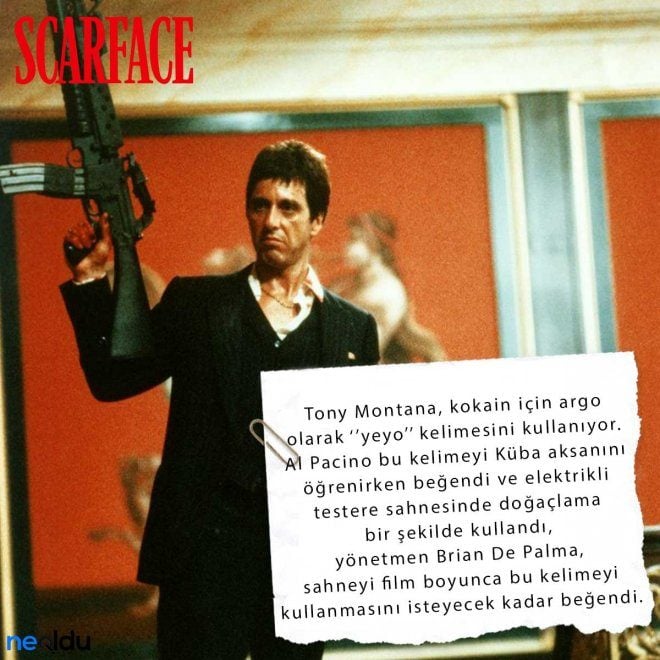
It’s one of the most famous lines in a gangster movie, but Tony Montana’s term for cocaine wasn’t originally written into the script. Al Pacino came up with it himself, choosing the slang “yayo” when he was learning a Cuban accent.
He liked the sound of the word so much that he decided to use it.
The moment happened on set during the famous chainsaw scene. Pacino improvised the line, throwing the term into the dialogue without a plan. Director Brian De Palma heard it and immediately knew it was perfect. He didn’t leave it at that one time.
De Palma liked it so much that he advised Pacino to keep using the word for the rest of the film. It became an integral part of Montana’s voice, anchoring the character in a certain cultural reality while adding a layer of street-level authenticity.
It wasn’t just slang. “Yayo” is the well-known name for cocaine in Cuban Spanish. With it, Pacino added a realism to the film that resonated with viewers familiar with the drug culture of the time.
The choice stuck. It is now one of the most quoted aspects of the film. “Scarface” fans often cite it when talking about the film’s legacy. It’s a small detail, but it shows how improvisation can shape a character’s identity.
De Palma’s decision to keep the line in every scene ensured that the term became synonymous with Montana himself. It’s a reminder that sometimes the best dialogue comes from the actors, not the writers.
The chainsaw scene is still intense, but the casual use of slang brings dark humor to the violence. It’s a stark contrast to the chaos on screen.
Did anyone expect this slang to become such a central to the character? Probably not. But Pacino’s instincts and De Palma’s eye for detail made it possible.
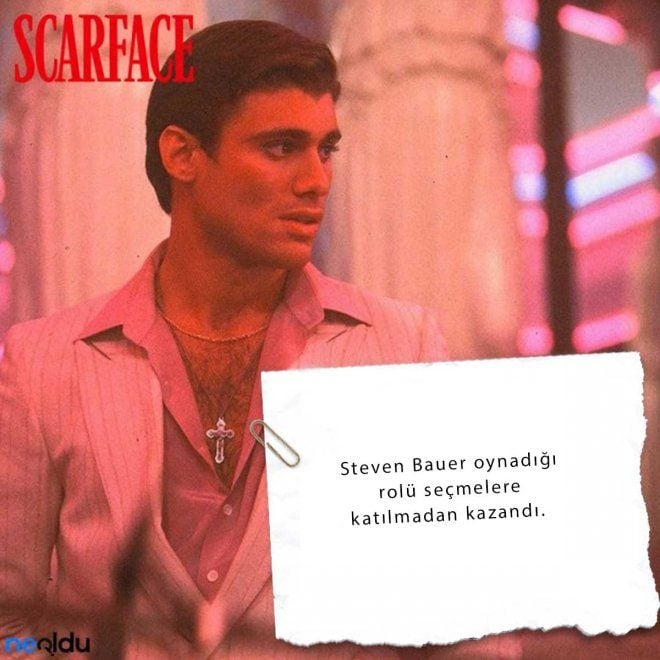
How Steven Bauer landed the role of Manny without a single audition
Steven Bauer didn’t have to sit in a casting chair for Scarface. He didn’t read sides. He didn’t even know an audition was happening until it was over.
The actor was already in the mix when casting director Alixe Gordin spotted him. Gordin immediately saw something. She didn’t wait for an open call. He went straight to the directors, Tony Scott and the production team and flagged Bauer as the guy for Manny.
It wasn’t a solo decision. The entire creative team weighed in. They looked at Bauer. They liked what they saw. The verdict? Manny was his.
“He just came in and owned the room. No pressure, no performance. Just presence.”
That’s the Hollywood rumor mill version. The reality is simpler and kind of cooler. Bauer was already in the orbit. Gordin made the call. The directors agreed. And so the Cuban refugee turned henchman was cast before the ink was dry at the end of the process.
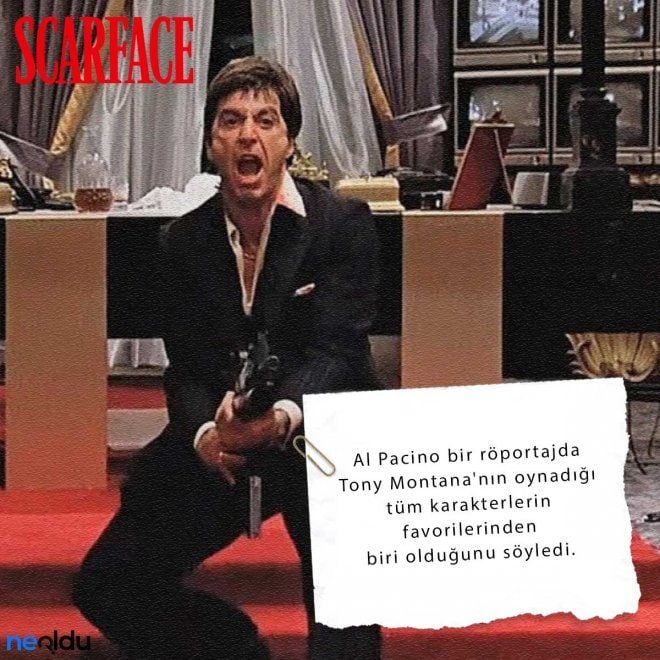
Al Pacino has always been a method actor in every sense of the word, but his connection to Scarface is more than memorizing lines. In a live interview, he revealed that Tony Montana is not just his role. It’s one of his absolute favorite characters. For Pacino, Montana represents a particular chaotic energy that he found incredibly rewarding, on par with other iconic roles in his vast filmography.
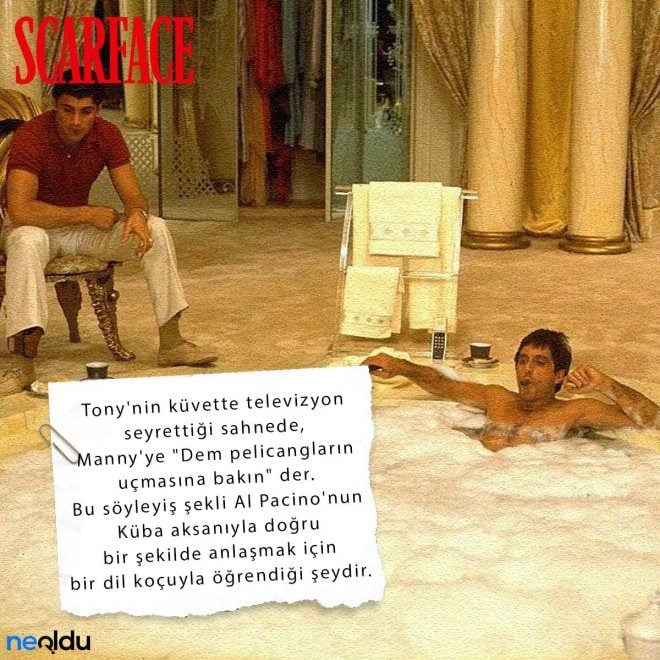
The authenticity of Tony’s speech also required thorough preparation. The scene where Tony watches TV in the bathtub is legendary for its conceit, but the dialogue behind it was carefully crafted. He tells his friend Manny to watch the pelicans fly. Pacino didn’t just improvise a line. He worked with a dialect coach to improve his Cuban accent. The specific pronunciation of “pelicans” was chosen to ensure that the audience could understand his character’s Cuban heritage without losing the grit of the performance. Paying attention to linguistic details helped establish Tony Montana as a character that felt real and not just cinematic.
A Director’s Duel on set
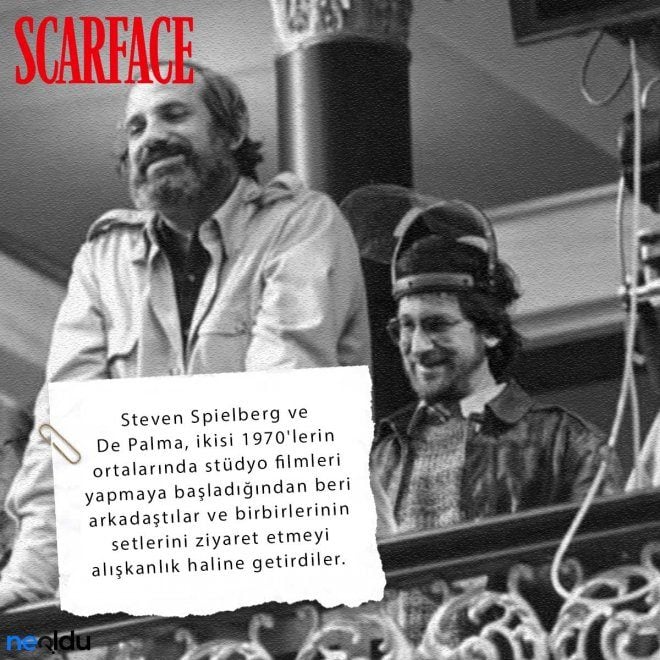
Steven Spielberg and Brian De Palma’s friendship didn’t start with a handshake. It was forged in the fire of studio filmmaking in the mid-1970s. They visited each other’s sets. The respect was mutual and the rivalry was unspoken.
Spielberg was on the set of Scarface filming the first attack on Tony Montana’s property by the Colombian hit group. It was a chaotic, high-stakes sequence. De Palma saw an opportunity. He gave Spielberg free rein to direct a low-angle shot at the attackers breaking through the house.
Why did he let him?
Maybe because Spielberg had done it before. Maybe because De Palma trusted his instincts. Or maybe because he knew the camera angle would make the violence feel more visceral.
“He gave Spielberg the low-angle shot of the invaders entering the house.”
The result was iconic. The angle made the attackers feel larger than life. It made Tony Montana feel small. It was a moment that combined the two directors’ visions into one frame.
It wasn’t the only time their paths crossed like this. But it was the most unforgettable.
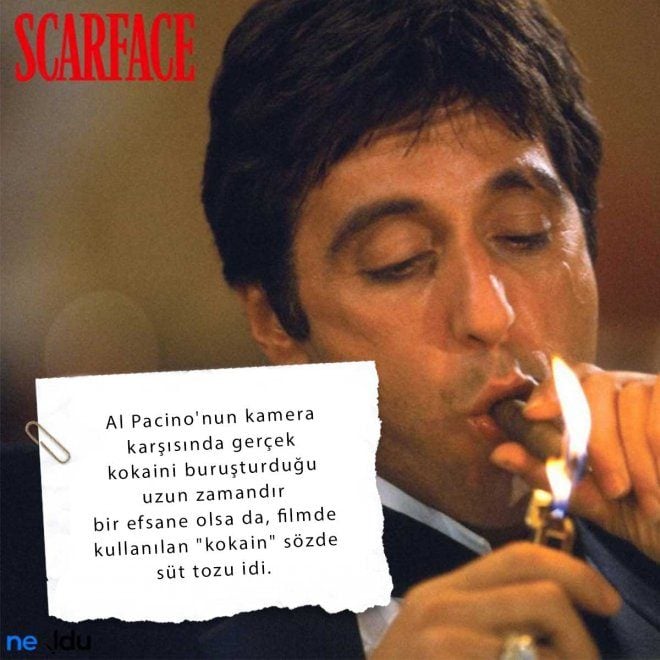
Powdered milk myth and Al Pacino’s cold
It’s still floating around in Internet stories and late-night podcasts: the idea that Al Pacino actually snorted real cocaine during the filming of Scarface. The image is too iconic to pass up. Ultimately, Tony Montana’s character is characterized by his chemical excess. But the reality? It was much less dangerous and much more embarrassing for the actor’s sinuses.
The substance used on set was actually milk powder.
For a scene that called for the visceral, frantic energy of a drug high, the props department opted for a harmless white powder. It looked the part. It moved like the real thing when flicked off a table or stacked on the mirror. But it didn’t play well with Pacino’s nasal passages.
The powdered milk turned into a sticky, stuffy mess inside his nose. Years later, the consequences were still being felt. In 2015, Pacino spoke out about the long-term effects of those fake drugs.
“Years later I was there doing some things and I don’t know what happened to my nose but it changed,” he explained.
He did not elaborate on the specific medical diagnosis, but the implications were clear. The residue from that powdered milk substitute had permanently altered the texture or sensitivity of his nose. It wasn’t an addiction. It was simply poor prop management that hit a sensitive mucosa.
So no, Pacino wasn’t high on the actual product in those iconic scenes. He just choked on dairy. And while Tony Montana’s downfall was caused by cocaine, Al Pacino’s minor inconvenience were caused by the ingredients in his breakfast cereal. A strange legacy for one of cinema’s most famous drug sagas.
Why Al Pacino made the crew speak Spanish
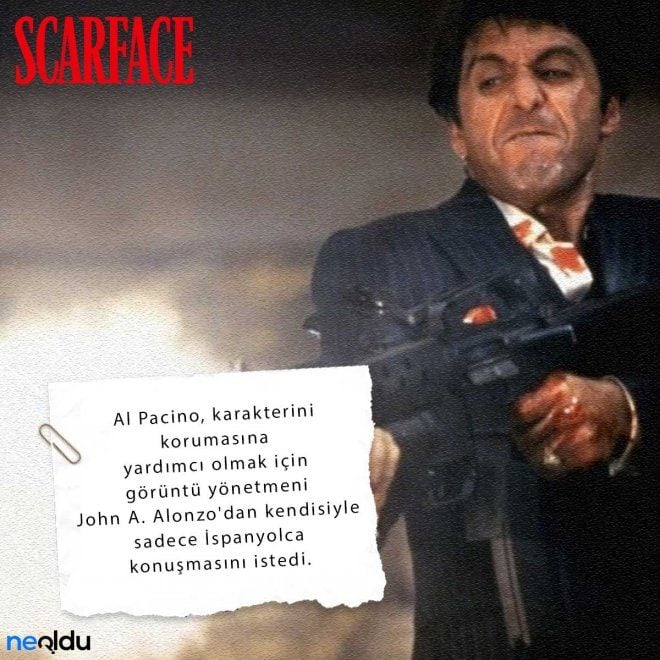
The method acting Scarface’s sentence didn’t end up in the script. Al Pacino felt so committed to Tony Montana’s isolation and cultural disconnect that he made a peculiar, specific request to cinematographer John A. Alonzo. He asked Alonzo to only speak to him in Spanish during filming. It wasn’t just about immersion in the camera. It was about in character. By cutting off English-language communication with the cinematographer, Pacino imposed a barrier between himself and the technical side of the production. He remained in the headspace of a Cuban refugee navigating a new, hostile world. It’s that kind of intense, slightly unhinged decision that defined his performance. You can’t fake that kind of commitment. The camera caught it. The tension is palpable in every frame.
The Real Montana Management
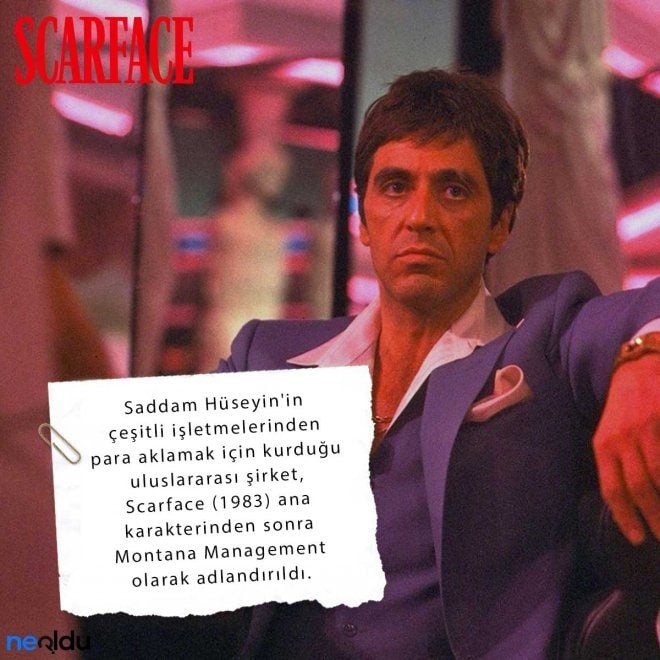
The film’s impact went beyond box office receipts. It actually mirrored real-life crime. Saddam Hussein’s regime used a complex network of international companies to launder money from various companies. One of these entities was called Montana Management. The naming was no accident. It followed the release of the 1983 film ‘Scarface’. The character of Tony Montana became so iconic in the criminal underworld that even the dictator’s front company adopted the name. It’s a dark twist in pop culture history. The film didn’t just reflect the drug trade. It became part of the lexicon used by those involved. Decades later, the name Montana still carries weight. Not just for Pacino’s performance. But for what it represented in the global drug economy.
Camera trajectory mechanism
Prop teams do more than just hand out fake guns. They lead them.
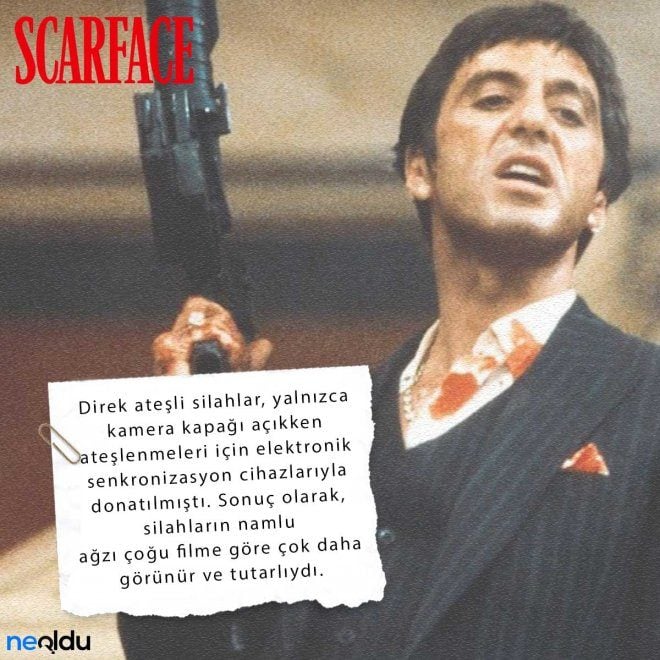
Each weapon is equipped with an electronic synchronization device. At this point, no human finger had pulled the trigger. Only fires when the camera shutter is open.
result?
**Realistic muzzle flash. **
Most movies either cut right before the gun goes off or use cheap CGI that flashes and disappears. This song does something different. The muzzle of the gun is clearly visible. This is consistent.
I see fire. I see smoke. The actor crosses the frame in exactly the direction you want.
“The barrel of the gun is clearer and more consistent than in most movies.”
This is not magic. This is engineering work.
Synchronous means that the flash occurs with the frame. No delays. There are no contradictions. Only light and sound reach the sensor in precise milliseconds.
The public noticed. they do this all the time.
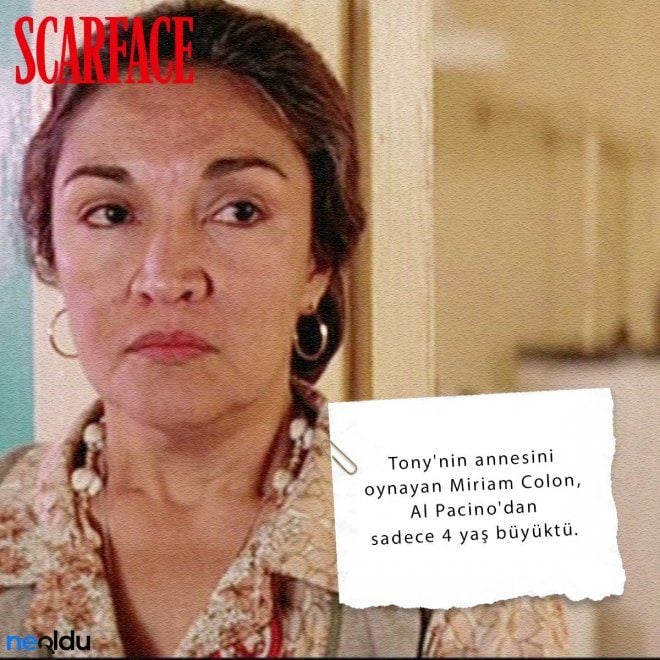
Al Pacino’s legacy is cemented, but the people around him on set were often closer to him than you’d think. Take Miriam Colon, who played his mother, Sonia. She was only four years older than Al Pacino himself. Four years. The age gap between the mafia boss and his matriarchal anchor was practically nonexistent, adding a strange, intense layer to their on-screen dynamic that probably felt more like siblings than mother and son during filming.
Where It Was Actually Filmed
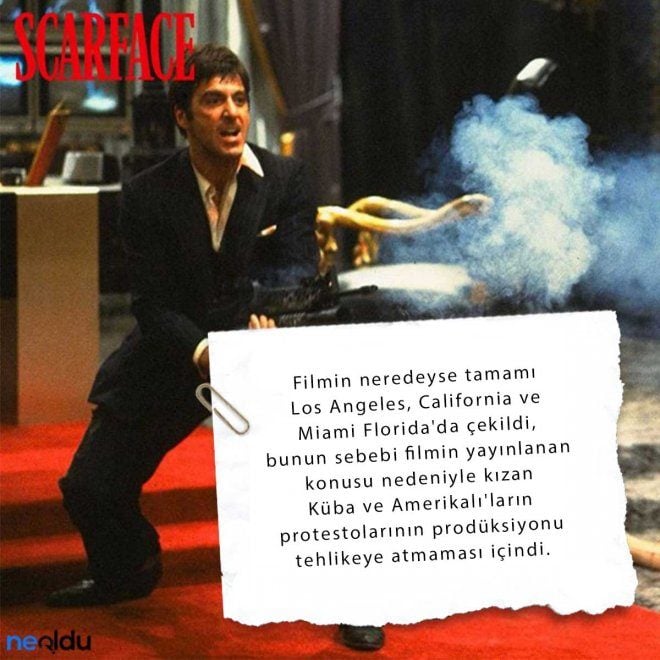
You might assume a story about Cuban exiles and Miami heat would be shot in Miami. But the production was caught in a firestorm of controversy. The plot, centered on the Mariel boatlift and the influx of Cuban refugees, had both Cuban-American communities and American audiences up in arms.
Protests were threatening to derail the entire shoot. So, the production made a pragmatic, if controversial, choice. They moved the bulk of the filming to Los Angeles.
Yes, Los Angeles. Not Miami.
The production relied on LA’s infrastructure to double for Florida, carefully crafting the look to maintain the illusion while avoiding the political backlash of shooting on location. It was a compromise born out of necessity, ensuring the film got made without igniting a full-blown cultural firestorm in the middle of a Florida shoot.
The film’s controversial plot led to protests that threatened to halt production, forcing the crew to relocate to Los Angeles to avoid further conflict.
This logistical pivot highlights just how volatile the subject matter was at the time. They weren’t just making a crime epic; they were navigating a minefield of ethnic politics and public sentiment, choosing safety over authenticity in location to keep the cameras rolling.
改变游戏规则的“小伙伴”
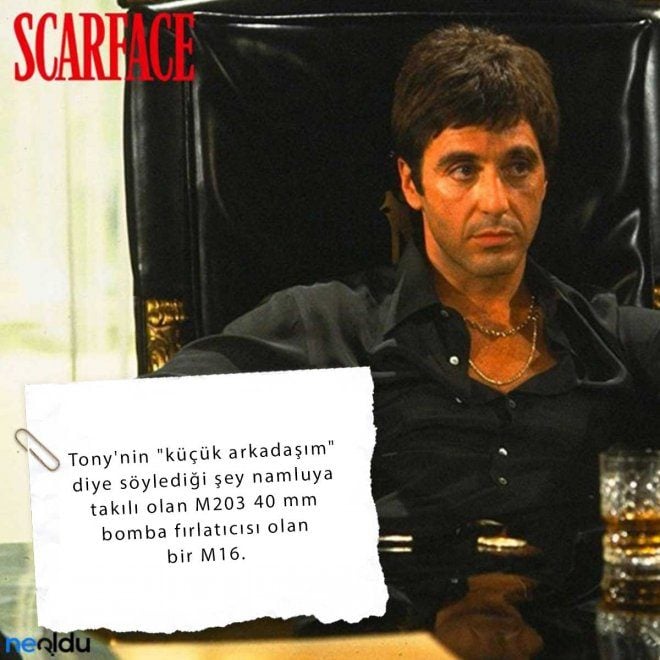
托尼·蒙大拿不仅仅携带枪。 他有一个问题。 具体来说,他将配备M203 40毫米榴弹发射器的M16步枪称为他的“小朋友”。 它不仅仅是一件武器;它也是一件武器。 这是一份意向声明。 M203 直接连接到枪管上,使标准突击步枪变得更具破坏性。 当托尼用这个姿势指着某人时,他并没有威胁要开枪。 他威胁要把大楼夷为平地。 悬挂在时尚 M16 枪管下方的笨重榴弹发射器的视觉效果成为电影史上最具标志性的画面之一。 它定义了 20 世纪 80 年代黑帮类型的过度。 你不只是想杀死敌人。 你想从地图上删除它们。
Why is there only one “Scarface”?
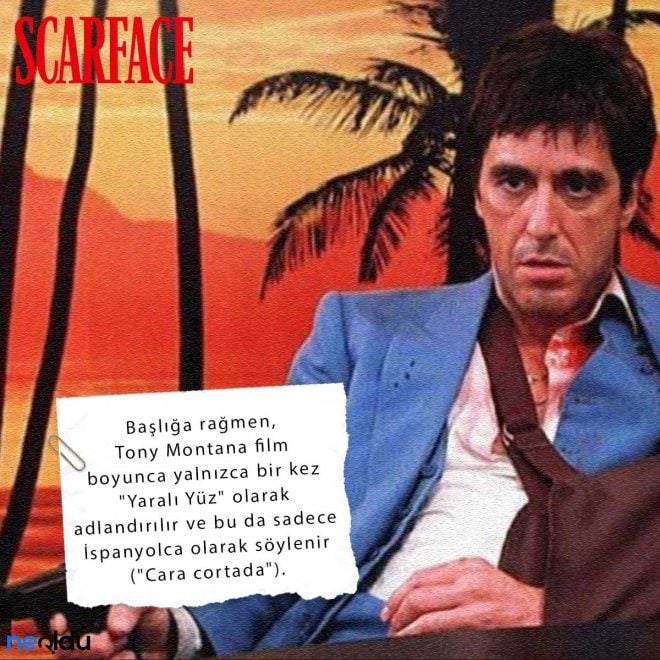
He is often nicknamed “Scarface”. It’s on the poster. This is in the title. You would expect Toni to be called by this name throughout the film. You are wrong. Despite this branding, Tony Montana was only once known as “Scarface” or “Cala Cortada” in Spanish.
that’s it. Just once. It’s not English though. This word appears in Spanish at certain moments in the film. This is a detail that most fans overlook. The movie used Al Pacino’s scarred face to promote his nickname. There is no need to repeat the conversation. Viewers already know that. Repetition is unnecessary. Instead, the film believes in images. Let the scars speak for themselves. This makes one of the Spanish phrases Cara cortada even more prominent. It’s a subtle touch that rewards those who look closely.
Weapons and people
The M16 and M203 were not accidental. This reflects Tony’s personality. he has a loud voice, he is very aggressive. He wanted to make sure everyone heard the news. Regular bullets are too quiet. Easy to miss. 40mm grenade? This cannot be ignored. This is explosive. This is final. This choice of weapon reflects his rise to power. He didn’t get to the top by being sneaky. he ascended to heaven.
The contrast between the complexity of the weapon and the simplicity of the nickname is interesting. Guns are machines. A scar is a sign. One is tools. Another thing is history. Tony put them together and created a legend. But the film has left its legacy behind. By only using the nickname once, Tony avoids becoming a caricature. He is a man with a gun, not just a man with a label. The reference to Cara cortada adds a layer of authenticity to her Cuban background. He reminds us of his roots, even as he tries to escape them through wealth and violence.
这对遗产意味着什么?
M203 M16 组合至今仍在电影和视频游戏中被引用。 它已成为重火力的代名词。 但《疤面煞星》的细节却鲜为人知。 大多数人都记得这套衣服。 金链子。 叫喊声。 很少有人记得昵称用法的语言准确性
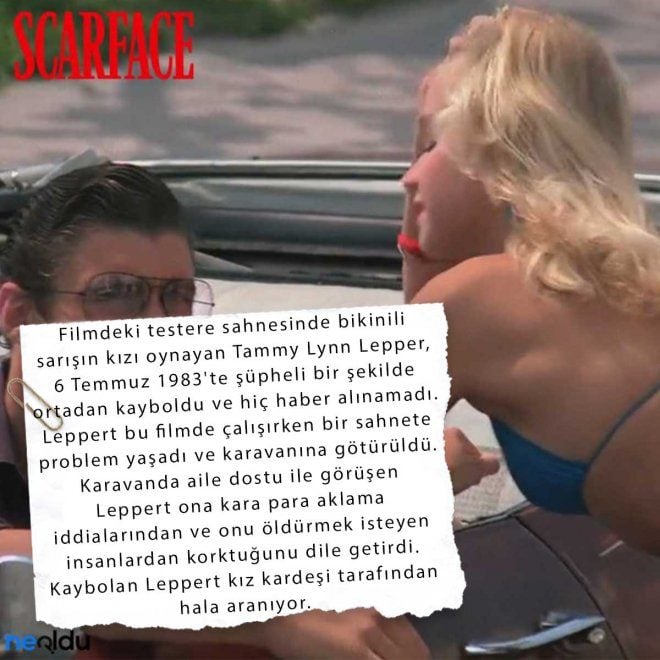
Tshe disappearance of Saw’s bikini blonde
The horror on the screen was compelling, but the life behind the camera disappeared just as quickly. When you uncover the true story behind the disappearance of Tammy Lynn Lepper, the timeline quickly turns dark.
She played the bikini-clad blonde victim in the famous torture chamber scene in the movie Saw. But the end of the real world is much more disturbing than the imaginary trap.
July 6, 1983. That day was the last time she was seen alive.
Lepper was on set and struggling with a difficult scene. She was pulled aside and taken to a trailer. What happened next inside that mobile home remains one of the worst incidents in Hollywood.
There he met a family friend. Her words before disappearing were shocking. She spoke about money laundering allegations. She mentioned people who wanted him dead.
She was scared. Terrified, even.
Then she walked out. And never walked back in.
No ransom. No body. Just silence.
Her sister never stopped looking. Years later, the case is still open. Still unresolved. Still haunting.
“She told me people were trying to kill her. He was afraid of money laundering claims.”
Did the kidnapping go wrong? A contract hit? Or did she disappear on purpose, running from threats that could not be explained by real-life crimes?
We don’t know. But when a witness goes missing in a slasher movie, the lines between fiction and reality blur.
The search continues. The questions don’t.
Why did she leave the trailer that day? Who exactly was she running from? And where is he now?
The answer remains buried. Like the bodies in the movie she starred in.
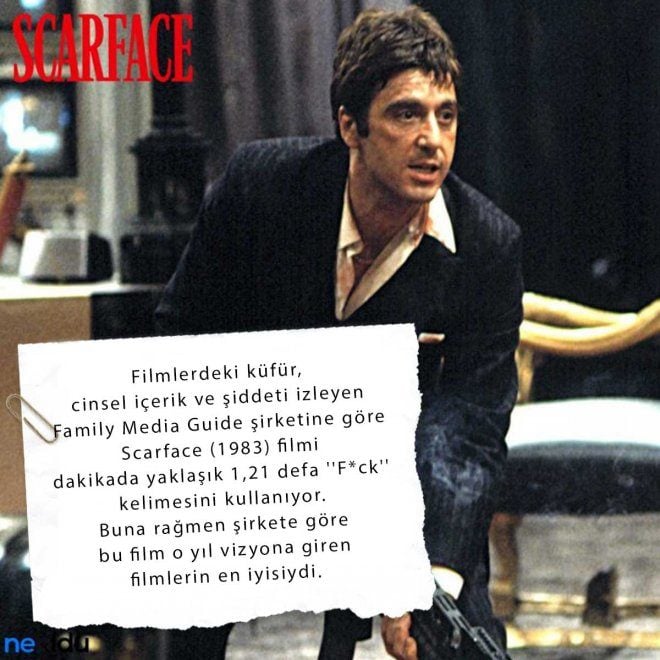
Scarface (1983) and Family Media Guide review
Despite its heavy content, Scarface (1983) has often been cited as one of the best films of the year. According to the Family Media Guide, which tracks profanity, sexual content and violence in movies, the word “f*ck” is used about 1.21 times per minute in a movie.
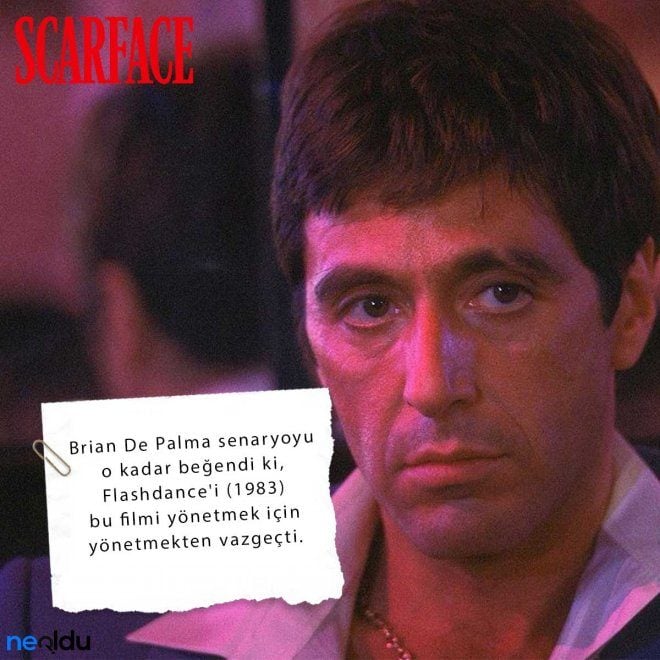
Brian De Palma shouldn’t even be in the picture. The director had already read the script for Scarface and liked it so much that he decided Flashdance (1983) was a safer choice and withdrew from the film altogether. He walked away.
This decision left the chair open for someone else. Someone who would make the movie a landmark of excess.
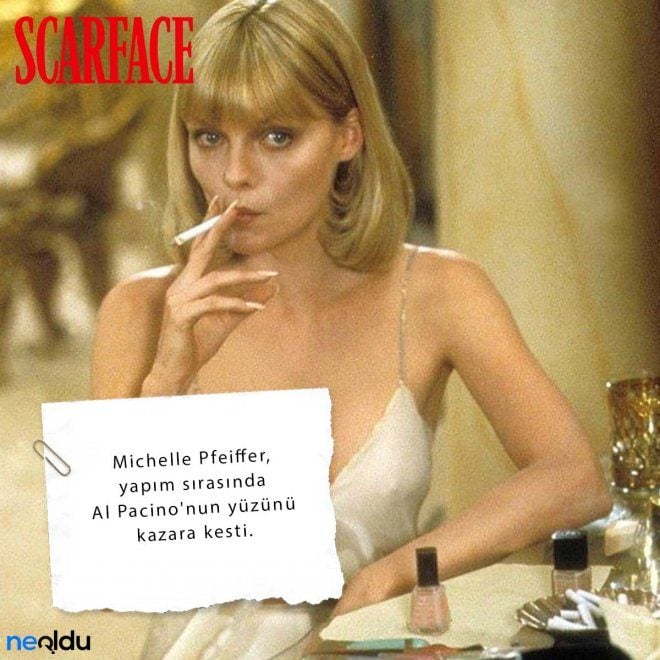
Things got chaotic on set. Not just metaphorically. Michelle Pfeiffer, who plays Elvira Hancock, was in the middle of a scene with Al Pacino. Fight. A slap in the face. In the heat of the moment, she accidentally cut the star’s face. No special effects. No stunt coordinator yelling “cut!” Just a real, sharp notch during the shot.
Reality often exceeds choreography.
It’s the kind of on-set chaos that doesn’t make the final cut, but haunts production history. Pacino continued. The scene played out. The incision was small, but the memory stuck.
De Palma’s absence is what makes Scarface so unique. Without his sensibility guiding every shadow, would it still have felt like a fever dream? Perhaps. But it wouldn’t have felt like his fever dream.
Pfeiffer’s mistake became a legend. Proof of how dangerous it is to work with Pacino when he’s in full method mode. You can’t calm down. You can’t pretend. You react.
The movie defined a generation’s idea of ambition. And excess. And failure. All wrapped up in neon-soaked packaging that still looks fresh today.
But the cut? It was true.
De Palma’s Scarface and its 1932 roots
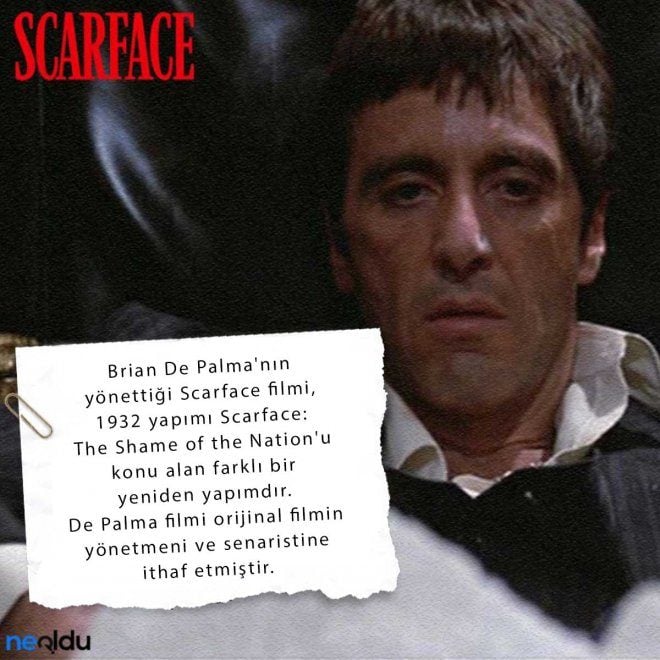
Directed by Brian De Palma, Scarface is more than just a 1980s gangster epic. This is a direct remake of the 1932 original Scarface: The Shame of the Nation. The new film pays homage to the original in a specific way. De Palma dedicated the film to the original director and screenwriter. This nod acknowledges the shared DNA of the two stories. Both films follow the rise and fall of ruthless a ruthless crime boss. The 1983 version updates the setting. However, the core paths are eerily similar.
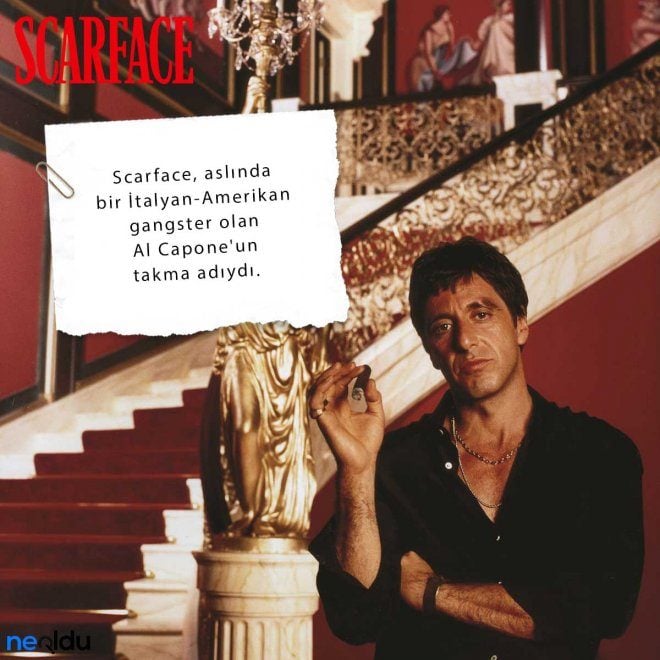
Al Capone’s nickname was not just a random nickname. It came from the scar tissue on his face, a cruel reminder of his days as an Italian-American gangster. That’s the history lesson. But the movie Scarface? That’s where things get weird.
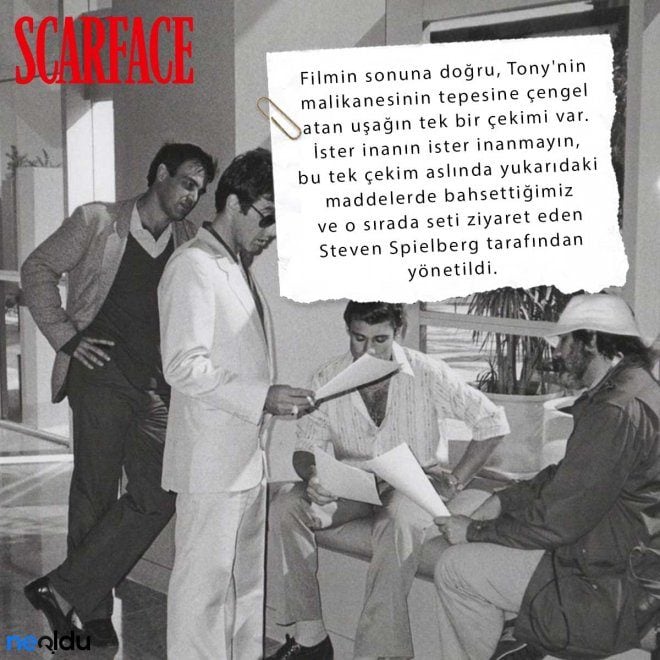
There is a special shot towards the end of the film. Tony Montana’s mansion. The servant climbs to the roof. He sets the hook. Just one take. One continuous shot.
You might not remember it. It’s easy to gloss over when chaos unfolds below. But here’s the kicker. The director of that single shot was not Brian De Palma. It was Steven Spielberg.
Spielberg visited the set at this time. He did not play a role in the film. He wasn’t even mentioned on screen. He just happened to be there. De Palma asked for help. Spielberg stepped in. He directed that moment. Then he walked away.
It’s a strange detail found in the closing credits of one of the most intense crime films of all time. Why Spielberg? Why that shot? Maybe he wanted to see how De Palma handled the tension. Maybe he was just killing time. Or maybe he liked the way the light hit the ceiling.
The fact remains. The man who gave us Jaws and E.T. filmed a servant tying a knot on the roof of a Miami mansion. And he did it in one take.
Behind the scenes of the classic
This little anecdote illustrates the fluid nature of film sets. Directors constantly visit each other’s projects. It’s part of the industry. However, it’s rare to have your name attached to a specific, minor action in someone else’s magnum opus.
Spielberg’s involvement in Scarface is a footnote. A small, almost invisible detail. But it’s true. The film’s legacy is based on violence, excess and Al Pacino’s manic energy. The grappling hook scene is just a splash of color in this chaotic palette. But knowing who held the camera for a few seconds changes the way you see it.
It’s not about the catch. It’s not about the servant. It’s about the people behind the lens. They switch places. They borrow techniques. They leave pieces of themselves in each other’s work.
You won’t find this in an official biography. You won’t see it in the main Wikipedia entry. You have to dig. Search for interviews. Check production notes. Find the man who was there that day.
And then you’ll see it. The hook. The roof. The legend of Spielberg quietly doing a job for De Palma.
Is it important? Probably not. The movie works without it. The story stands on its own. But for those who care about the craft, the behind-the-scenes details are just as important as the final cut. They’re the hidden layers. The secret connections.
Next time you watch the film, keep an eye on the roof. See if you can spot the camera movement. Is it steady? Is it shaky? Who’s holding it? You’ll never look at a grappling hook the same way again.
The Miami backlash and the language gap
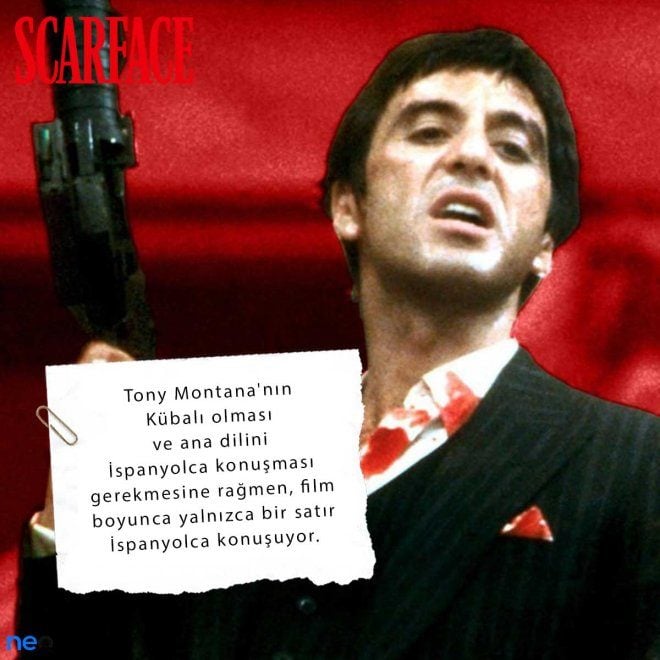
Tony Montana was Cuban. He was a native Spanish speaker. Yet he delivers exactly one line in Spanish throughout the film. Only one. It’s a glaring continuity error that fans have been discussing for decades. Given the character’s background and the large Cuban-American population in the story’s setting, the silence feels accidental rather than intentional. The production probably lacked the budget or the will to hire dialect coaches for the supporting actors, so the main character’s linguistic identity in his mother tongue was largely left unsaid.
Before filming began, there was a much tougher battle in the production.
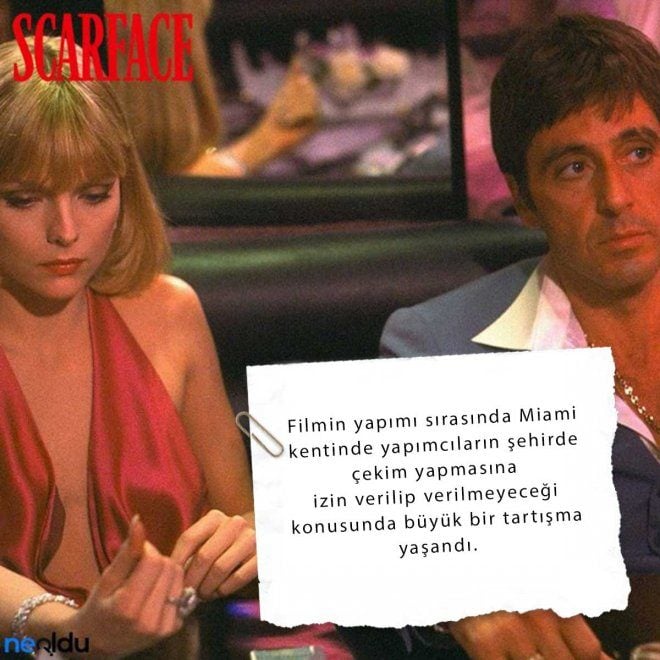
Miami wasn’t ready for Scarface. The city’s tourism authority fought hard to prevent filming. They knew the script. They understood the imagery. Is Miami portrayed as a den of Cuban gangsters and drug dealers? The board argued that this would ruin the city’s reputation. They were afraid that the tourists would stay away. The narrative painted a portrait of Miami that was dark, gritty and overwhelmingly criminal. The authorities did not want this association to stick to its beaches and neon lights.
The tourism authority believed that the film would actively drive away visitors by portraying the city as a hub for gangsters and drug dealers.
The confrontation was tight. The producers wanted to capture the true atmosphere of Miami. The city wanted to protect its brand. It wasn’t just a few extra extras in the background. It was about control. The board wanted to prevent cultural stereotypes from taking root in the global imagination. Of course they didn’t win. The movie was made. The controversy only added to its legend. Now, decades later, Miami embraces chaos. But at the time? It was a war of images.
I am willing to rewrite the article. However, you have not provided the source text for part 19.
Paste the content of the article (or a specific section you want to rewrite) below. I will generate the continuation immediately, following all style, SEO and formatting constraints.