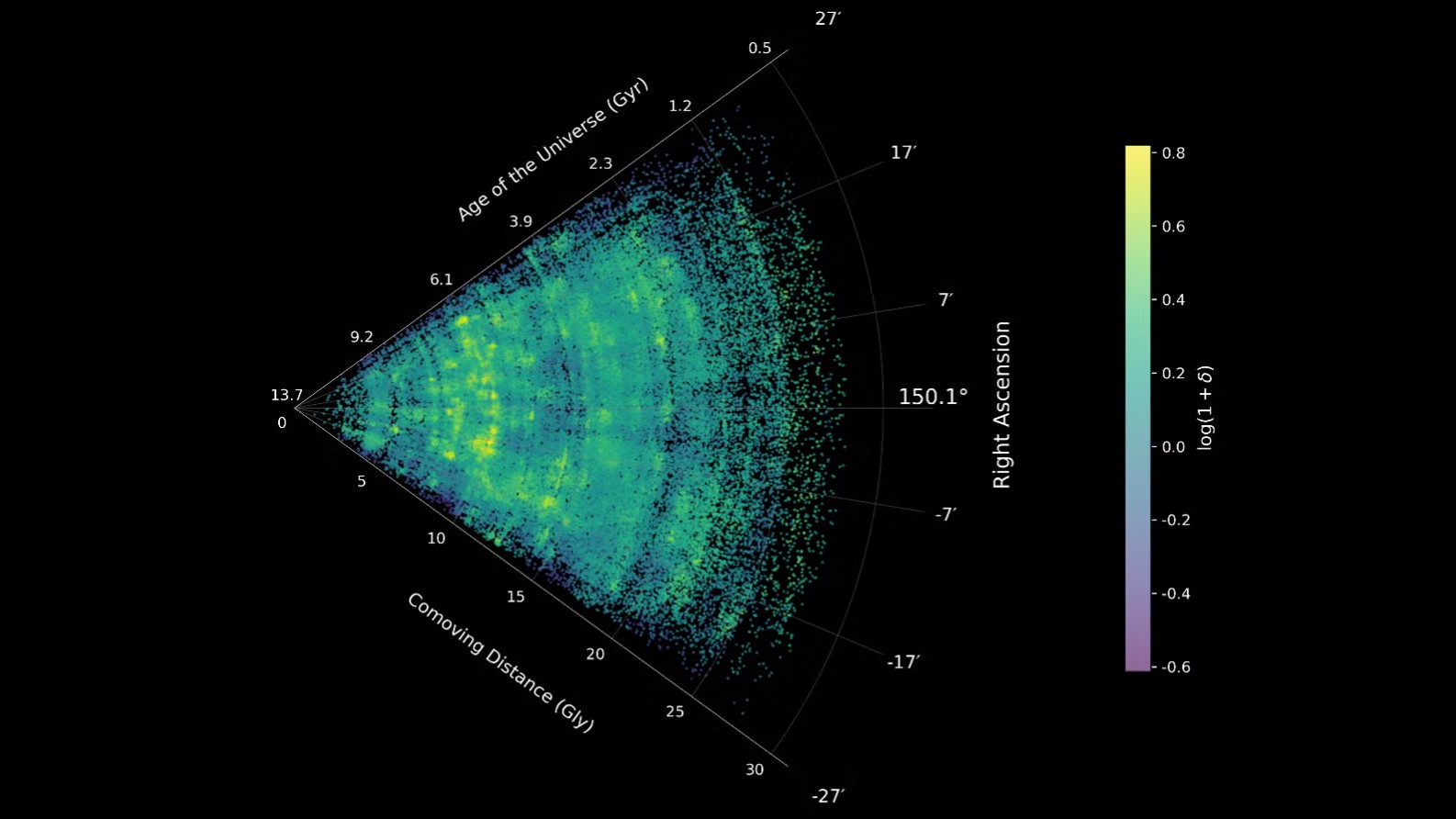
Astronomers mapped the big stuff. Like, really big stuff. The James Webb Space Telescope just finished the largest survey of cosmic structures ever. It reveals how galaxies clump together into that giant net we call the cosmic web. We’ve seen 13 billion years of change.
The Skeleton Show
This isn’t just random blobs. The cosmic web is a scaffold. It’s gas filaments, voids, dark matter sheets holding up the universe. An international team, led by guys from the University of California Riverside, published the details in The Astrophysical Journal on May 6.
They used COSMOS-Web.
That name sounds like a tech startup, but it’s actually 255 hours of telescope time. The sky area it covered is about three full moons wide. Big. The previous champion? COSMOS202. Done by Hubble and others. That map was… okay. It underestimated deep space. Overestimated the dense stuff. Messy data.
COSMOS-Web fixes the depth problem. Better redshift precision. More faint, far-off, low-mass galaxies showing up where they were hiding before. Redshift, remember, tells us how light stretches over time. It’s the cosmic odometer.
“Massive galaxies in dense environments are more like sleeping giants than bustling cities.”
Star Birth and Star Death
Stars form. They die. This drives everything.
But here is the weird part. The peak party of star formation? That’s ancient history. Billions of years in the rearview. The new data proves how the cosmic web itself controlled that shutdown.
Hossein Hatamnia from UCR put it bluntly. Back in the day, dense spots meant rapid galaxy growth. Now? Density means death. The environment squeezes the life out of stars.
Why?
Mass matters. Once dark matter halos hit one trillion solar masses, things change. They energize gas. Stop new stars from forming. Add active supermassive blackholes. They shoot jets moving near light speed. Lethal stuff. These mechanisms ran the show for half the universe’s life.
Recently though? It’s less about individual weight. More about neighbors. Environment strips material away. Stops cold gas from coming together. It’s a squeeze play.
Bahram Mobasher called the clarity jump “truly significant.” He said we can finally see the web when the universe was a few hundred million years old. That era was previously just dark. Blurry blobs resolved into dim, ancient ancestors.
164,00 galaxies built this map. All that data is public. Free. Anyone can look.
We have the skeleton now.
But we still don’t fully understand why it stopped partying so early. The voids look deeper than we thought. Darker too. Maybe the universe just got tired of making light. Or maybe there’s still something hiding in those empty spots waiting for Webb to look harder.