For stargazers in the Northern Hemisphere, the arrival of May marks a critical transition in the night sky. While summer promises warmer weather, it also brings longer nights of twilight that wash out the fainter details of the cosmos. Mid-May represents the last optimal window to witness the Milky Way’s core in its full glory before the encroaching light of summer shortens the viewing season.
The “Core Season” Advantage
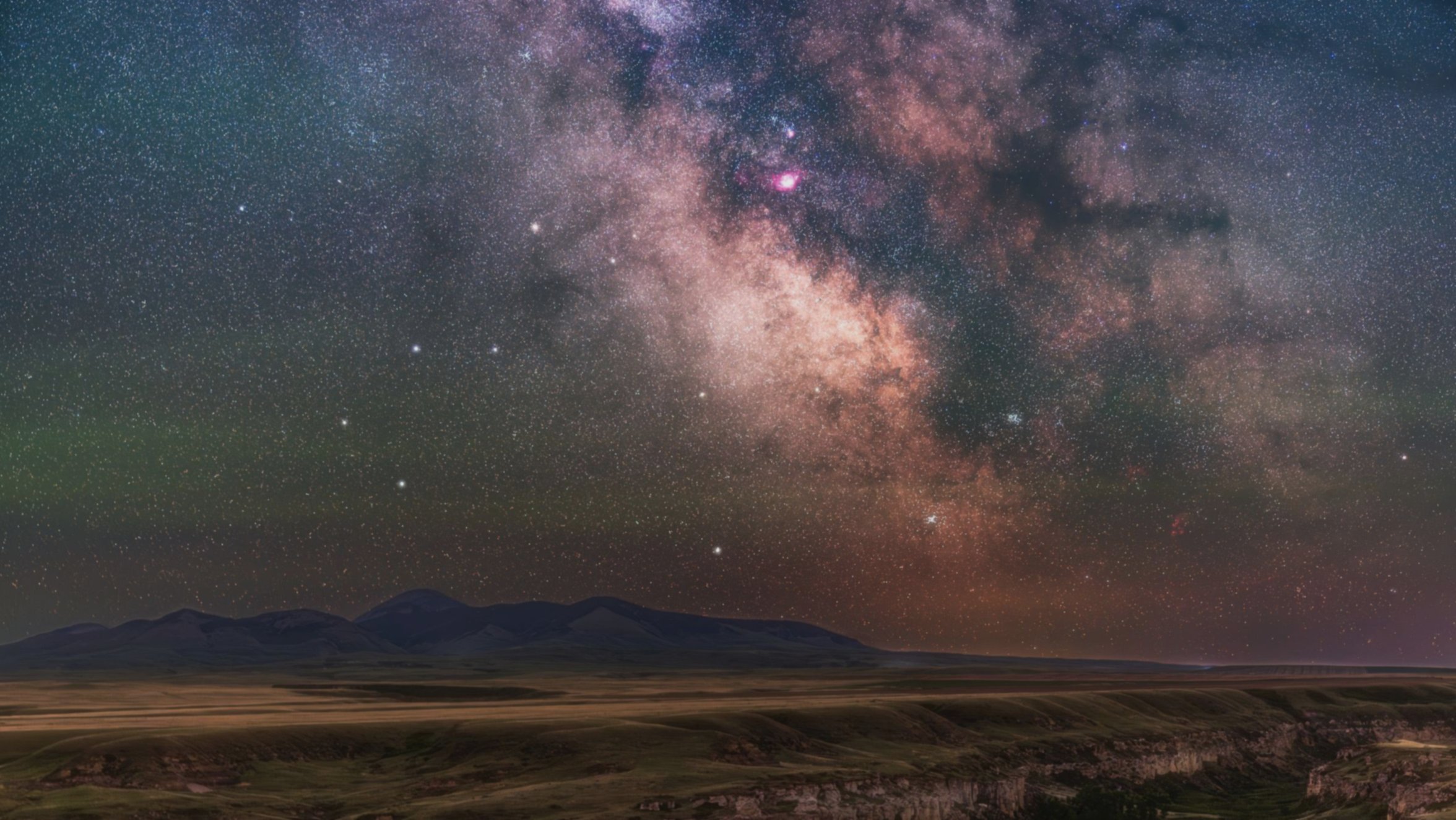
Astronomers refer to the period from February to October as “Core Season.” During these months, Earth’s orbit positions our planet such that we face the bright, dense center of our galaxy rather than its sparse outer edges. This alignment allows the Milky Way to appear as a luminous band stretching across the sky, rather than a faint whisper of stars.
However, not all nights within Core Season are equal. Visibility peaks around the new moon, when the Moon’s glare is absent. This year, the new moon falls on May 16, creating exceptionally dark skies.
The May new moon offers a strategic advantage over June. Because June’s new moon occurs close to the summer solstice, astronomical twilight persists for longer periods, eating into the true darkness required to see the galaxy’s subtle dust lanes and star clusters.
Timing Is Everything
To maximize your chances of a clear view, timing is as crucial as location. The Milky Way’s core does not rise vertically in the Northern Hemisphere; instead, it arcs low across the southern horizon.
- Best Hours: The optimal viewing window is between midnight and dawn. During this time, the galactic center reaches its highest point in the sky, minimizing atmospheric distortion.
- Direction: Face south. The core will appear to tumble toward the horizon, passing through the constellations of Sagittarius, Scorpius, Scutum, and Aquila.
Preparing for the Hunt
Seeing the Milky Way with the naked eye requires more than just looking up; it requires escaping light pollution. Even in suburban areas, streetlights can obscure the galaxy’s fainter structures.
- Find Darkness: Use resources like DarkSky.org to locate nearby “dark sky” sites, where the absence of artificial light allows the human eye to adapt fully.
- Plan Your Shot: Smartphone apps such as Stellarium or Sky Safari 7 Pro can help you identify exactly where the galactic core will be on your specific date.
- Check Twilight Times: Consult tools like Time and Date’s daylight tracker to determine precisely when astronomical twilight ends and true night begins in your region.
Capturing the View
For those wishing to document the experience, astrophotography offers a deeper way to engage with the galaxy. Long-exposure techniques can reveal colors and details invisible to the naked eye. Beginners should look into guides on camera settings for night sky photography, ensuring they have the right lenses and tripods to capture the static beauty of the cosmos without blur.
Conclusion
The mid-May new moon offers a fleeting but spectacular opportunity to connect with the center of our galaxy. By combining dark skies, precise timing, and proper preparation, observers can witness the Milky Way’s core at its most visible before summer twilight takes over.