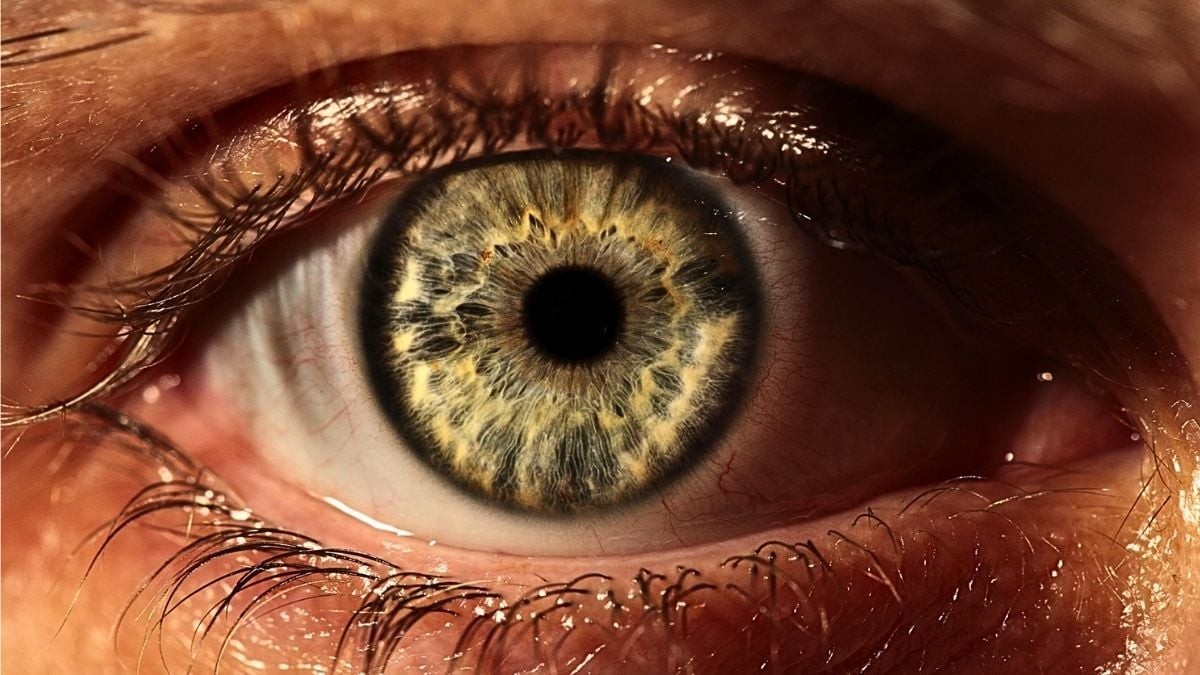
Standard soft contact lenses are basically scratch magnets.
You handle them, clean them, store them. Day after day. Microscopic tears accumulate. Most of the time you can’t see them. But that doesn’t mean they’re harmless.
Rough surfaces scatter light. Glare increases. Worse, those tiny grooves become real estate for proteins and microbes. A hidden health risk. A scratch deep enough to spot? Toss it out. More waste. More cost.
Until now.
Researchers at Dankook University in South Korea changed the chemistry. Jung-Hyun Choi, Byoung-Ki Cho, and team developed hydrogel lenses that self-repair. Just sit under standard ultraviolet (UV) light for an hour.
The magic ingredient?
Disulfide cross-linkers.
These molecules contain a sulfur-to-sulfur bond that is unique. Break it. It forms again.
When you scratch a conventional lens, the polymer chains snap. The damage stays. In this new design, UV light acts as a trigger. It rearranges the sulfur bonds across the tear. They grip the separated polymers back together.
“The DS-Hydrogel exhibited effective recovery… whereas the Control-Hydrogel… exhibited no visible healing.”
Ninety percent of the structural stability comes back. That’s a lot of recovery.
It isn’t just about healing.
The material is also tougher. They added a secondary polymer to boost resistance against abrasion and bacteria. The result? A lens that resists scratches in the first place and fixes the ones it doesn’t stop.
Water retention matches today’s market standards. No drying out.
Think about the implication.
We already have UV contact lens cases on shelves. They sanitize. What if they repaired too? You drop your lens in a tired state. Wait an hour. Pull them out looking brand new.
This isn’t sci-fi. It’s applied chemistry published in ACS Applied Polymer Materials.
Previous attempts at self-healing materials needed heat. High heat. You can’t put a hot lens on your cornea. Room temperature UV repair is the breakthrough here. Practical. At home.
Safety tests remain. Always with eyes. You wouldn’t expect less.
But the path is clear. Durable, long-lasting hydrogels that fix themselves while you sleep. Or just while you wait for your coffee to brew.
Will the next pair in your case know when to mend?