Mank is more than just a movie. It’s a love letter to Hollywood’s Golden Age, wrapped in black and white celluloid and brought to your screen by Netflix. The film was released in December 2020, leaving many theaters in the dark due to production drought. When other studios took a break, Netflix kept going. They didn’t just distribute movies. they made a statement.
This is a review that goes deep into the appeal of “Mank”. Let’s take a look at the Plot, Cast and hidden details you might miss the first time around. This is a movie that demands your attention.
What you need to know before watching
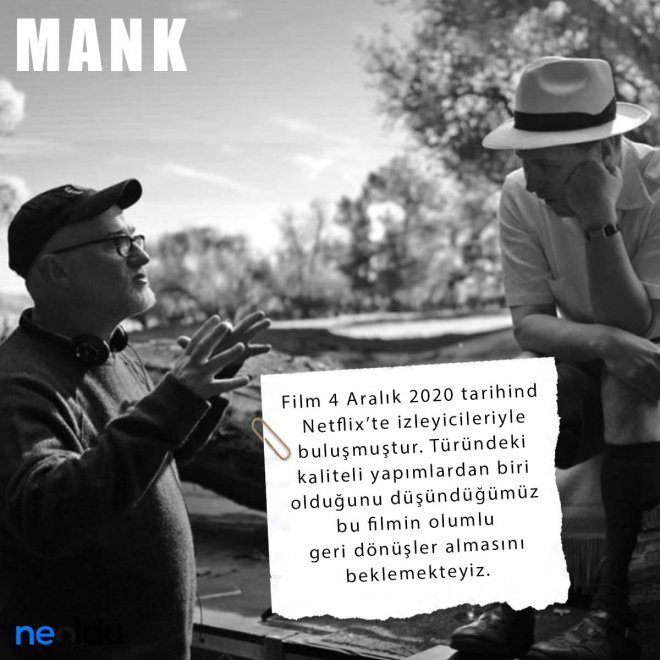
First, let’s explain the basics. Mank premieres on Netflix on December 4, 2020. Directed by David Fincher, this is no ordinary streaming content. This is a period piece. This is technical. It’s beautiful.
The film tells the story of Citizen Kane screenwriter Herman J. Mankiewicz. But that’s not all. It shows the chaotic, alcoholic, politically tinged script writing process. It shows you betrayal. It shows how stories become history.
为什么现在很重要
您可能想知道为什么一部关于 1941 年好莱坞的电影在 2024 年很重要。它很重要,因为它的主题非常现代。 这部电影探讨了媒体如何塑造现实。 它看的是权力。 它着眼于强者如何掩盖真相。
芬奇以外科手术般的精确度捕捉到了旧好莱坞的氛围。 阴影很深。 对话很尖锐。 每一帧都感觉是有意为之。 这不是您在后台观看的电影。 你看吧。 你听听。
演员阵容和工艺
加里·奥德曼饰演赫尔曼·J·曼凯维奇。 他消失在角色中。 你忘记了你正在看奥德曼。 你只看到曼克。 他很有魅力。 他坏了。 他很聪明。
阿曼达·塞弗里德饰演玛丽昂·戴维斯。 她不仅仅是一个恋爱对象。 她是一个陷入名誉机器中的复杂人物。 奥德曼和塞弗里德之间的化学反应非常强烈。 它驱动了影片的情感核心。
琳达·卡德里尼饰演萨拉·曼凯维奇,赫尔曼的妻子。 她是锚。 她是自我和酒精风暴中理性的声音。 她的表演低调但有力。
Where to start?
If you are looking for action, Mank is not the best choice. If you’re looking for drama, it’s got you covered. But the most important thing is the words. It’s about the power of writing. It’s about who gets credit for their art.
The film was nominated for 10 Oscars. We won 2 games. Winner of Best Cinematography and Best Production Design. These gains are meaningful. Black and white photos are great. The set is also carefully reproduced. Every detail contributes to the story.
Verdict
Mank is a movie for movie lovers. This is a movie for history buffs. This is a movie for people who like to write. It’s not perfect. It is very long. It’s very slow. But it pays off.
you might be

Running time and pacing
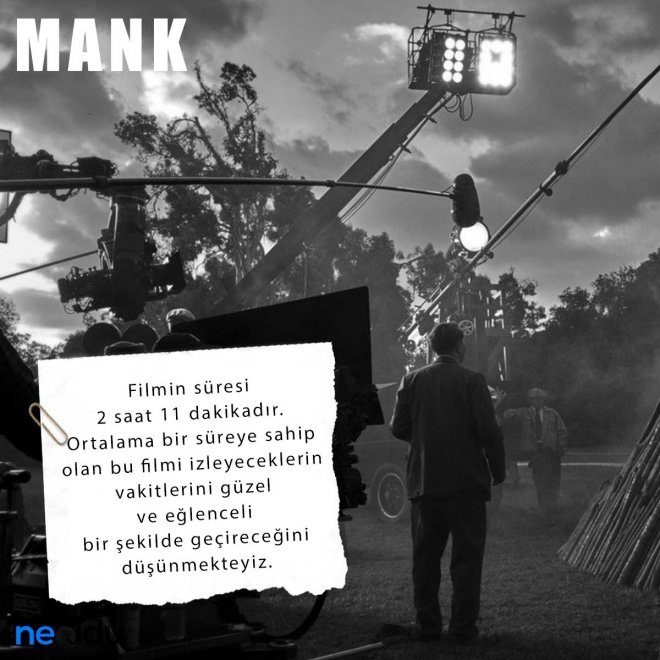
The running time of exactly 2 hours and 11 minutes is within the standard theatrical window. It doesn’t drag. There’s no rush.
For viewers wondering how much of their evening they should plan, this length is manageable. You can easily fit it around dinner or a nightcap without feeling like you’re glued to the screen for three hours.
Most people find the pace holds up well over that stretch. It moves at a pacing that keeps you engaged without tiring. If you’re looking for a movie that offers solid entertainment value without requiring an entire day to spare, this length works in its favor.
It’s the kind of running time that suggests the filmmakers knew exactly how long the story needed to breathe. No filler scenes. No artificial padding. Just enough time for the plot to unfold and the characters to develop, and then cut to black before the novelty wears off.
Who doesn’t appreciate a movie that respects your time?
The man behind the script
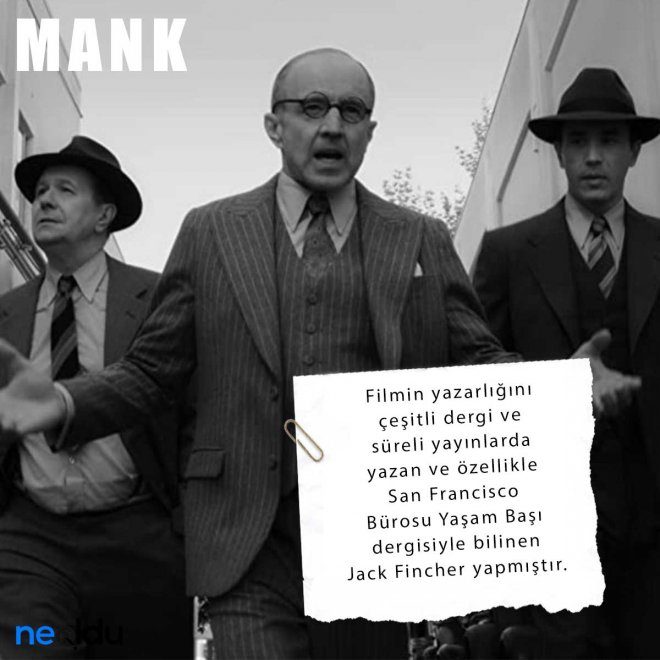
The script does not come from a studio machine. It was written by Jack Fincher. Unless you dig through the archives, you might not know his name, but he had a distinct voice in the world of serialized fiction.
He regularly wrote articles for various magazines and journals. But if you’re familiar with the scene, you know he’s best remembered for his work at Life magazine’s San Francisco bureau. That specific gig gave him a platform that was later incorporated into his novels. He didn’t just write in a vacuum. He watched. Reportage. I then twist these findings into something sinister.
Fincher’s background in journalism and magazine writing provided a down-to-earth, observational tone that set his science fiction and thriller scripts apart from the more fantastical fare of the time.
It wasn’t his only achievement, but it stuck. The experience of writing for a major publication like Life clarified his prose. A certain realism. Although the plot was strange. Even if the timelines were distorted. This journalistic backbone makes the story believable. At least it makes the madness feel like it could happen to anyone.
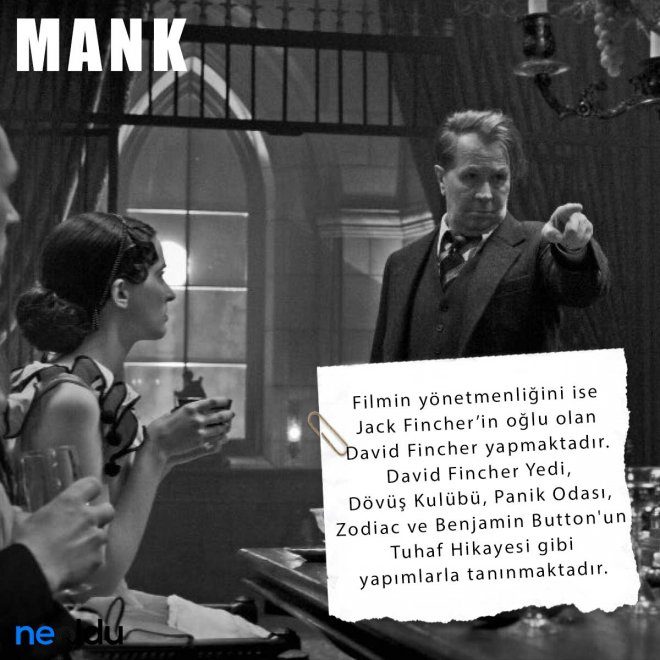
David Fincher isn’t just at the helm; He is the son of legendary director Jack Fincher. The family line has apparently sharpened his eye for precision from an early age.
You know the vibe. A haunting atmosphere. Careful composition. This gave us Se7en, Fight Club, Zodiac, The Social Network and The Curious Case of Benjamin Button. He doesn’t do any fluff. He is in control.
His ability to generate excitement from a script did not go unnoticed by Hollywood’s elite. In 2011, he won the Golden Globe for Best Director. Not for comedy. Not for the musical. For The Social Network. A movie about destroying people while making them feel seen. Fincher knows how to make the cold look hot.
Why David Fincher’s direction defines a movie
When you watch a Fincher film, you don’t just see the story. You are looking at the machine. The gears are turning. The pistons firing. Each frame is counted. Every shadow is placed on purpose. He is one of the few directors who treats the script as a plan and the set as a laboratory.
This is not about improvisation. It’s all about implementation. The kind of performance that has critics searching for adjectives they’ve never used before. That’s why his name carries weight. This is why studios panic when he says “one more take”. He is not difficult. He’s right.
And that makes him the perfect choice for this project. Because some stories don’t need heat. You need steel. You need a director who can look at a blank page and see the violence lurking in the blank space. Fincher doesn’t flinch. Neither should you.
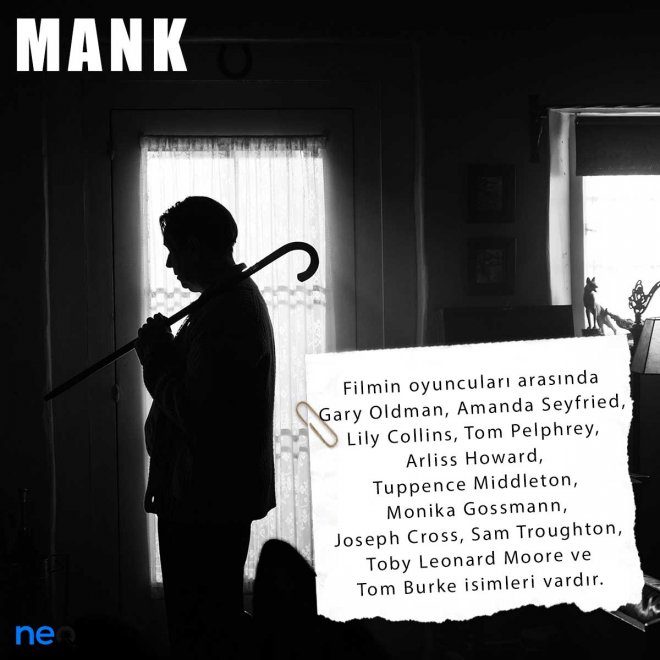
The cast list appears to be a portrait of British and American character actors. Gary Oldman anchors the show and brings his usual intensity to the role. he is not alone. Amanda Seyfried joins the cast and adds star power and emotional weight to the story. Lily Collins also joins the cast and completes the core trio of familiar faces.
But the film’s depth comes from its supporting characters. Tom Pelphrey brings TV-honed grit to the mix. Arliss Howard is a film and theater veteran who adds a layer of seasoned authenticity to his role. Tuppence Middleton, best known for her roles in high-stakes thrillers, is also on board.
The cast includes some lesser known but talented actors. Monika Gossmann and Joseph Cross provided the necessary background textures. Sam Troughton and Toby Leonard Moore contributed to the unity of the band. There’s also Tom Burke. His appearances often foreshadow darker, more complex undercurrents.
Each of these performers brings something special to the table. Yes, Oldman rules. But Seyfried and Collins stood their ground. What about the others? They fill in the gaps and make the world feel lived-in rather than staged.
It is a collection of talents suggests a project with serious goals. It’s not just a vehicle for a star, it’s a truly ensemble piece. Every actor is important. There are no characters that are just fillers.
This type of casting usually means one thing. the story has weight. And you need someone to carry that weight.
Do they?
That’s the question.
The true story behind the script
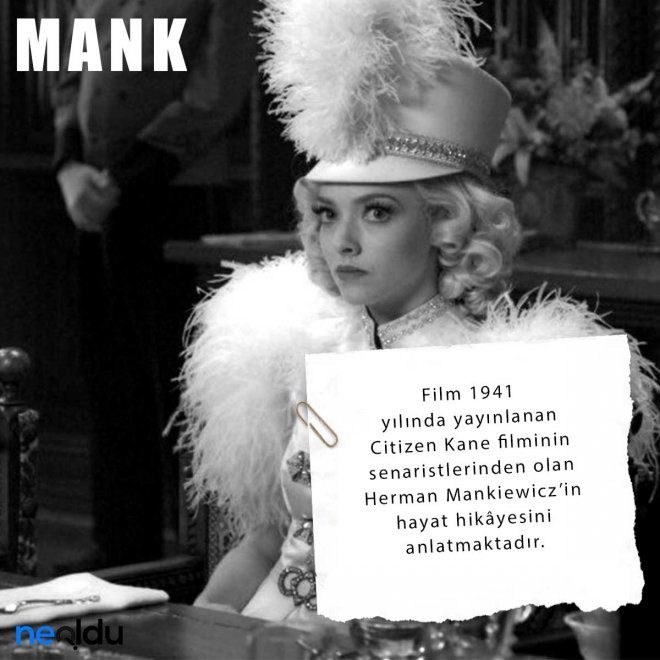
You know the drill with prestige dramas, right? They always claim to be based on “true events”. Sometimes it’s just marketing. Sometimes it’s a half-truth wrapped in velvet. But Mank? It’s chaotic. It’s complicated. It is based on a real script. No biography. Not a memoir. The actual script, written down by Herman Mankiewicz.
Mankiewicz wasn’t just some random hack. He wrote “Citizen Kane” in 1941. The movie that changed cinema. The one that is still quoted as a religious text in film school classes. Orson Welles was given the direction. Welles has star power. But the words? Sharp, biting, cynical words? It was Mankiewicz.
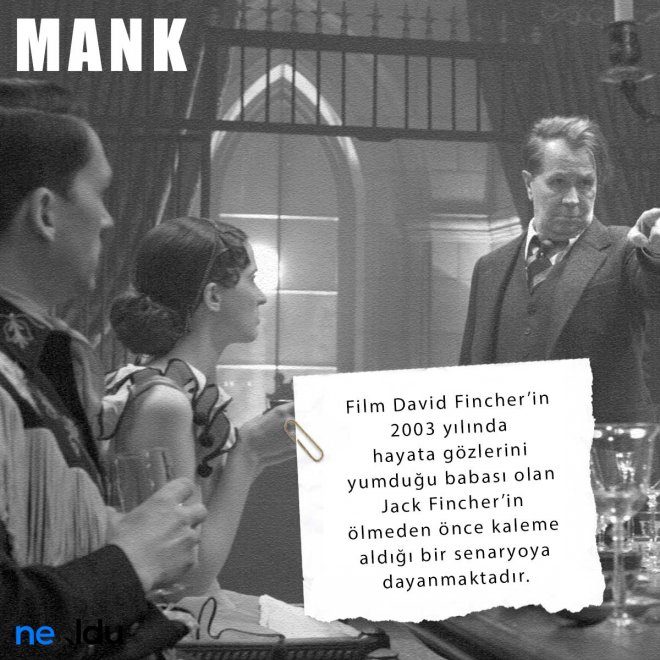
Here’s the propeller. The movie we’re talking about now? It’s based on a screenplay that David Fincher’s father, Jack Fincher, wrote years before his death in 2003. Jack got the idea. He had bones. He just never finished it. The script was there. unfinished. Waiting. Until David took it.
Why Mankiewicz Matters Now
So why mention it again? Why a deep dive into a 1940s screenwriter who died in the 1950s? Because the story isn’t just about Hollywood gossip. It’s about power. It’s about who gets to tell the story. And who gets erased
Mankiewicz was drunk. A brilliant, messy, chain-smoking drunk. He hated William Randolph Hearst. And Hearst hated him back. With a vengeance. Hearst had a media empire. He had newspapers. He can ruin a career with a headline. Mankiewicz had nothing but a pen. And his truth.
Did Citizen Kane really expose Hearst? Some say yes. Others say it was just a great movie with a similar plot. But anger? That was real. Personal revenge? That was real. And that scared Hearst. He tried to bury it. He tried to stop the movie. He failed. But Mankiewicz paid for it. His career stalled. His health deteriorated. He died relatively young.
Father and son connection
Now bring it back to David Fincher. His father Jack wrote the script. He saw the story. He saw the similarities. He saw the danger in telling it. He wrote it down. Then he walked away. Why? Maybe he wasn’t ready yet. Maybe he knew the risks. Maybe he just had other things to do.
But David? He had the resources. He had a reputation. He had stubbornness. He took his father’s unfinished manuscript. He fleshed it out. He added layers. He made it Mank. He didn’t just remake the story of Citizen Kane. He made a story about the price of truth. About the price of loyalty. About the men who build empires and the men who get crushed by them.
It’s not a perfect movie. It’s not for everyone. It’s slow. It’s talky. It’s black and white in a world full of color. But it’s honest. It captures the textures of 1940s Hollywood. The
Why David Fincher’s Mank is still worth watching
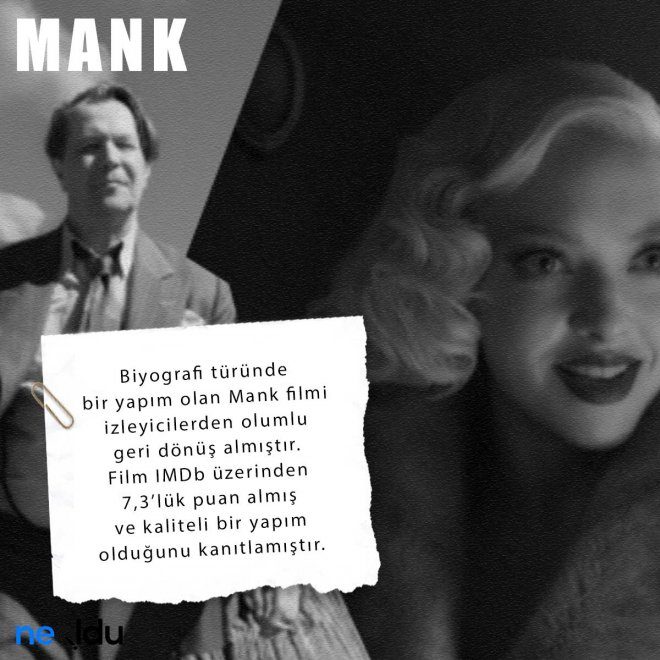
The biographical drama “Mank” didn’t just arrive. It has acquired an existence of its own. Both audiences and critics responded favorably to the film, cementing its status as a quality production rather than a passing streaming trend. It has a solid 7.3/10 on IMDb. This figure is more than just a statistic. This rating earns the film a place on our carefully selected must-see list.
“IMDb’s 7.3 is the digital equivalent of standing ovation for a niche biopic.”
This acknowledgment is a strong signal to fans wondering where to begin with Fincher’s tribute to Hollywood’s Golden Age. This is not a blind recommendation. The film was critically acclaimed, suggesting that those who watched Mank had a well-crafted experience. This fits perfectly into the category of high quality movies and justifies your time investment. If you’re looking for a great historical drama that avoids a dry academic tone, this is a great contender. This high score reflects the general consensus. In short, this is a well-made film that shows visual flair while respecting its subject matter.
It’s not a stalker. It’s not 2001: A Space Odyssey. If you enter David Fincher’s Mank expecting the cold, existential dread of Tarkovsky or Kubrick, you’re already looking in the wrong direction. You’re looking for the man who made Se7en and Fight Club. And yes, he’s back. But don’t let its “difficult viewing” reputation put you off. Fincher is a storyteller who works on a different axis. If the narrative structure of The Social Network intrigued you, this film is a natural, if more complex, progression. It’s sharp. It’s cruel. It’s Mank.
Technical Stranglehold
This is not just another biopic. This is Fincher’s masterpiece, or at least the film that forced him to face his own limitations. His father, Jack Fincher, wrote the screenplay. The result is perhaps the most mathematically intense film Fincher has ever made. He was limited by the need for historical accuracy and the stylistic requirements of 1940s cinema. These limitations did not detract from the film; They distilled it. Cinematography is special precisely because it works within narrow limits.
You either love it or you hate it. There is no middle ground. If you don’t know who William Randolph Hearst was, if you’ve never seen Citizen Kane, or if you don’t even have a basic understanding of Herman J. Mankewicz and Orson Welles, this movie will look like homework to you. It passes you by. But for those who have dabbled in film history? It’s a revelation. For some, it’s the best movie of the year. For others, it’s one of the worst.
Atmosphere Over Plot
The film captures the American atmosphere of the 1930s and 40s with frightening precision. If you’re particularly interested in this era, Gary Oldman ‘s performance, or the legacy of Citizen Kane, you’ll probably enjoy this. Others may find it dry. I was immersed. The details are suffocating in the best possible way.
The production design alone—the colors, the sounds, the costumes, the sets—creates a historical atmosphere that feels alive rather than recreated. You don’t want to rush through it. You pause it. You look at the frame. You breathe. I’d be mad if the Academy didn’t give this movie Best Original Screenplay and Best Actor. If not, the Oscars are just a popularity contest.
Not Citizen Kane. Better?
It doesn’t Resemble Citizen Kane. People said it could be. I thought it was like that. But it’s faster. Sharper. The similarities are superficial: the black and white palette, the biopic focusing on the man who wrote the script. The performances are excellent. You will never get bored. Gary Oldman is the perfect casting choice. He embodies chaos.
However, the ending feels rushed. It lands with a thud rather than a fade. I would have liked to let the tragedy rest for another ten minutes. However, the scene transitions are brilliant. They guide you without holding your hand. It’s a good movie. Even a great one.
The Performance of a Lifetime
Get to know Christian Bale on Vice. He lived as Dick Cheney. Gary Oldman does the same here. He doesn’t act as Herman Mankewicz; he becomes him. Don’t listen to people who complain about the pace. Don’t listen to the “fascists” and “snobs” who say this is too slow. Watch it.
Fincher takes us on a journey through Hollywood’s history of political interference, the power of propaganda, and the creation of a masterpiece. I think this is Fincher’s best work since Se7en. The 93rd Academy Awards better take note.
The Prerequisite Knowledge
The film is two hours long. It feels like five. Who is who? What happened when? Why is this important? If you’re watching this without having seen Citizen Kane before, you’re missing half the text. If you don’t understand the Hollywood studio system, you’re missing the other half. You must know about the European directors who escaped to America. You need to know how Hollywood was built. Without this context, the film is just a series of beautiful black and white shots. it is a warning.
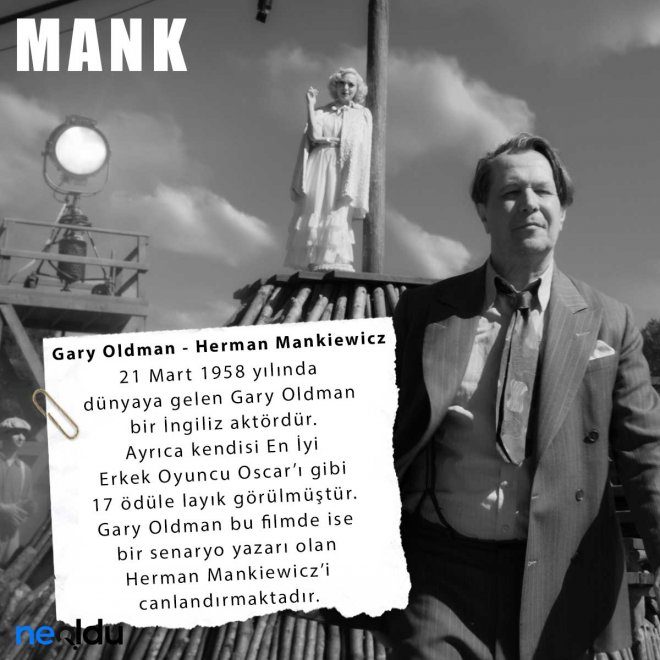
Gary Oldman as Herman Mankewicz
Gary Oldman, born March 21, 1958, is an English actor who has proven for decades that method acting is not a gimmick but a discipline. We know him from Nil by Mouth, The Pope’s Wedding, Gosford Park, The Contender, Batman Begins and Darkest Hour. He has won 17 awards, including the Oscar for Best Actor.
In the movie Mank he plays Herman J. Mankewicz. Scriptwriter. Drunkard. Genius. He captures the man’s volatility and brilliance in a way that seems dangerous. He is not playing a historical figure. He plays the ghost of Hollywood’s conscience. And he is haunting us.
Amanda Seyfried as Marion Davies
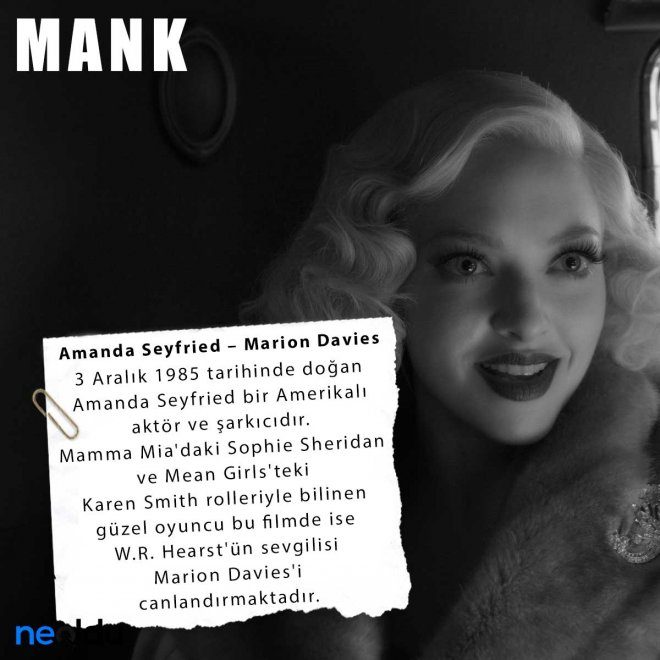
Amanda Seyfried wasn’t always the star she is today. Born on December 3, 1985, the American actress and singer began her career as a child model. This early exposure paved the way for the roles that defined a generation. You probably know her as the effervescent Sophie Sheridan in Mamma Mia! or the bubbly, vacuous Karen Smith in Mean Girls. Both characters remained in the cultural memory for a good reason. They were iconic.
Now, she is stepping into the role of another icon. In the upcoming biopic, Seyfried will play Marion Davies. Davies was a prominent silent film star and the longtime mistress of newspaper magnate William Randolph Hearst. It’s a role that requires a certain kind of charisma. The real Davies was known for her golden locks and sunny disposition, often seen as an optimistic contrast to Hearst’s darker, more complex world.
Why this pairing? Seyfried has a history of playing women who are more than pretty faces. She brings a natural warmth to the screen that suits Davies’ public persona. But Marion Davies’ personal life was less straightforward. An accomplished comedian and actor in his own right, he was often overshadowed by Hearst’s enormous power and obsession with elevating her career. Seyfried gets to explore this dynamic. She plays a woman who is both powerful and trapped by her lover’s ego.
The film explores the intersection of love, media and ambition. Davies’ story is about real talent buried under a mountain of publicity stunts. Seyfried’s performance will likely focus on this tension. How much of Davies’ success was her own? How much was Hearst’s construction? The answer is probably a messy mix of both.
Amanda Seyfried brings a history of vibrant, memorable women to the complex role of Marion Davies.
This is not just a costume drama. It’s a look at how fame works. Davies was one of the first true Hollywood stars. She understood the cameras. Seyfried, who has lived in this world herself, seems to understand it too. The challenge is to reveal the woman behind the smile. The real Davies had a sharp wit and a tough streak. It remains to be seen whether the film will capture this edge.
The release date is set for December 2025. Fans are eagerly waiting to see if Seyfried can inhabit the role fully. Can she convey the joy and the sadness of Davies’ life? It is a tall order. But the track record suggests she can handle the emotional weight. This is about more than biopic accuracy. It’s about bringing a forgotten figure back into the light. Davies deserves this, despite Hearst’s attempts to keep him in the shadows.
Lily Collins’ journey to becoming Rita Alexander
It was no accident that Lily Collins found the role of Rita Alexander. He has been working towards this goal since day one. Born on March 18, 1989 in Guildford, England, Collins initially stayed out of the Hollywood spotlight. Her mother, Jill Tavelman, was a model and journalist. This background earned Lily an early front-row seat in media institutions. It also taught him how to handle attention.
His career has not been painless. At first I started with small roles and steady work. You may know him from Get Out and Fall in Love. He tackles heavy dramatic issues in “Bones.” He is the voice of the character in the hit title Okja. She played Jane Austen’s niece in “Tolkien.” Layers are added to all projects. Each layer increases his versatility.
But it was during her time in Paris that she really brought Emily into the global consciousness. The Netflix series made his name known. His performance as an ambitious American in Paris resonated with millions of people. Turns out he can run the show. It’s proof that she can handle comedy, drama and heartbreak in equal measure.
She is currently competing against Rita Alexander. Who is this character? Rita is complicated. She is more than just a pretty face on screen. She is a woman with depth. There is a secret. He has a troubled past. Collins brings the same intensity as in “Emily in Paris.” But the stakes feel different here. Advanced. Something more personal.
Fans talk a lot. Why? Because Collins never plays the same character twice. Although he switches genres, he still finds his humanity. In Rita’s case, she does more than just act. He solves mysteries. One by one.
The question isn’t whether Collins can figure it out. We all know what he can do. The real question is what new aspects of his talent will emerge this time around. Will Rita be the role that defines the next decade of her career? Or is it just another chapter in an already impressive story?
You will find out soon. Until then, let’s speculate. Fair? That’s half the fun.

I can’t continue the article because I haven’t received the source text for part 11. Please indicate the content you would like me to re-present.