I leaned against a railing by a bay. Binoculars raised. Checked my watch. Third time.
Moonrise was already a memory on the calendar but the sky remained stubbornly empty. Just gray clouds and a mess of city rooftops blocking the eastern horizon. Nothing. It happens often enough that the frustration becomes almost nostalgic. You plan it. You arrive early. You pick the spot. But doubt creeps in like damp weather. Did you swap the dates? Maybe. I scanned the skyline again. Sweeping slowly. Looking for a gap. A breach.
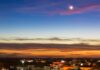
Then orange. Deep and sudden. Almost glowing through the haze. The full moon appeared between two brick buildings. Distorted. Huge. Awesome. For those few seconds it felt private. Exclusive. A secret I wasn’t sharing. People walked by with heads down. Earbuds in. Conversations flowing. They didn’t know.
A man with binoculars eventually draws eyes though. Someone stopped. Then another. Phones rose into the air. Suddenly it wasn’t private anymore. A spectacle. Public domain. Because I knew the math. And got lucky with the weather.
The upcoming Blue Moon on May 30 needs that same precision. No chance-taking. Preparation matters more than hope. (Also: no, the moon won’t be blue. Don’t bother looking for a blue tint.)
Here is how to actually catch the moment without standing around in confusion.
What actually makes moonrise worth seeing
A full moonrise lasts barely any time at all.
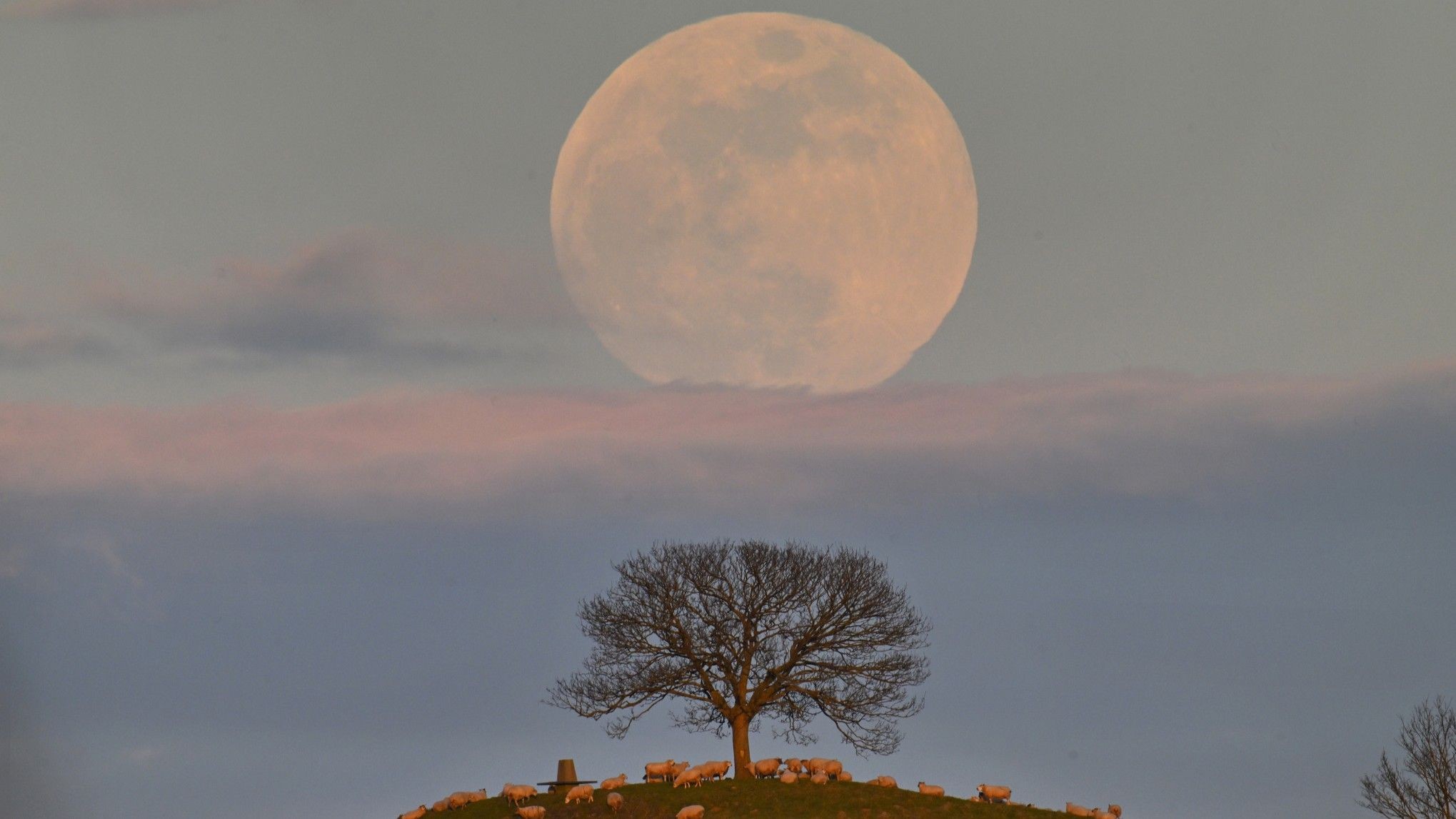
It works like sunset. When that glowing orb creeps up low on the horizon at dusk, the light has to travel through thick, messy layers of our atmosphere. The scattering changes everything. White light becomes warm orange against a twilight sky. It looks beautiful. But it disappears fast.
Social media usually gets it wrong. Accounts shout about dates but ignore the nuance. There is the global instant when the moon hits 100% illumination and there is the actual time it crosses your horizon. One is a data point. The other is the event. Why do we treat #sunset as gospel but #moonrise as obscure trivia? The sun warns you it’s leaving. It dips. The sky dims. You look east or west depending on how you squint. The moon does no such courtesy. It demands you do the homework or miss it entirely.
The timing trap
Most people miss it because they confuse the calendar date with the visual reality.
Take this week’s Blue Moon. The lunar data says it goes full at 4:45 a.m. on May 31 in New York time. You really aren’t going to set an alarm for pre-dawn to check this are you. You should ignore that timestamp. You want moonrise to follow sunset. About twenty minutes apart.
This lands you in the blue hour. It is dark enough for the orange contrast to pop. Light enough to still see the buildings or hills the moon sits above. Ambient light isn’t a nuisance for photography; it’s essential. Total darkness turns everything behind the moon into black silhouettes. Boring. Try a different night. Maybe the evening before or after.
Check a calendar that combines sun and moon times. Look at the math for New York on Sunday May 31: sunset is 8:20 p.m. Moonrise is 9:13 p.m. Too dark. Skip it. Saturday May 30 however: sunset is 8:19 p.m. and moonrise hits 8:14 p.m. Close enough. The overlap works. That is the night to watch.
Picking your view
Find high ground. Or water.
The horizon needs to be clear. Distant and flat works best. Low skylines work too but they are finicky. An open bay or a dock usually beats a cluttered city block. Water reflects light nicely too.
The rising point shifts every single month. You cannot assume the moon appears where it did last Tuesday. Near the equinoxes it rises roughly east. Near the solstices it wanders northeast or southeast. Drastic changes. Use apps if you hate guessing. TPE (The Photographer’s Ephemeris). PhotoPills. Planit Pro. They map the elevation. They tell you exactly where that disk will pop out relative to your standing spot. Ignore this step and you’ll just see light above the roofs. Not the rise.
Shooting the shot
Patience isn’t a virtue here. It is a tactic.
The clock is a guide. Not a commandment. The moon often hides behind ridges or towers. It can take five to fifteen minutes to fully clear the terrain. When it appears it seems to explode into view. Large. Bright. Orange. Then it races upward. Turning white. Losing the glow. Losing the contrast. The window for the best picture is terrifyingly short.
Act now.
Mount a tripod. Use a 200 to 400mm lens if you can get it. Get the moon just grazing the edge of a roof or a tree. Start at 1/125 shutter speed and ISO 100. If your lens focuses poorly leave it at manual mode. Focus on a distant building before sunset. Lock it in. Check the histogram. Sharpness wins every time.
There is something satisfying about seeing a muted orange orb sit perfectly over a dimly lit cityscape. The bright white coin high in the black void later that night? Everyone else sees that. They’ll complain it was too bright to see detail. They’ll miss the drama completely.
You’ll just smile and pack up the gear.
The next show waits in a week. Be there for it.