Tickets Guide to the Galaxy is more than just a story. This is a sprawling, nerdy epic that refuses to rest on its laurels. For over 30 years, the world has jumped between media like a badger on an espresso. It started on the radio. It consisted of six books and was often mistakenly called a trilogy. There is a TV series. play. video game. Darth Vader brush. Caught up with the Ghostbusters. We jammed with Pink Floyd and Radiohead. It also left traces on asteroids.
Now a new movie is trying to reinvent the wheel. If you are confused, here are some important facts. These details will surprise your friends. They will amaze your trivia night opponents. It might make you feel like a competent Dungeon Master.
Origin of the radio series
It all started with a radio show. This is where the magic begins. This wasn’t something I realized right away. It faltered. But viewers have noticed. The writing is sharp. Sarcasm is dry. Douglas Adams had a knack for making the absurd seem logical.
The public loved Arthur Dent. he is just an ordinary person. His house was demolished. Then he realized that the Earth was being bulldozed. That hook worked. It gets people’s attention. The radio series was broadcast in a total of 5 series. The program was broadcast from 1978 to 1998. But the anchor configuration is very tight. The first season aired in 1978.
Adams didn’t stop there. He wrote the second series. Then the third. Then came the fourth. Next is the fifth. The story continues to develop. The character has grown. But the core remains. Arthur Dent wanted to drink tea. They brought towels instead.
“The way a ship hangs in the sky is a lot like the way a brick hangs.”
This sentence sets the tone. This is very interesting. It’s very strange. This is for hitchhikers. Broadcast formats enable sound effects. turn on the music. It’s something that subsequent film adaptations have struggled to match, which is ridiculous. The sound is very clear. Voiced by Peter Jones. Simon Jones plays Arthur. Stephen Moore is Ford’s governor. They create dynamics. Chemicals.
People took notes. They were quoting lines. They become fans. The radio series laid the groundwork. Without it, the book would not exist. Without it, there would be no film. This is the seed. This is a mystical species.

The origin story of The Hitchhiker’s Guide to the Galaxy is less of a creative brainstorm and more of a lucky accident involving beer and bad decisions. It began on February 4, 1977. Douglas Adams sits down with Simon Brett. Brett is a producer of BBC Radio 4’s The Burkiss Way. They needed to pitch something.
After a discussion, Brett agreed to help Adams pitch a sci-fi comedy to the BBC. This encounter gave birth to a franchise.
Drunk on the spot
The initial spark didn’t come from the writers’ room. It comes from Adams lying in a field. he was drunk He had a hitchhiker’s guide to Europe. He looked up at the night sky. The Milky Way looks big. The guide looks very small. The contrast stuck.
Preliminary title
Before it had a catchy name, the concept was called “The Ends of the Earth.” The starting point is a dark comedy. Each episode ends with the destruction of Earth. Adams likes to find new and fun ways to blow up the globe every time.
“The idea is that at the end of each show, the Earth will be destroyed in a new and interesting way.”
ford prefect enters
The story changes as Adams developed the plot. He created Ford Prefect. Ford was an alien. He wrote for a galactic travel guide. His job is to provide background information to the public. He offers an objective perspective. He doesn’t care about the planet. he is an outsider.
Adams ended up redesigning the entire concept. He focused on the guide himself. The title has been changed. The focus has changed. The rest is history.

If you changed the name by mistake
It happened in the backseat of a taxi. Douglas Adams was on his way to a BBC show. He needed the lead. He didn’t have one. The name of the front passenger was Arthur Dent. The change stuck. Aleric B vanished. “The Hitchhiker’s Guide to the Galaxy” The main character is Arthur Dent.
The beginning of the radio series
The debut did not happen in silence. It was broadcast on BBC Radio 4. The date is Wednesday, March 8, 1978, and the time is 10:30 p.m. The premiere includes six episodes. The production team didn’t call them episodes. They call it “fits.”
Why vinyl is important here
You might be wondering about the audio version. In 1979 The Hitchhiker’s Guide vinyl record was officially released. It is not an exact copy of the broadcast. The first four episodes of the broadcast have been summarized. Why the difference? Legal reasons. BBC Radio uses licensed music. Those tracks couldn’t be sold commercially without paying heavy fees. Therefore, the vinyl are completely separate recordings. There are no licensing issues. Condensed version for fans.
The voice of comedy
The sound of this series is excellent. Critics praised the sound effects. They were groundbreaking for their time. Adams doesn’t consider comedy radio secondary. He demanded production values on par with modern rock albums. result? The Hitchhiker’s Guide to the Galaxy was the first BBC comedy to be broadcast in stereo. It sounded big. It sounded expensive.
Awards and honors
Did you win anything? Yes. Critics love it. Adams won an Imperial Tobacco Award in 1978, followed by a Sony Award in 1979. In 1980, it won the Society of Authors/Pye Awards for “Best Young Adult Programme”. There is one more statistic to consider. This radio series has a unique record. It is the only broadcast program nominated for an SF Achievement Award. Better known as the Hugo Awards®.
How Marvin took over
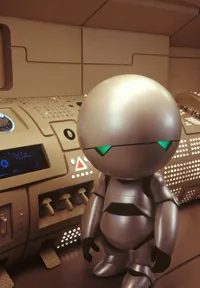
Marvin shouldn’t have continued. He was a one-time joke. A punchline is written for a single episode. But the audience loved him. Instantly. Producer Geoffrey Perkins noticed the reaction. He told Adams to keep him. Marvin the Paranoid Android wasn’t a bit anymore. He becomes the main character.

The radio series continues
By September 2004, the BBC was already busy broadcasting a radio revival of the third volume of Hitchhiker’s Guide to the Galaxy. This is the Tertiary Phase. But it’s not just repetition. Douglas Adams was still alive when he and director Dirk Maggs began work on the radio adaptation of Volumes 3 – 5. He had plans. Then he died.
But the project has not stopped. Maggs took over. He wrote the final two segments using Adams’ notes. They are called the Quandary Phase and the Quintessential Phase. It is scheduled to be aired in late 2005. These episodes should tie up all the loose threads in the story.
There is a strange beauty to this show. Adams’ voice was heard throughout the Tertiary Phase broadcast. He also plays Agrajag. You know the character. An angry man who hates Arthur Dent. Adams never recorded lines for this role as a new performance. Maggs edited existing recordings of Adams reading the book. He stitched them together. It worked. The result is a posthumous performance that feels authentic, even if it is made from old materials.
This book
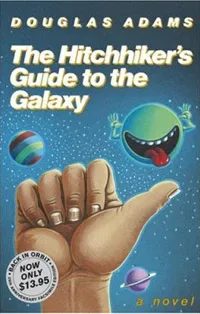

The chaotic birth of the first hitchhiking novel
Radio stations have too many hits to pass up. It was there that Douglas Adams was persuaded to turn his sketch into a book. What follows is a chaotic five-part novel published between 1979 and 1992. Often mistakenly called a trilogy.
The first episode of The Hitchhiker’s Guide to the Galaxy was released in the UK in September 1979. It is basically a continuation of the first four episodes that aired. It topped the Sunday Times mass market bestseller list for several weeks. But getting there is a nightmare.
Adams has a habit of meeting deadlines. He misses them throughout the first book. In the end, the publisher rejected the manuscript. they called him. Ask him to finish the page he is currently writing. After that, a bicycle courier was sent to pick up a bicycle.
That’s why the first book ends so abruptly.
US release and Dark Turn
The second work appeared in the fall of 1980. Restaurant at the End of the Universe has been published. Around the same time, there was also the first book that finally crossed the Atlantic and arrived in the United States.
The second book was messed up. It is condensed. The plot is a mess. Scramble 7, 8, 9, 10, 11, 12. Then five and six.
Then came 1982’s Life, the Universe and Everything.
His tone changed. The sky darkens. This plot goes further than what was told in the radio series. This isn’t just a joke anymore. It’s getting into the cosmic weeds.
Love and fish
Part IV began in 1984. Goodbye and thanks for all the fish.
Introducing a new theme. Keep.
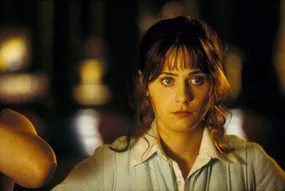

The story ended with the release of Mostly Harmless in 1992. That’s not the end of things. It obliterated the planet Earth. Again.
Adams has left his mark on the literary world even before the last chapter. In 1984, the Pan Books presented him with the Golden Pan Award. He is the youngest writer to win this award. Pan handled the publishing rights for this series in the UK. Around the same time, he was nominated for the first British Young Writer’s Award, making him not only a science fiction writer, but a full-fledged genius.
TV show
Although the original book has been adapted over the decades, the 1981 BBC radio series remains the definitive audio experience. Stephen Moore plays Arthur, Simon Jones plays Ford and Geoffrey McGivern plays Zaphod. The chemistry was electric. The sound design is groundbreaking.
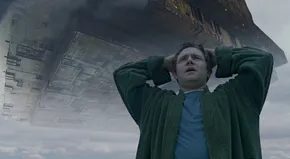
Then in 2005, he tried his hand at filming a TV series. The film was directed by Andy Tennant and starred Martin Freeman and Simon Jones. It didn’t land. Critics call it stiff. Fans called it “soulless”. Budgets were tight, jokes fell flat, and visuals looked like they were rendered on a potato. It is almost forgotten now.
His latest project is the play “Hitchhiker’s Guide to the Galaxy: Second Draft”, which toured the UK. It retains that spirit, but it fails to capture the global scope of radio broadcasting.
However, radio scripts are still available. The audio dramas are still listened to. Why? Because their voice is right. And that’s hard to do on screen.
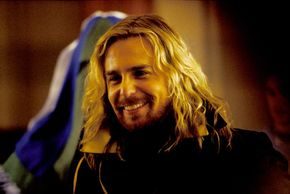

Discover the Star Wars legacy with hitchhikers
In the 1981 BBC TV series The Hitchhiker’s Guide to the Galaxy, it was a beast. Directed and produced by Alan Bell, the series featured over-the-top effects that seem expensive even by today’s standards. But within the visual spectacle are some interesting casting choices.
In one episode, Ford Prefect is stopped by a tall bodyguard who works for intergalactic rock star Hotblack Desiato. That majestic figure? It’s Dave Prowse. You may know him best as the physical body of Darth Vader from the original Star Wars trilogy.
In fact, the producers wanted an actor who could capture Vader’s personality: a whiny, slightly feminine tone. They tried to cast Hayden Christensen, who played young Vader in the prequels. He wasn’t available. So they chose Prowse. The result is a tall, silent menace rather than a loud one.
CGI that is not CGI
The visuals of the show were groundbreaking. Pearce Studios’ Rod Lord handled the computer graphics. Both critics and the public were fascinated by these pictures. It attracted a lot of attention.
This is the turning point. These visual effects are not computer generated. Lord created them by animating reversed line drawings on acetate. He add color to the sequences with light gels (the same type used in traditional production lighting). It’s an analog method that looks digital.
Douglas Adams: From Chicken Coop to Science Fiction
Douglas Adams was born on March 11, 1952 in Cambridge, Cambridgeshire, England. After school he wandered. He worked odd jobs to find his place. One of my jobs was cleaning chicken sheds. Another was as a bodyguard for the Arab royal family.
His career as a writer started early. He was a script editor and screenwriter of Doctor Who. He also wrote episodes of Monty Python’s Flying Circus series. In addition to the Hitchhiker’s Guide series, he has also written fiction and non-fiction books.
Adams is obsessed with technology. He tinkered with on video game production. He worked on the video game “The Hitchhiker’s Guide to the Galaxy”.
The Final Days
Adams died on May 11, 2001 at the age of 49. The cause of death was a heart attack during working out. At that time, he was finishing the script of the film. He is survived by his wife Jane Belson and daughter Polly Ann Adams. Polly appears in a crowd scene in the new film.
movie
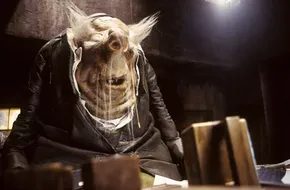

How did the Hitchhiker’s Guide to the Galaxy movie come about?
Touchstone Pictures finally got around to making The Hitchhiker’s Guide to the Galaxy a movie, but the process was anything but smooth. The project has been in development hell for over 20 years. Producer Douglas Adams once joked that the film would be released “just before the Last Trump,” a prediction that was more than comedic exaggeration and surprisingly prescient given recent history.
Ghostbusters detour
This story begins in 1982. Producers Ivan Reitman, Joe Medjuck and Michael C. Gross have optioned the rights to the popular sci-fi series. Adams was no slouch. He created three different versions of the script for the production team. The plan was clear. They cast Bill Murray or Dan Aykroyd as the slacker alien Ford Prefect. Both were top comedians of their time.
But then Ghostbusters happened.
Adams’ script was shelved indefinitely. Why? Because Reitman and his partners decided to move on to Dan Aykroyd’s supernatural comedy. *Hitchhiker’s Guide to the Galaxy has been put on hold so the team can work on Ghostbusters. This is one of those Hollywood “what ifs” that fans still talk about.
Disney Steps In
Fast forward to 1997. After years of on-and-off time, Adams finally signed with Disney. The studio has big goals for the property. Jay Roach, who had just directed Austin Powers, was hired to helm the project. Adams went back to work rewriting the script for this new era.
Disney also went shopping for A-list talent. They targeted Hugh Laurie for Arthur Dent. Jim Carrey was eyed for the hedonistic alien Zaphod Beeblebrox. The late Nigel Hawthorne was cast as the difficult Martian bureaucrat Slartibartfast.
A Director’s Pass
Things didn’t go well for Roach. Finally, he stepped down from the director’s chair. Instead of delaying, Roach handed the project over to Spike Jonze. Jones also refused.
But Jonze had a connection. He suggested Nick Goldsmith and Garth Jennings, the duo behind the hit music video for “Hammer and Tongs.” They accepted the gig. The project has finally started. The wait is not over yet, but the right people were finally in the room.
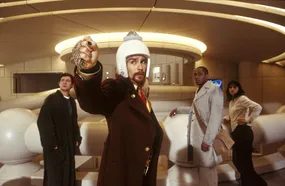

Who actually wrote the final script of “The Hitchhiker’s Guide”?
Just when the commotion surrounding the film version of Guide to the Galaxy has died down, the closing credits tell a story of loss and cooperation. Douglas Adams personally wrote the original script and brought his unique voice to the adaptation. But before the cameras could start filming, tragedy struck. Even after Adams’ death, the script wasn’t left in the cold. Garth Jennings and Karey Kirkpatrick helped revise the material and ensure the film stayed true to the spirit Adams created.
A character created especially for Malkovich
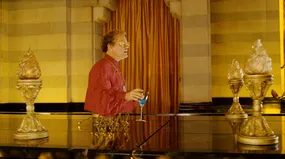
While the writers were revising the script, Douglas Adams also had a specific vision for the character. He just wouldn’t leave the Actors alone. Adams created the character of Humma Kavula specifically for John Malkovich. An important figure in galaxy’s lore, this religious leader is tailor-made for Malkovich’s unique presence. This is not a afterthought. This is a thoughtful choice by Adams himself, bridging the gap between the original and the big screen beyond the grave.

Hidden Cameos and continuity errors
You might not immediately recognize him, but Simon Jones appears in the film. The actor, who voiced Arthur Dent in the classic radio drama and the 1981 TV miniseries, makes a cameo appearance. He’s not just trying his luck here. Jones and Douglas Adams were lifelong friends. This connection may have paved the way for the appearance.
Then there’s Marvin. The original paranoid android from the miniseries shows up. But he doesn’t play the same character. In the movie, he is portrayed as a completely different robot. Fans of the older versions may notice this is a subtle change if they look closely.
Beyond The Guide
This movie is more than just an adaptation of the book. This appeals to people whose roles have been defined by previous generations. Bringing Jones back is a nod to those roots. It bridges the gap between audio sources and screen adaptation.

Why are there references to the hitchhiker’s guide everywhere?
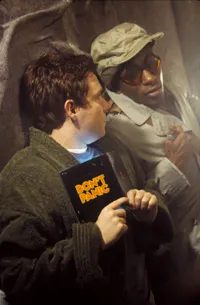
You may not remember these books. You may never have heard of the radio series. But the ghost of Tickets Guide to the Galaxy is everywhere. It’s in the code we write. It’s in the games we play. This is how we talk about the universe and the absurd.
The cultural footprint is huge. It’s not just a book on your bookshelf.
The text adventure that captivated gamers in 1984.
28.) If you find modern games difficult, try the 1984 computer game “The Hitchhiker’s Guide to the Galaxy”. This is a text-based adventure game designed by Douglas Adams and Steve Meretzky.
It’s not just hard. This is almost impossible.
The game comes with strange items such as danger-sensitive sunglasses and a fleet of small battleships. The user interface was advanced for its time, but the puzzles were brutal. If you’re brave enough to fail, you can also play online.
Hovercraft drama and whale disaster
29.) Ken Campbell brought this story to life for the first time on stage. The play premiered at the Institute of Contemporary Arts in May 1979.
The audience didn’t sit on the chairs. They were riding a giant hovercraft.
It worked. The first run was successful. But Campbell wanted something bigger. He staged a lavish version using lasers and a revolving stage. The theater has turned into a spaceport.
Then there’s the marketing gimmick. They dropped a giant inflatable whale from Tower Bridge.
it doesn’t work. The production ended in a colossal failure.
Babel Fish and Real World Translation
30.) In space, babel fish are small parasites. you put it in your ear. Translate any language into your native language.
Real life repeats this fiction. Altavista’s online translator is called Babel Fish. This is a direct tribute to Douglas’ work. Although the Internet has moved on to different tools, it is still possible.
Trillian: From Heroes to Software
31.) Instant messaging programs rarely have literary roots. Trillian is an exception.
The software is named after the heroine of the series, Tricia McMillan. This is a small detail. But it shows how deep the rabbit hole goes.

42 Popular cultural heritage
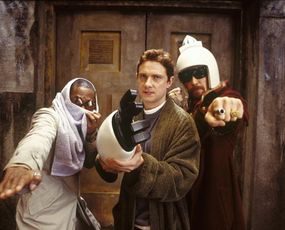
It starts with a simple search. Write “What is the answer to life, the universe and everything?” Google. Scroll down. Skip ads. Find the calculator widget. Press Enter. The result is always 42. This is the same answer that the supercomputer Deep Thought gave in The Hitchhiker’s Guide to the Galaxy. It cannot be undone. It’s embedded in your brain’s search history.
Its influence extends far beyond search engines. Radiohead alluded to this cosmic joke in their song “Paranoid Android”. The title is a direct homage to Marvin, the depressed robot from Adams’ series. This is a subtle link for fans, but big enough for those who know where to look.
The online community picked up the baton. GameFAQs hosts one of the most active message boards under the name “Life, the Universe and Everything”. They borrowed the name from the third book in the series. This is the perfect place for players to spend hours discussing stats and strategies. Some might say this is the only place it makes sense.
Even children’s TV shows got in on the jokes. Christopher Cerf, creator of Between the Lions Christopher Cerf recognized an easter egg. The character Lionel has a rugby jersey with the number 42. It’s an deliberate homage. Cerf did not hide it. He wanted fans to spot it.
“Don’t forget to bring your towel.”
This advice comes from Towlie from South Park. He repeats the line often. This is a direct callback to the Guide’s most important survival tip in the guide. The show knows its audience. They know you remember the books.
This reference also appears in shooter games. GoldenEye: 007 for Nintendo 64 offers multiplayer rewards for the player with the fewest kills. It is said to be “Mostly Harmless”. In the universe, this is a revised description for Earth. This is the ultimate insult. A gentle one.

Space Quotes: From Neopetes to Asteroids
The intersection between geek culture and childhood games goes deeper than you think. If you’ve spent a few hours at Neopets, you’ve probably come across Pangalactic Mouthwash. It sounds like a sugary cartoon drink, but it’s actually a kid’s version of the Pan-Galaxy Gargle Blaster from The Litchhiker’s Guide to the Galaxy. An in-game guide is dedicated to parental potions. Shockwave warns that it is one of the most dangerous and best adult drinks in the known galaxy. It’s not just about drinking. Just be patient.
Stupid Fish and Toral Beast
Then there’s Dope Fish. you know that. This pixelated, slightly melancholic creature lurks in the background of The Secret of Monkey Island and other LucasArts classics. It is the second stupidest creature in the universe.
This title is not randomly assigned. Tom Hall, who created Silly Fish Commander Keene, gave him a special rating for a reason. The dumbest creatures in the universe are the furious talking beasts of Toral. The beast thinks everyone else is too stupid to notice his existence. Dope Fish follows closely behind. It’s a narrow joke, but I think everyone reading this will get it.
Birthday balance and naming rights
Douglas Adams didn’t just write books. He lives in his own world. On his 42nd birthday he played guitar with Pink Floyd. This is not a staged photo shoot. This is a real concert jam. The gift came from his old friend and band guitarist Dave Gilmore.
Their friendship is a two-way street. Around the same time, Gilmour needed help naming Pink Floyd’s new album. Adams gave the name. The result was The Division Bell, released in 1994. To thank Adams for winning the title, Gilmour donated £5,000 to Adams’ favorite charity. This is a direct trade. The name of the donation. birthday jam session.
A final tribute
Adams died in 2001. The condolences are astronomical. literally.
A day before his death, the International Astronomical Union’s Minor Planet Center took concrete action. They named the asteroid 18610 after Arthur Dent. The main character of “The Lifthiker’s Guide to the Galaxy”. The asteroid itself was named Arthur Dent. It revolves silently around the sun. It is a landmark that stands silently in the dark.
Rule 41
This set has strict rules. The ticket guide to the galaxy has a total of 41 fun facts. no longer. Quite a number. Quantity matters. It is part of the structure. Chaos has its limits.
Guide
- BBC hitchhiker’s guide to galactic cult destinations
- Megadodo Publisher
●ZZ9 Multiple Z Alpha - Douglas Adams Portal
- Planet Maglicia