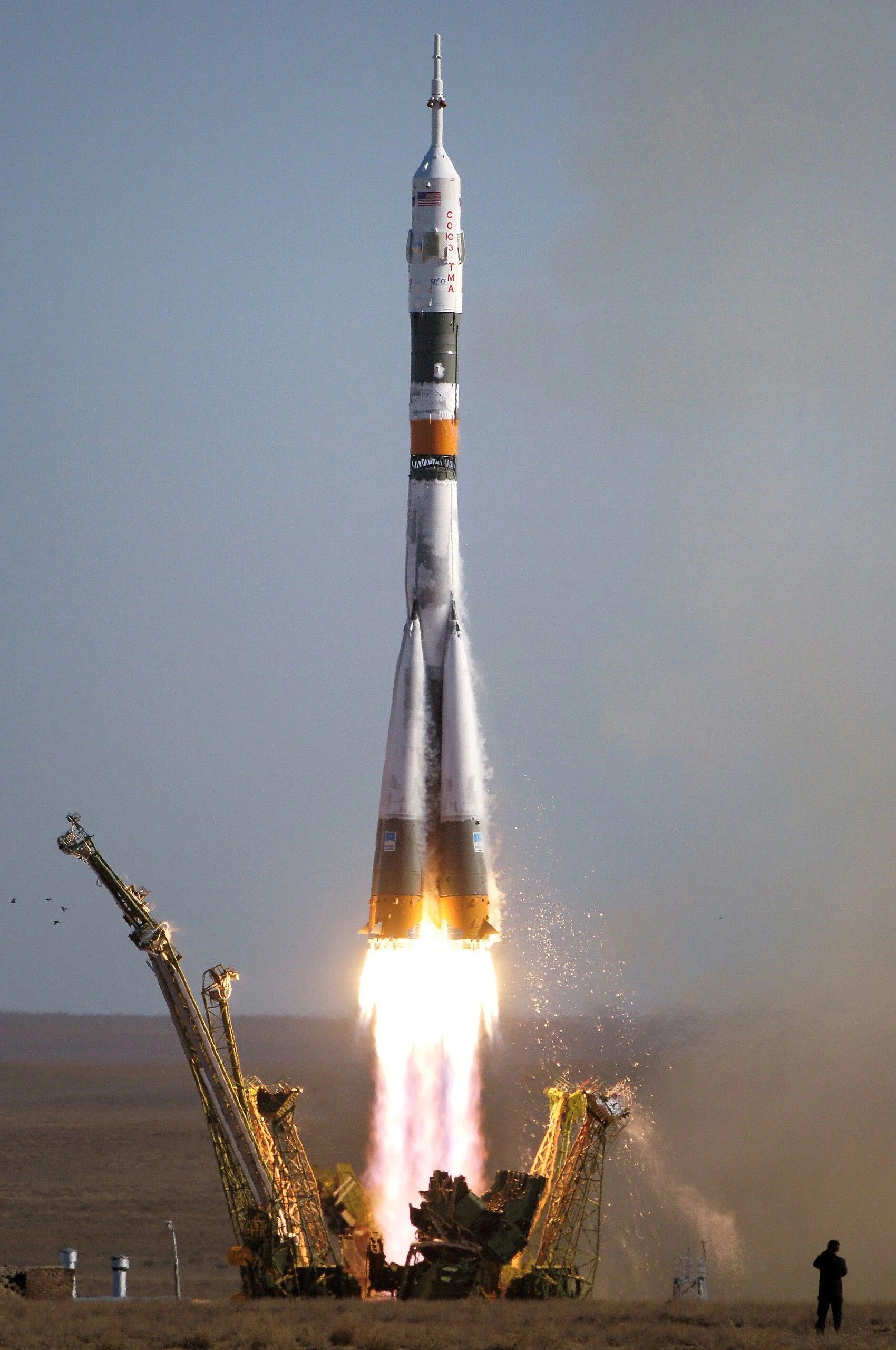
Conventional rockets are stuck in a paradox. You need fuel to move. Fuel has weight. Weight needs more fuel to lift. It’s a cycle that limits us to the inner solar system and makes interstellar travel look like science fiction.
But what if you didn’t have to carry your own momentum?
A new review published in Acta Astronautica looks at propellantless space travel technologies that ignore this constraint. Instead of burning chemicals, these spacecraft steal momentum from their environment. Planets. Sunlight. Charged particles. They don’t carry the fire. They just surf.
Here is how we might leave Earth behind without lugging tanks of hydrazine into the void.
Gravity Assists: Trading Timing for Fuel
We already know how to cheat the rocket equation. It’s called a gravity assist.
Engineers send a probe flying past a planet at a precise angle. The spacecraft dips into the planet’s gravitational well and swings around it. It snags a tiny bit of the planet’s orbital velocity. The planet loses negligible energy. The probe gets a massive boost.
Voyager 1 and 2 did this. They hit Jupiter. Then Saturn. Uranus. Neptune. No fuel burned for those major speed gains. Just physics and timing.
The problem? The planets don’t line up for you.
Gravity assists are a one-off deal. You need a specific window. Miss the launch date and you miss the boost. You can’t just point a gravity-assisted craft wherever you want. The routes are rigid. Rare. Restrictive.
Solar Sails: Pushed by Photons
If gravity is too picky, try sunlight.
Propellantless spacecraft propulsion using solar sails has moved from theory to reality. Japan’s IKAROS mission in 2010 proved it. The probe deployed a massive membrane. Sunlight hit it. Photons reflected. The reflection created pressure. Push.
It’s not a lot of push. It’s continuous. No fuel consumption. IKAROS made it to Venus.
Solar sails have flaws, though. The material is huge and thin. Think gossamer. One micrometeoroid impact could tear a hole in your engine. And there’s another issue: distance. Sunlight fades with the square of the distance from the source. Get far enough away, and your sail becomes a kite in a breeze. The thrust vanishes.
Magnetic Sails: Deflecting the Solar Wind
Photons are weak. What about particles?
The Sun blows out a stream of charged plasma called the solar wind. Magnetic sails plan to catch that. Instead of a physical mirror, they use a superconducting loop to create a magnetic bubble. The charged particles in the wind hit the bubble. They deflect. Conservation of momentum gives the sail a shove.
This sounds better than solar sails. It doesn’t rely on reflection. It won’t degrade from UV damage or dust impacts in the same way. It works further from the Sun, theoretically.
So why haven’t we built one?
The size. The superconducting loop would need a radius of up to 50 kilometers. Fifty kilometers. Of superconducting wire. That needs to stay frozen at cryogenic temperatures in space. We can’t manufacture that. We can’t deploy it. We can’t cool it.
Electric Sails: The Cheaper Magnetic Option
Magnetic fields are heavy and expensive. Charge is lighter.
An electric sail (E-sail) uses long, charged wires. Typically tens of kilometers of tethers. The wires repel the protons in the solar wind. It’s like a static-electricity model of a magnetic sail.
The advantage is mass. You don’t need heavy superconducting loops. You just need light conductive wire.
The downside is power and fragility. You need enough voltage to maintain the electric field over those tens of kilometers. The wires are fragile. A collision with space debris snaps them. If the circuit breaks, you stop moving.
Each technology trades engineering complexity for access to free energy in the void.
Which Propulsion Method Is Right For You?
There is no winner here. Yet.
The choice depends on the mission. Need a fast shot to Mars using existing tech? Use chemical rockets with gravity assists. Want a cheap, steady trip to an asteroid belt object? Maybe a solar sail, if you can build the mirror.
Looking further out? The outer solar system is dark and cold. Solar sails stall. You need the solar wind. But magnetic sails require technology we haven’t invented. Electric sails are plausible but untested at scale.
Propellantless space flight concepts challenge the assumption that you must burn to go. They force engineers to think about structures as propulsion systems. Huge. Fragile. Elegant.
The review suggests we look at these not as alternatives, but as a toolkit. Use gravity for the heavy lifting. Sails for the coasting.
The stars are still far. But maybe we don’t need more fuel to get there. We just need bigger webs to catch the light.
Or the wind.
Who knows? We’re still on the ground.