November 2025 hits the century mark for that moment the world finally saw the king.
Or so the story goes.
The real history is messy. It involves hot knives. Brute force. And a deliberate effort to hide the violence from public view. We like to think of archaeology as science. In this case? It was closer to surgery gone wrong.
The resin problem in Tutankhamun’s tomb
Here’s where you find him: deep inside the Valley of the Kings.
Howard Carter led the dig. Mostly Egyptian workers did the heavy lifting clearing the antechamber. That took years. Friction with the local government added delays. So it wasn’t until 1925 they cracked the inner sarcophagus.
This sparked another round of Tutmania. The world was watching.
Then came the disaster.
Inside the coffin? Hardened resin. Black pitch. The ancient embalmers had poured it over the wrappings to stop decay. Over time it turned into concrete. Carter’s notes say the body was “firmly stuck.” No gentle pull worked.
They tried baking the coffin in the sun. Didn’t budge.
Desperation set in. Carter’s team grabbed heated blades.
They didn’t just remove the king. They carved him apart.
How Howard Carter decapitated a pharaoh
The result? Dismemberment.
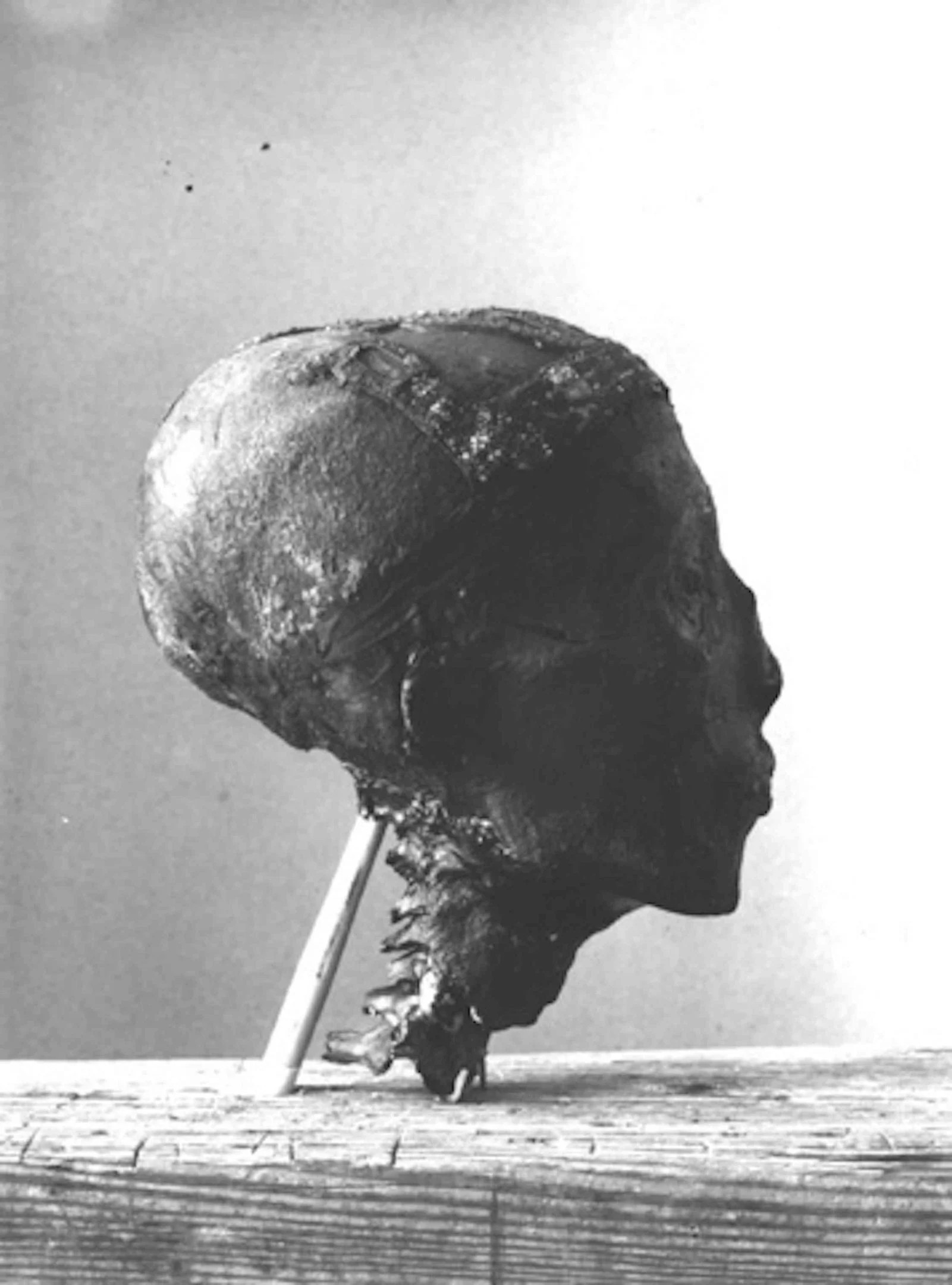
Tutankhamun ended up with no head. Arms ripped at the shoulders, elbows, wrists. Legs cut at the hips, knees, ankles. The torso sliced away from the pelvis.
It’s brutal.
Later they glued the pieces back together. A macabre collage to make the pharaoh look intact again. A restoration of image, not body.
What the official records hid from us
Did you know this happens in the books?
Official accounts say nothing about the carnage. Howard Carter published two volumes of the excavation details. In the second volume (1927) there is one famous photo of the king. Head wrapped. Neat. Palatable.
If you look at that image, the spinal column is hidden by cloth. Why? Because it was severed.
Egyptologist Joyce Tyldesley dug into the files at the Griffith Institute, Oxford. She checked Carter’s private logs. Public records.
The decapitation is missing.
Absent entirely.
Why leave it out? Maybe guilt. Maybe a strange form of respect. Or maybe just a cover-up to protect the brand of the discovery.
Today has been a great day in the photography history.
Harry Burton the photographer didn’t get the memo about decorum. His flash bulbs caught the truth. In some of those shots, Tutankhamun’s skull has nails or spikes driven through it to hold it upright for the camera.
Gruesome. Stark. Ignored in the main text.
The darker side of golden Egyptology
So we ask: what kind of science breaks the patient to study him?
The centenary forces a look at ethics. Not just the gold. The glint. But the cost. The violence behind the curtain.
Archaeology in the early 20th century had no rulebook. Or the rules didn’t apply to kings dead for three millennia. Carter called that day great. The evidence suggests something grim lies beneath the celebration.
We are still looking at the pieces he put back together.
Does the method matter if the artifacts survive?
Perhaps. Maybe not. But the gap between what Carter showed the world and what actually happened remains wide. Filled with resin, blood, and silence.
We know he was cut. We know they hid it.
Now we just watch. Waiting to see what else sticks out.