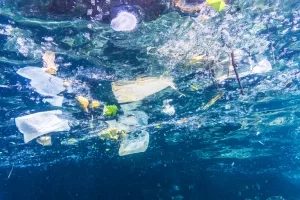
The oceans are drowning. Estimates suggest there are 150 million tons of plastic waste floating in the seas right now. That number is so large it barely registers as real. It is not just debris. It is a slow-motion disaster that has moved from scientific papers into public consciousness. More people are waking up to the scale of the problem. They want to act.
But action is hard when the problem is everywhere.
So what do we actually do? Which projects can help remove this plastic? What can an individual do without moving to a boat and staying at sea for a decade? The gap between caring and doing is wide. We need to look at the projects trying to fix it. And the individual steps that matter.
The Scale of the Problem
150 million tons. Put that in perspective. It is a weight equivalent to thousands of blue whales. Or a mountain of plastic stretching for miles. This is not a future problem. It is here. Now.
The pollution is visible. It harms marine life. It breaks down into microplastics that enter the food chain. The awareness is growing. So is the desire to help. But desire alone does not clean the water. We need concrete solutions.
Projects Trying to Clean the Seas
Several initiatives are working to tackle this. They use different methods. Some catch plastic before it spreads. Some remove it after it has accumulated.
The Ocean Cleanup is one well-known project. They use large barriers to collect plastic in the Great Pacific Garbage Patch. The idea is to intercept waste before it reaches the open ocean. Others focus on rivers. Rivers are the main entry points for plastic pollution. Stopping it there is often more effective than cleaning the ocean later.
These projects are promising. They show that technology can help. But they are not enough on their own.
What Can Individuals Do?
You do not need a million dollars to help. Small actions matter. But they must be consistent.
Reduce single-use plastics. This is obvious but essential. Bring your own bag. Use a reusable bottle. Refuse unnecessary packaging. These choices reduce demand. They lower the amount of plastic entering the waste stream.
Support policies that regulate plastic production. Individual action helps. Systemic change is necessary. Vote for leaders who prioritize environmental protection. Advocate for laws that hold producers responsible for their waste.
Be mindful of where your trash goes. Proper disposal prevents litter from reaching waterways. Recycle correctly. Understand local recycling rules. Contamination in recycling bins undermines the whole system.
Why This Matters
Plastic pollution is not just an aesthetic issue. It is a health issue. It is an ecological crisis. The plastic breaks down. Microplastics enter fish. We eat the fish. The cycle continues.
Acting now matters. Every piece of plastic prevented is a victory. Every project supported pushes us closer to cleaner oceans.
The work is ongoing. The problem is vast. But so is the potential for change. Start where you are. Use what you have. Do what you can. The ocean cannot wait.
We assume plastic is permanent. It’s in our grocery bags, our clothes, even the microbeads in our face wash. Since 1950, humanity has churned out 8.3 billion tons of this material. That is over one metric ton per person alive today. Currently, we produce between 300 and 400 million tons every single year. The curve only goes up.
Here is the catch. Most of that plastic doesn’t stay in your closet or on your shelf. It ends up in landfills or, worse, in nature.
“We are swimming in 150 million tons of plastic waste in our oceans alone.”
The result is everywhere. You find it in the soil. You find it in the rivers. But the ocean is where the scale becomes terrifying. Researchers estimate there are 150 million tons of plastic debris floating in marine environments.
It isn’t just floating near the coastlines. It forms gigantic swirling gyres. The Great Pacific Garbage Patch is the most famous example. But the contamination has reached places humans rarely visit.
- The Arctic ice packs.
- The deepest trenches of the Mariana Trench.
Plastic is no longer a local litter problem. It is a global geological marker. And we are still producing more of it.
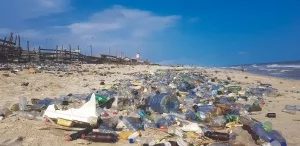

The Forever Pollution Problem
The very traits that made plastic a miracle material are now its death sentence. These substances are built to last, meaning they simply do not rot. When you throw away a bag or a bottle, it does not vanish. It breaks down. Slowly. So slowly that you won’t live to see it finish.
What we call “degradable” plastic is mostly just a lie about time. It fragments into smaller and smaller pieces rather than biodegrading. The trash you tossed yesterday becomes a permanent fixture in the environment for decades, if not centuries. And here is the kicker. It is still a problem even when you can’t see it. That is microplastic.
We know the headlines. Sea turtles choking on rings. Whales with stomachs full of debris. These images are grim but familiar. The assumption is that this is just a visual blight. It is not. It is an ecological rewrite.
Researchers now know that many marine organisms use floating plastic as a ferry system, riding it across oceans to new shores.
The health risks to humans are still being mapped out. We suspect the particles accumulate in our bodies. But the bigger threat is the structural change to ecosystems. Plastic is not just litter. It is a vehicle.
Think about it. The ocean is vast. Dispersal of species is limited by distance and currents. Plastic changes that math. Scientists have confirmed that a growing number of marine organisms treat floating plastic debris as rafts. They hitch a ride.
This phenomenon, known as the “plastic raft effect,” turns litter into a global transportation network. Invasive species use these floating islands to cross oceans. They reach places they could never swim or drift to naturally. This alters food webs. It introduces predators to new habitats. It disrupts local balances.
The plastic you dropped in a river today might end up in a reef halfway across the world. Not as trash. As a habitat for something that shouldn’t be there. The pollution is mobile. It is adaptive. It is winning.
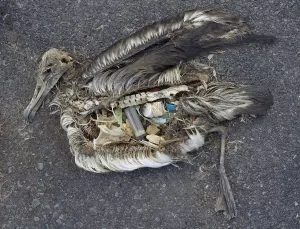

The rise of specialized plastic harvesters
When you look at the sheer volume of plastic choking our oceans, the solutions often feel as scattered as the debris itself. We are talking about everything from discarded shopping bags to tangled fishing nets. But people are actually building machines to fight back. Take the “Sea Cow,” a catamaran developed by the NGO One Earth – One Ocean. It drifts through coastal waters, using mobile nets to scoop up floating trash. Then there is the “Seabin,” a concept born from two Australian surfers. This device sits quietly in harbors, using a pump to suck in plastic waste. They are practical, localized fixes for specific environments.
The failure of the giant arc
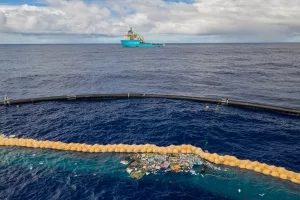
But the most ambitious, and controversial, project remains The Ocean Cleanup. Boyan Slat, a young Dutch entrepreneur, envisioned a massive, U-shaped barrier to capture plastic in the Great Pacific Garbage Patch. The goal was industrial scale. The reality was messy. The first field test failed to deliver. The system worked exactly as designed in one regard: it collected plastic. But it failed in the only way that mattered. The ocean currents were stronger than the barrier’s anchor. The plastic flowed in, only to be pushed right back out moments later. It was a humbling lesson in fluid dynamics versus engineering ambition.
Turning the tide
For a while, it looked like the project might implode under the weight of its own public promises. Critics pointed to the recycled plastic as proof of concept failure. The organization had to pivot. They stripped down the design. They changed the towing mechanism. They stopped trying to hold position against the current and started letting the system move with it, acting more like a vacuum than a wall.
Then, in early October, the narrative shifted. The Ocean Cleanup announced that the revised system had successfully caught plastic for the first time. This wasn’t a lab simulation. This was real-world validation. The test phase had lasted months. The results were granular. The system didn’t just pick up one size of debris. It captured giant ghost nets. It snared flimsy grocery bags. It even trapped microscopic plastic particles.
The revised technology moved from a static barrier to a dynamic collector, proving that large-scale ocean cleanup is not just theoretical.
Why the size of the plastic matters
The diversity of the catch is significant. Most cleanup efforts struggle with the “invisible” plastic—the microplastics that slip through standard nets. By confirming that the system can handle everything from massive industrial waste to tiny fragments, the organization has addressed the primary criticism of their earlier designs. It works across the spectrum of marine pollution. The Great Pacific Garbage Patch is vast, but it is no longer an untouchable zone. The technology is now proven. The next question is whether we can scale it fast enough to matter.

The Ocean Cleanup’s Blind Spot
The Ocean Cleanup has made headlines, but it only tackles the visible fraction of the ocean’s plastic crisis. Their systems skim the surface, catching debris that floats. They miss the stuff sinking below.
Marcella Hansch, a German architect, sees this gap as a critical failure. She designed the Pacific Garbage Screening to solve it. Her inspiration came from a diving trip. She saw more plastic than fish through her mask.
The design resembles a floating comb. Giant teeth spread wide in the water. The goal is to calm specific water currents. This change in flow matters. It allows plastic to rise.
Plastic usually sinks because of waves and currents. Here, density does the work. The system filters even small particles. They float up. They get caught.
It sounds simple. It isn’t. The concept exists only on paper. No prototype. No pilot program. Just drawings.
“I saw more plastic than fish.”
Hansch’s design targets the hidden layer of pollution. The Ocean Cleanup handles the top. She aims for the depth. Together, they cover more ground.
But until construction starts, it’s just an idea. The ocean doesn’t wait for blueprints. The plastic keeps sinking.
We need solutions that reach below the surface. Not just across it.

The reality of reducing and reusing
We still don’t know if humanity can actually stop the plastic flood. Let’s assume for a moment that we succeed. The oceans are finally clear. No more drifting bottles. No more microplastics choking coral reefs.
But here’s the catch. That victory is temporary unless we change how we consume.
If we keep buying endless amounts of poorly biodegradable plastic that refuses to recycle, the waste returns. It always does. The ocean isn’t a black hole. It’s a mirror.
So researchers are scrambling. They’re hunting for better recycling methods. They’re engineering ecological alternatives. Synthetic biology. Mycelium packaging. It’s promising. But while labs chug coffee and run simulations, there’s a simpler lever we can pull ourselves.
Reduce and reuse.
It’s not a new slogan. It’s an old one that got drowned out by convenience.
Every person can cut their plastic footprint. Not by going full hermit in a yurt. Just by noticing the waste. The single-use coffee cup. The over-wrapped snack. The plastic bag that lasts three minutes but decays for three centuries.
People are starting to get it. They’re buying less stuff. They’re keeping things longer. They’re choosing durability over disposability.
It’s not about perfection. It’s about pattern.
Stop treating plastic like it’s free. Because it isn’t. The cost just gets shifted to someone else. Or to the future.
Which brings us back to the question nobody wants to answer: What happens when the “easy” plastic runs out?