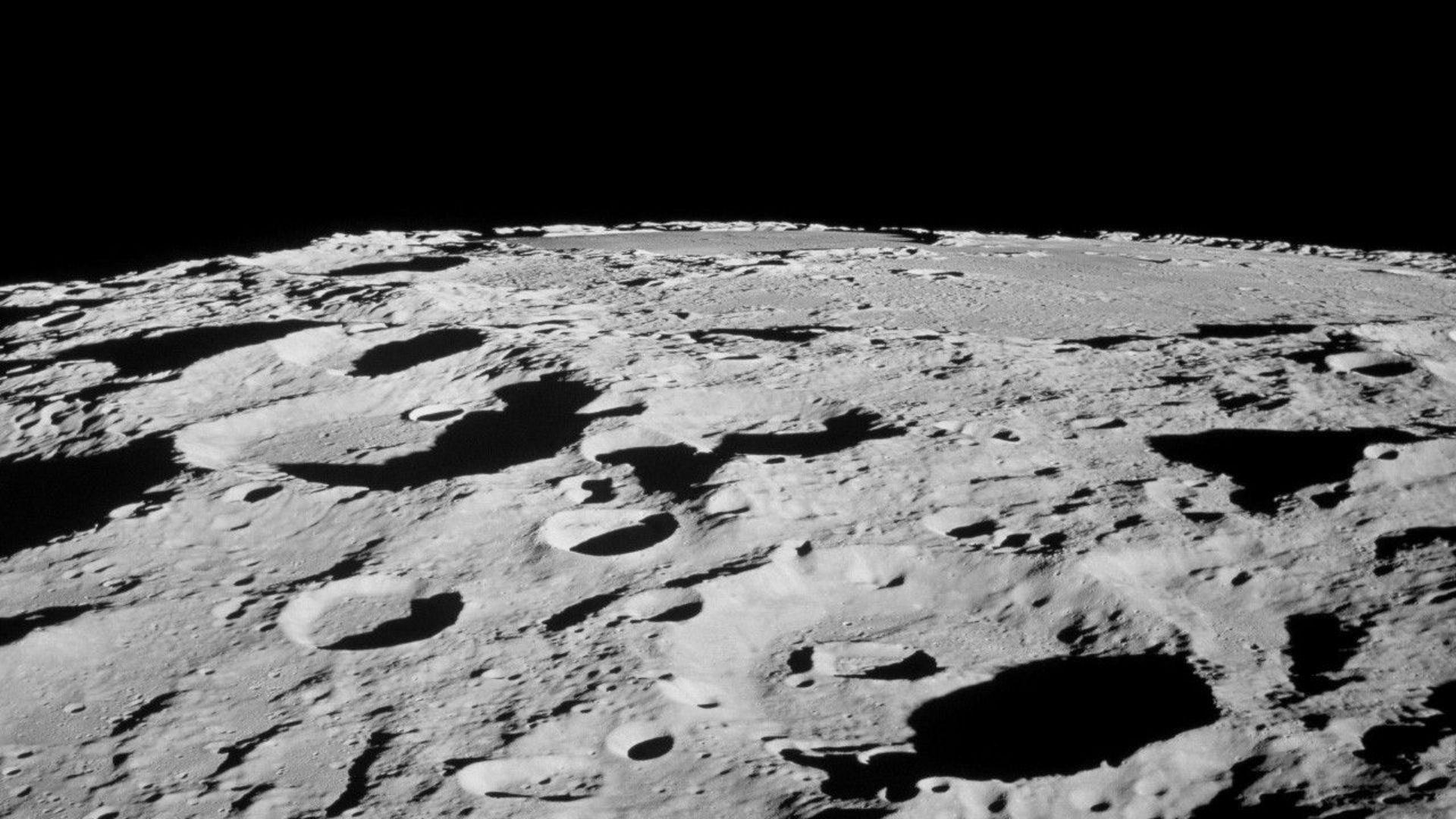
NIST researchers think we can build a moon-based navigation system by hiding lasers in dark holes. Specifically, the permanently shadowed craters near the lunar south pole. It’s counterintuitive. Why put delicate optical instruments in places colder than Pluto?
Because stability.
Earth GPS relies on satellites broadcasting time. Spacecraft near the moon don’t get that luxury right now. They look back at Earth. They wait for signals. It works, mostly, but as NASA ramps up the Artemis program, this tether feels heavy. Clunky. What if the moon had its own heartbeat? A timing backbone independent of Houston.
The freezer effect
Silicon optical cavities make laser light ultra-stable. On Earth, they’re temperamental. Tiny temperature shifts kill the precision. So we build complex cryogenic coolers. Vibration isolation platforms. It’s expensive.
Now picture the moon’s south pole. The tilt is shallow. Sunlight never reaches the bottom of these craters. They stay dark forever.
The temperature dips to -223 C (-370 F).
That’s colder than you’d believe possible. It’s also a near-perfect vacuum. Vibrations? Minimal compared to Earth.
“As soon as I understood what the permanently shot regions can offer, I felt that this was the most ideal environment.” — Jun Ye
Nature does the heavy lifting. The crater is a natural cryostat. No active cooling needed. Just place the device. Let the cold lock the frequency. The laser emits light that is almost perfectly constant. Constant light means precise distance measurements. Precise distances mean you know where you are.
Not just for rocks
Water ice probably hides in these dark basins. We go there to mine it. But maybe we go there to listen, too. To time, actually.
These ultrastable lasers could serve as master references. Imagine a network of beacons. Satellites orbit the moon. Rovers drive over the jagged south pole terrain. Lighting is tricky there. Shadows swallow you whole. Visual navigation fails.
If you have a local laser network, you don’t care about the sun. You care about the phase of the light. The signal links up with atomic clocks. It creates a scaffold for positioning, navigation, and timing (PNT).
A true Lunar GPS.
It’s not here yet. Concepts range from orbital nav-sats to radio beacons. But this approach? It uses the harsh environment as an ally instead of a barrier. That’s smart engineering. Or lazy genius.
Will astronauts actually plug their suits into this network? Maybe. The idea sits there, frozen in the dark, waiting for hardware to catch up. Who’s going to send it first?