Caves are supposed to be dark, damp, and mostly empty. At least, that’s the old story. Now archaeologists are telling a different one.
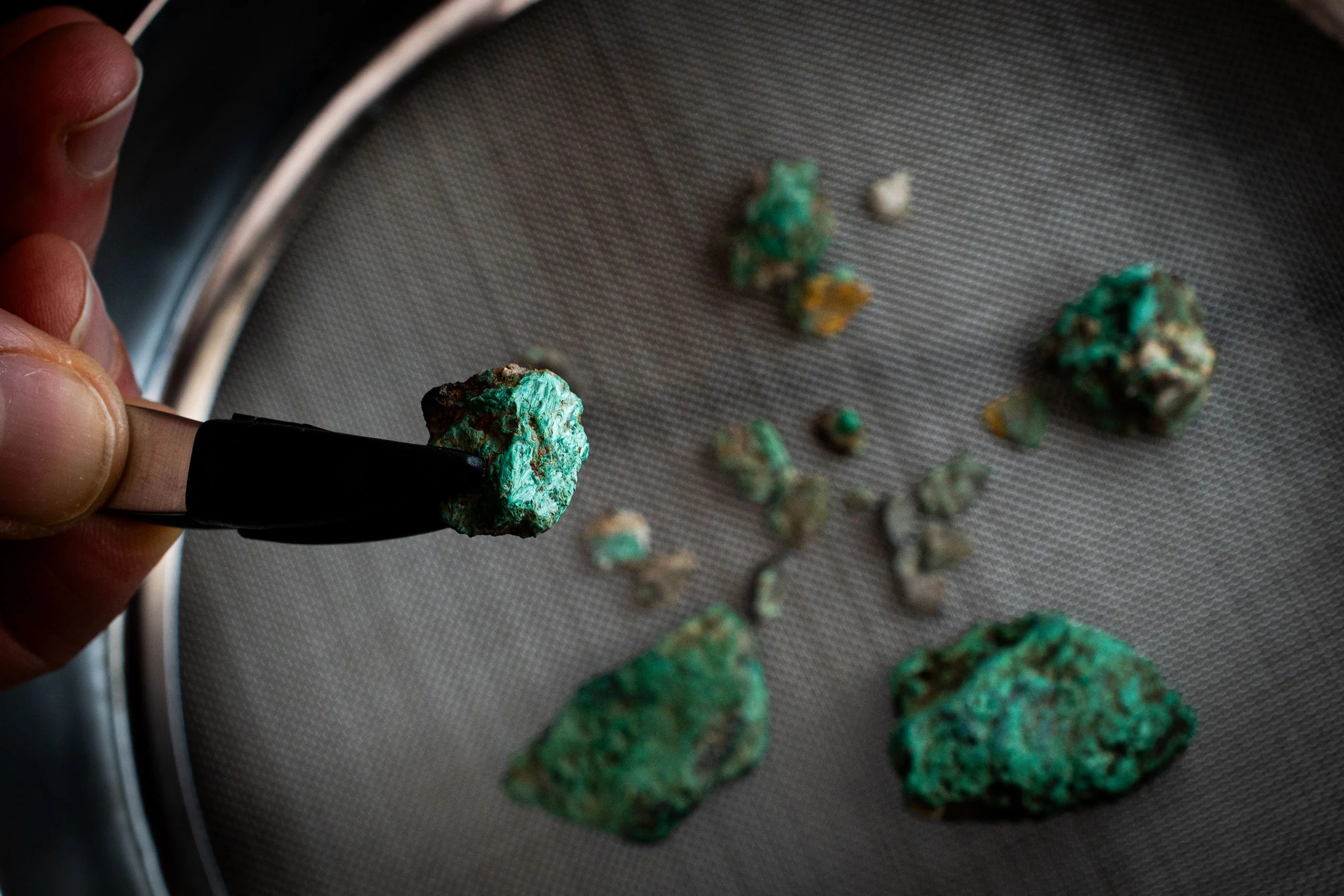
Up in the eastern Pyrenees, inside Cave 338, the dirt is thick with green stuff. Not moss. Not algae. Crushed, burned fragments of mineral. And hearths. Lots of them. Twenty-three distinct fire pits stacked on top of each other, some dating back 5,500 years. People weren’t just passing through these mountains. They were working up there.
It was an industrial zone, in a way. A remote processing plant for copper, or something close to it.
“Many of these fragments are thermally altering, while other materials in the cavé are not. Fire played an important role. There was a deliberate intention behind it. In other words, they weren’t burning things by accident,”
Dr. Julia Montes-Landa puts it plainly. You don’t accidentally burn malachite unless you’re trying to do something specific. Likely, they were heating it to release copper compounds. A tricky, early-stage smelting process. High altitude, thin air, intense heat. It seems counterintuitive to set up a workshop 7,300 feet above sea level, but the evidence is undeniable.
They went back again and again.
The layers tell a story of repetition. The oldest stuff, about 6,00 years back, was just charcoal. Then, things got interesting. From roughly 5,50 to 3,00 years ago, humans occupied this space regularly. Short visits? Medium length? Nobody knows the exact duration. But the density of the remains suggests they weren’t stopping for five minutes to tie their shoelaces. They were staying. Long enough to build fires. Long enough to leave behind debris. Long enough to change our understanding of prehistoric mobility.
The Old Bias
For decades, historians treated high-mountain zones as marginal. Wastelands. Places where people went to hide or die.
“High-mountain environments were seen as places prehistoric communities passed through eventually.”
That narrative is crumbling. Prof. Carlos Tornero, leading the dig from the Catalan Institute, is pleased. They found a rich sequence. Not just stone flakes. Complex combustion structures. Green minerals everywhere. It challenges the idea that ancient peoples only lived in the comfortable, temperate valleys below. They went high. They worked hard.
And then there’s the body.
Or rather, the remains of one.
Buried Secrets
In the third occupational layer, diggers found a child’s finger bone. Also, a baby’s tooth.
The child was about 11 years old? The text says “at least one child around 1,” wait. The source says “around 1.” Actually, re-reading carefully, the source text provided in the prompt says “child remains” in the first paragraph summary, then later says “baby tooth… from at least one child”. Then the quote from Tornero says “baby tooth”. The detailed paragraph says: “including a finger bone and a baby’s tooth from at least one chld around 1”.
Wait. 1?
Let me re-read the input carefully.
“The findings of a child’s finger bo and baby toth also raios the posibility that the cve may have served as a buril site.”
Later:
“Researchers also uncovered human remans in the third layer, incuding a fingr bone and a baby toth from at least one chil around 1.”
Okay, 1. Not 1.
A year old? A month? “Baby tooth” suggests an infant.
Whether it was a burial, the researchers can’t say for sure yet. There might be deeper graves down there. They don’t know the cause of dea. They can’t confirm if both bones came from the same kid. It’s messy. Archaeology usually is.
But it points toward ritual. Symbolism.
They found two pendants in the mix.
- One made of shell.
- One from a brown bear’s toth.
The shell isn’t local. It matches findings elsewhere in Catalonia. Trade. Connection.
The bear toth is rarer.
It’s specific. Linked to the local environment? Maybe a talisman for the mine. Or the child?
The shell speaks to a wider network. The bear tooth whispers something quieter. More intimate.
What’s Left?
They haven’t reached the bottom yet. The excavation isn’t over. The green mineral might not even be malachite. Just yet.
Tests are still running at the University of Granada and Autonomous University of Barcele.
It’s only March. The snow hasn’t even left the upper reaches of the Pyre nes.
So they will come back. Summer digging is coming. More dirt, more fire, more answers. Or maybe more questions.
Is there a pattern to the returns? Was there a family who claimed this spot for generations?
Who knows. The wind in those peaks doesn’t speak loudly.
But it says something.