The ocean is calling. And solar is listening. 🌊
Land is expensive. It’s scarce. It belongs to farms, cities, and mountains. So researchers looked elsewhere. Toward the water. Toward Taiwan.
The Setup
Taiwan is packed. Roughly the size of the Netherlands, yet home to 5 million more souls, mostly squeezed onto landlocked, mountainous terrain. Where do you put solar panels? Not on the hills.
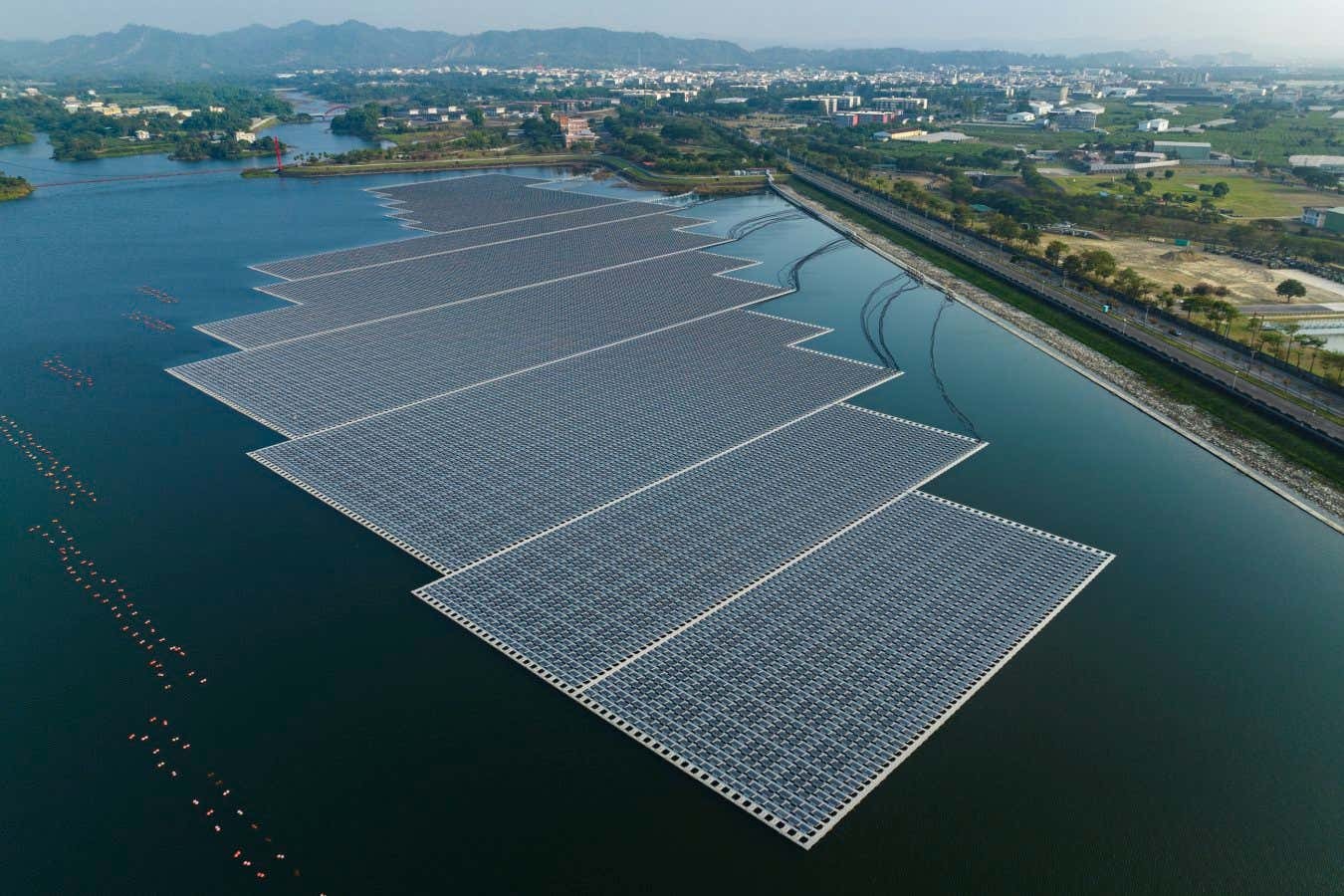
Chenya Energy built one of them instead. In 2021, they launched a 181-megW floating photovoltaic project in the industrial bay of western Taiwan. It sits on 1.8 square kilometers of water. They call it offshore floating photovoltaic.
For a fair test, they compared it to the Taiwan Power Company’s land-based plant. That one is older. Bigger, even (100 MW on 1.4 sq km). But the water project has more capacity, so they normalized the numbers. Excluded the extra 81 MW. Now compare apples to apples.
The Results
Here is the punchline. The floating array produces 12% more electricity.
Cost-wise, the sea bites. Operations are pricier. You’re fighting humidity. Rust. Salt spray. Waves that don’t stop crashing. Maintenance crews jet-ski around clearing driftwood. They scrub panels from narrow walkways. Bird droppings pile up. The salt sticks.
Yet it wins.
Net profit comes in at 11%, versus 8% for the land system. More power offsets the higher bills.
“For carbon reduction… OFPV is much better than land-based,” says lead researcher Ching-Feng Chen. “Installing on sea is difficult, sure. But it pays.”
Heat kills efficiency. Period. Solar panels hate the sun’s temperature. Land heats up. Water stays cool—about 2 to 3 degrees cooler on average. Ocean air is colder still. The wind blows harder.
So the panels stay efficient. The heat never wins.
Why Not Everywhere?
Floating solar isn’t new. Over 1,100 systems float on reservoirs and lakes. Mostly in Asia. China leads. The biggest? A gigawatt installation in Shandong. Huge. Shallow waters help.
Offshore? Harder.
The Taiwan installation rests directly on the seabed during low tide. Buoys hold it up. Anchors drag down. It has to withstand forces that don’t bother ground stations. Construction costs are 30% higher. You need steel that survives the rot. Electronics that survive the surge.
It hasn’t always gone well. In the Netherlands, Shell and Eneco yanked a system after an overheated electrical connector failed. Bad part. Bad day. Other prototypes, however, survive 10-meter waves since 2019 near Holland.
Then there’s the ecological hangover. Floating shades kill oxygen mixing. Light dims for phytoplankton. Aquatic life struggles in the shade.
“If you move further out, the waves get brutal,” says Vincent Bax, who studies this in the Netherlands. “Stay near shore and biodiversity suffers. Trade-off. Always.”
Who Needs This?
Maybe nobody needs this yet.
Chen expects growth only where wind doesn’t work. Think island nations with intense sun but little offshore wind. Japan. Indonesia. Caribbean countries. Taiwan itself.
Combine wind and floating solar across 1% of the suitable ocean, and it covers 30% of global demand by 2050. A massive potential. But it stays niche for now.
The study ignores long-term storm wear and tear. Storms eat floating tech. Waves batter anchors. Will the panels last two decades out in the churning open ocean?
Nobody knows. Not really.
Location matters most. Get it right and the profits sing. Get it wrong, and you’re fishing out corroded metal.
We have the technology. The math checks out. The water is right there.
Maybe the ocean is waiting for us to commit. 🏝️