We have all experienced the frustration of a smartphone battery draining rapidly or a device overheating during intensive use. A significant portion of this energy loss stems from how electronic circuits and memory chips operate. As these components process data, they consume power and generate heat, creating a bottleneck for battery efficiency.
A new development from the Institute of Science Tokyo (Science Tokyo) challenges the traditional limits of miniaturization. Researchers have created a memory device that defies a long-standing rule in electronics: as components shrink, they typically perform worse. This new technology actually improves as it gets smaller, paving the way for devices that could last months on a single charge.
The Problem with Shrinking Memory
Computer memory stores data by controlling the flow of electricity through materials, representing information as binary 0s and 1s. To reduce power consumption, engineers have long sought ways to make these components smaller and more efficient.
One promising approach is the ferroelectric tunnel junction (FTJ), introduced in 1971. FTJs use ferroelectric materials, whose internal electric polarization can be reversed to store data. This method requires significantly less electricity than traditional memory types. However, a major obstacle remained: as scientists shrank these devices, the materials often lost their ferroelectric properties, causing performance to degrade. This limitation halted further miniaturization for decades.
The Hafnium Oxide Breakthrough
The path forward emerged in 2011 with the discovery that hafnium oxide, a material already widely used in semiconductor manufacturing, retains its ferroelectric properties even at nanoscale thicknesses.
Building on this finding, Professor Yutaka Majima and his team at Science Tokyo engineered a memory device just 25 nanometers wide —approximately one three-thousandth the thickness of a human hair. This extreme miniaturization was not just a feat of engineering but a strategic move to overcome a persistent technical hurdle: electrical leakage.
Solving the Leakage Issue
In ultra-small devices, electricity often leaks through the boundaries between tiny crystals within the material. These “grain boundaries” have historically prevented memory chips from becoming smaller and more efficient.
Instead of trying to eliminate these boundaries entirely, the researchers took a counterintuitive approach:
* Extreme Miniaturization: By making the device sufficiently small, they reduced the overall impact of grain boundaries on performance.
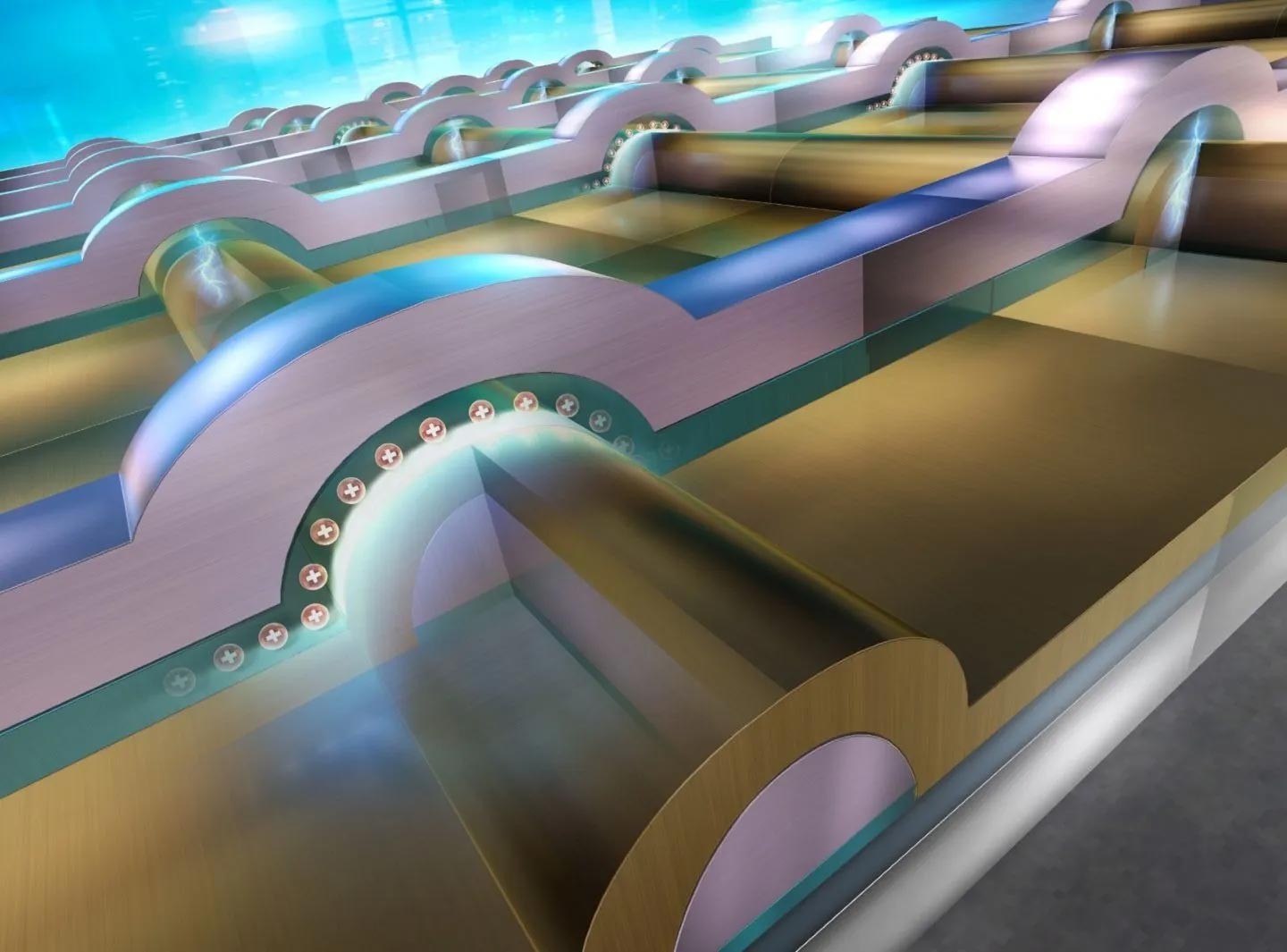
* Novel Electrode Structure: They developed a new heating method for the electrodes, causing them to form a natural semicircular shape. This structure mimics a single crystal, significantly reducing the number of boundaries where leakage could occur.
The result was a device that not only functioned at the nanoscale but performed better than its larger counterparts. This challenges the conventional wisdom that smaller electronics inevitably suffer from higher error rates and instability.
Why This Matters for Future Technology
This breakthrough has profound implications for the future of consumer electronics and artificial intelligence:
- Extended Battery Life: Devices such as smartwatches and hearing aids could operate for months on a single charge, eliminating the need for frequent replacements.
- IoT Expansion: Networks of connected sensors in smart cities or industrial settings could run indefinitely without maintenance, as they would require minimal power.
- Energy-Efficient AI: Artificial intelligence systems, which currently demand massive amounts of energy for processing, could utilize this low-power memory to achieve faster speeds with a fraction of the energy cost.
Crucially, because hafnium oxide is already compatible with existing semiconductor manufacturing processes, this technology can be integrated into current production lines without requiring a complete overhaul of the industry.
A New Perspective on Limits
Professor Yutaka Majima described the research process as “walking in the dark,” challenging assumptions that seemed like fundamental laws of physics. By questioning the idea that “smaller means worse,” the team discovered a new paradigm in materials science.
“By questioning traditional assumptions and exploring new ways to overcome these barriers, we were able to discover an entirely new perspective.”
This achievement does more than improve battery life; it redefines the potential of miniaturization. As this technology moves from the lab to commercial application, it promises a future where our devices are not only more powerful but also sustainably efficient, reducing both user inconvenience and environmental impact.