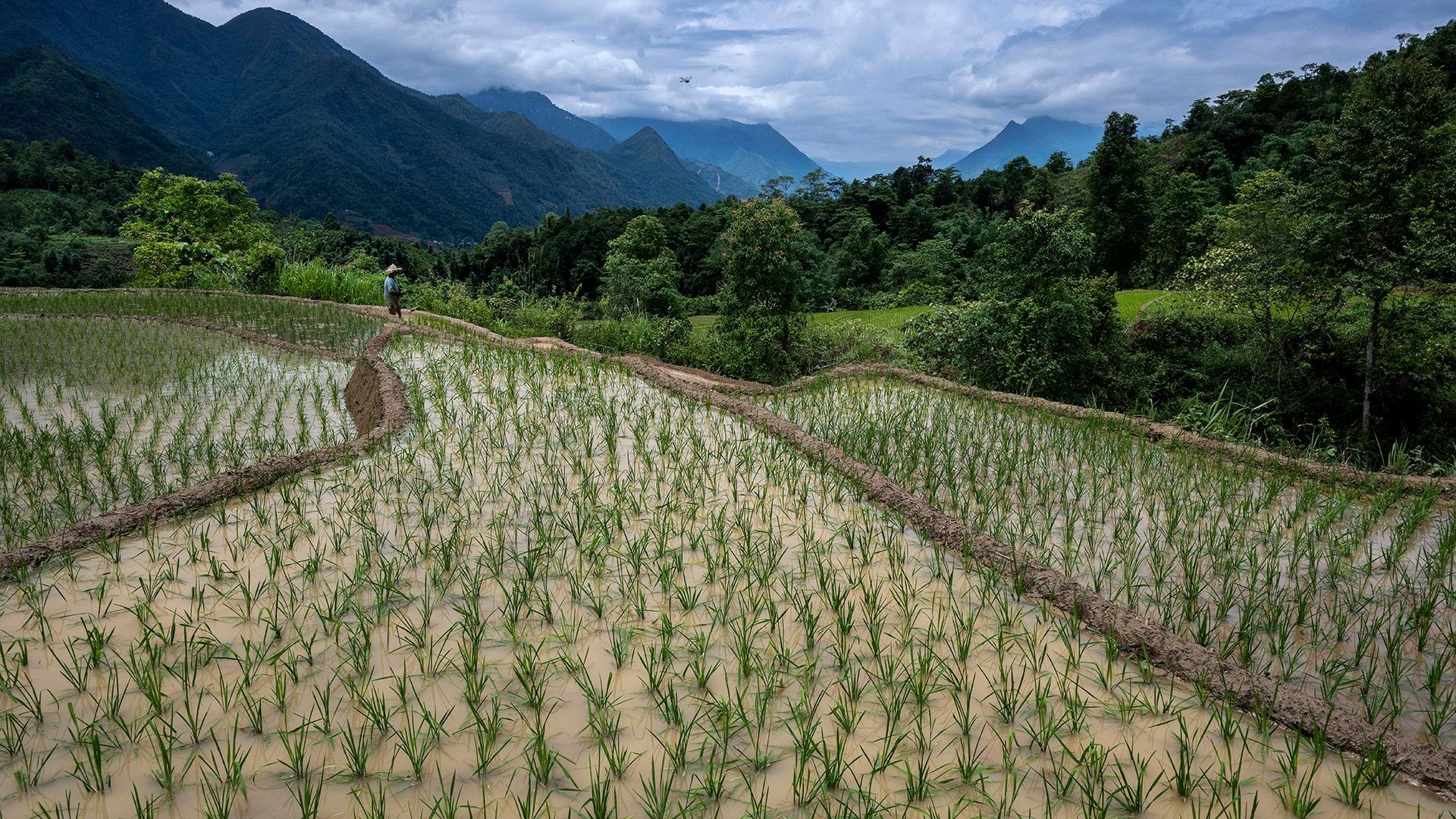
Rice is cooked. Literally. And metaphorically. The clock is ticking louder than any evolutionary mechanism can answer. New data shows global warming is moving 5,000 times faster than rice can possibly adapt. That number is not a rounding error. It’s a cliff edge.
For the past 9,00 years, humans have coaxed rice out of the earth. We’ve bred it. Moved it. Tinkered with it. But the upper temperature limit? It hasn’t budged.
Nicolas Gauthier, a researcher at the Florida Museum of Natural history, put it plainly.
We don’t want to downplay human ingenuity, but we might be closer to the wall than we think.
That wall is around 104 degrees Fahrenheit. Or 40 Celsius. Hit that and the photosynthesis shuts down. Pollen dies. Grains shrink. It doesn’t matter if the roots are deep. If the air gets that hot, the plant stops working.
Rice feeds more than half the planet. Ninety percent of that cultivation sits in Asia. Already, some fields are failing. The World Economic Forum calls it “severe warming.” I’d call it a breakdown.
Water plays tricks too. Sea levels rise, salt floods low-lying paddies, and the crop chokes. Shifts in wet and dry seasons scramble planting cycles. You need predictable water. You can’t have it.
Gauthier’s team looked at archaeological sites. Digging into a millennium of farming history. They saw rice moving into cooler zones when farmers bred cold-tolerant strains. Humans adjusted. We got clever.
But the heat ceiling? Fixed.
In Communications Earth & Environment, the researchers noted rice only grows where the annual mean stays below 82.4°F (28°C) and summer highs dip under 91.4°F (33°C). We are breaking those averages.
So we move, right? Shift the farms northward. Into cooler territories.
Maybe.
You can theoretically keep total global production flat by moving cultivation zones. But that is a fantasy for the people living in the south. It does nothing for the families in South Asia relying on tomorrow’s meal today. You don’t “pick up and move” a farming tradition built over centuries. You lose it.
The land doesn’t shift. The saltwater comes up. The heat stays.
And the billions depending on that white grain? They don’t have 5,000 generations to wait for an evolution that might not come.
What do we do when the staple stops growing? 🌾