


It ends up on the pavement. That is how most of us dispose of leftover dinner.
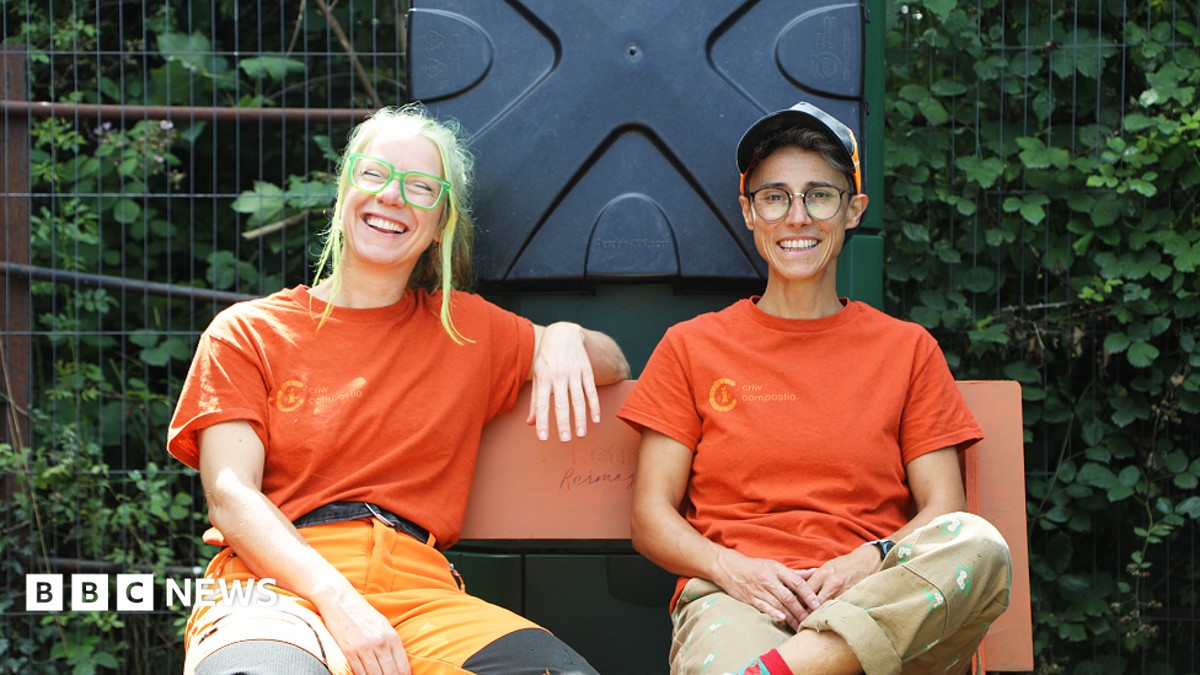
Steph Robinson and ffin Jordao see something else. They see fuel. Specifically, they see high-quality, peat-free compost ready for local soil.
When you bin food scraps, are you throwing trash away? Or are you giving a valuable resource back to the earth right outside your door? For the founders of Criw Compostio, the answer isn’t even a question. The second option is the only logical one.
The Closed-Loop Cycle of Community Composting
Criw Compostio isn’t just collecting trash. It’s operating a tight economic circle. They gather organic matter from cafes and small businesses. The businesses pay a fee. In return, Criw turns that waste into rich earth.
This compost isn’t sold off to anonymous retailers. It doesn’t end up on Amazon or eBay.
It goes to local growers. Those growers put food on the plates in those same cafes. Customers eat the food. Leftovers go back to Criw. The cycle restarts.
“We turn them into something that adds jobs,” Steph said. “We create nutritious soil. The whole thing stays here.”
A University Born Green Tech
Where did this come from?
Machynlleth, a small market town in Powys, Wales, might not look like the headquarters of an environmental revolution. But just outside the town lies the Centre for Alternative Technology (CAT). Founded over 50 years ago, it’s a hub for off-grid living and environmental research.
Steph, 49, came from England. Her background includes systems analysis and project management. She runs short courses at CAT. ffin, 43 from Portugal, is a biologist who works in the department. They met here. The partnership stuck.
“Criw Compostio grew out a project I set up in 2019,” Steph said. They started with a Shared Prosperity Fund grant. That initial funding worked so well, they expanded.
Now they focus on research and even run a composting school. The goal? Teach other communities how to replicate the model.
Hyper Composters and Rat-Proof Systems
The secret sauce isn’t magic. It’s technology and time.
Criw collects waste twice a week. This includes cafe leftovers, wood shavings from carpenters, and bedding from pets like rabbits and guinea pigs. They don’t transport it far. The processing site is right in Machynlleth.
Inside are what Steph calls “hot, rat-proof hyper composters.” These machines heat up the mixture. It turns waste into something unappealing to pests. And it does it quickly.
It still takes about a year to fully cure the material, though. When it’s done? It’s award-winning. The quality holds up.
“The frame we work within means this has to stay local,” Steph emphasized.
Beyond Business: Supporting Local Food Security
Most households in Powys don’t use Criw directly. Household food collection is mandatory in Wales and handled by the local council. Criw focuses on commercial waste. But they don’t ignore homeowners.
They run workshops for people wanting to compost in their own gardens. They advise allotment holders. They support the “growing revolution.”
Interest has surged. The cost-of-living crisis pushed people toward growing their own vegetables. Allotments are hot property.
“Interesting how much productivity can come from even a small garden,” ffin noted.
Their biggest customers aren’t households. They are the people selling at the Machynlleth farmers’ markets. The local whole food shops. Direct-to-restaurant suppliers. These growers rely on soil that didn’t strip peat bogs or ship nutrients from across the ocean.
The True Value of “Waste”
The team knows what they’re dealing with. Six board directors. One dedicated “compost caretaker.” A rolling staff of 15 volunteers. These volunteers get paid in compost, learning the craft as they earn their fuel for the season.
They also consult an advisory panel of soil ecology academics. It’s a mix of practical know-how and scientific rigor.
But the core belief is philosophical.
They reject the term “food waste.” To them, it’s not waste at all. It’s a resource that’s being extracted from the community. And that’s wrong.
“We know they are really valuable. We’re going to turn them into nutritious food.”
So the next time you throw leftovers out, pause. Look at the bin. It’s not the end. It’s the start of something else entirely. Or maybe it is. You decide.


