People fixate on the August 12 solar eclipse. Totally reasonable. It’s a big deal for the Northern Hemisphere. Totality slices through eastern Greenland, western Iceland, and northern Spain. A deep partial view reaches most of Europe. North America sees a small bite out of the sun. Then the Perseid meteor shower peaks. Perfect moonless skies follow immediately after. It feels like a celestial double-feature.
The trouble?
This mindset trains us to think skywatching only matters on specific countdown days. We turn astronomy into a checklist. Peaks. Windows. Deadlines. It works for eclipses. It doesn’t work for the Perseid meteor shower.
Why start watching the Perseids in July instead of August?
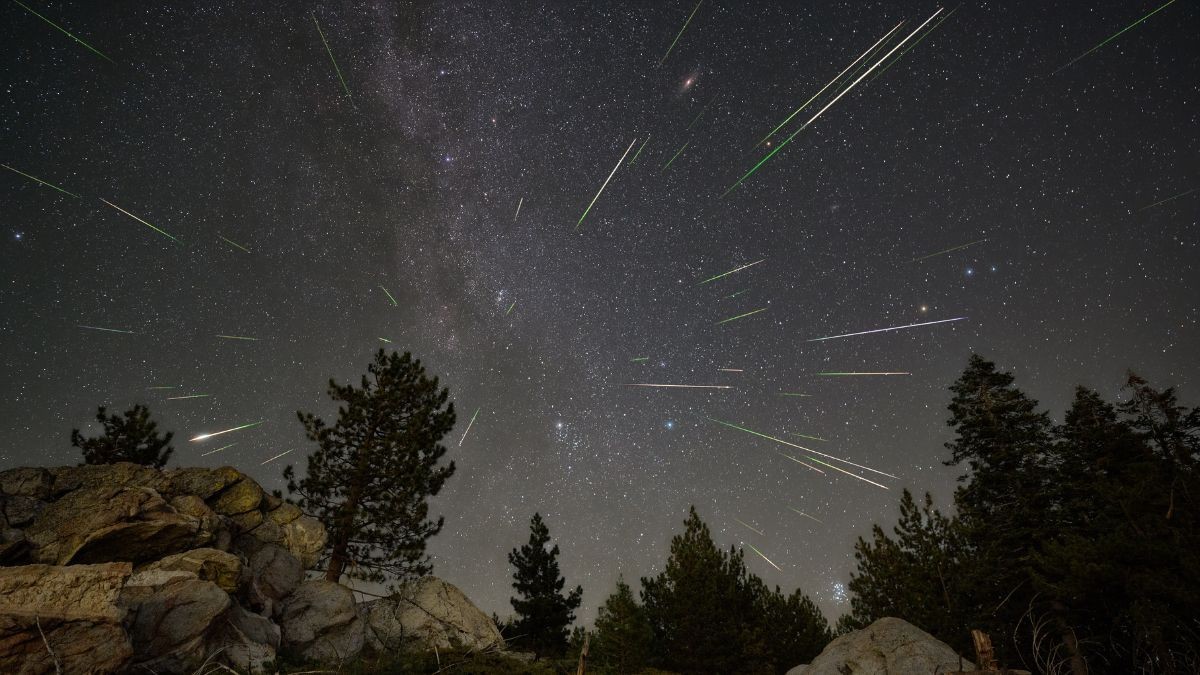
The Perseids begin now. Actually. Right now. The shower runs from July 17 to August 24. Sure, it hits a strong maximum on the night of August 12-13. Ideal dark skies could yield 50-plus meteors an hour. If you only stargaze once a month, aim for that night. Got more time? Start hunting immediately.
There is a rule: The best meteor is the first one.
In the weeks before the peak, expectations are lower. There is no pressure. You aren’t checking the forecast with anxiety. You step outside, maybe to get water, and a streak hits your peripheral vision. It feels accidental. Magic, not data.
I see this happen most often when I’m giving up for the night. Last summer I was dragging my telescope indoors. The session had been boring. A few globular clusters. Nothing special. I paused at the door to look at the stars one last time—and saw a bright Perseid whizz over the rooftops. Summer had arrived when I wasn’t even trying.
What creates the Perseid meteors?
Earth slowly enters the debris trail of Comet Swift-Tuttle. The comet last visited the inner solar system in 120 years ago (1992). It returns in 2126 until then it leaves dust behind. We run into this cloud for weeks.
The density increases as August approaches. The August 12-15 peak hits the densest part. In mid-July though the rate is low. Only a handful an hour. That is exactly why early Perseid meteor shower sightings feel special. You stumble upon them.
These early meteors also tend to be dramatic. The shower produces famous fireballs. Large. Vivid. Some leave glowing trails that last several seconds. Even when rates are low, a single fireball makes the night worthwhile.
Which meteor showers can you see this week?
Start looking after midnight. That’s when Perseus—the radiant constellation—climbs higher in the northeast. Shooting stars appear everywhere in the sky, obviously. If the streak’s path points back to Perseus, you caught a Perseid.
But you are not just looking for Perseids. July is quietly packed with other activity.
- Southern Delta Aquariids: Strengthening now. Roughly 25 per hour for southern latitudes under dark skies. Northern observers see fewer since the radiant stays low. These meteors are softer. Medium speed. Fewer fireballs.
- Alpha Capricornids: Active early July to mid-August. Technically weak. A handful of meteors usually. But they compensate with unusually bright, slow fireballs.
There is a catch.
Both of these peak under the Buck Moon on July 31. A nearly full moon washes out the faint stuff. But fireballs? They punch through the glare.
The best view comes when you stop trying so hard.
How to watch without the moon ruining it
I usually start the season by accident. I linger outdoors on warm nights. Stay up too late. Use my smart telescope to snap deep-sky photos while half-expecting a streak. Do it now. Before the moon waxes. Definitely before early August, when a waning moon rises just as meteor activity spikes. That is the worst timing for observation.
Sky events July 17–24: The Perseid meteor shower window
The new moon passed on July 14. This weekend marks the return of the crescent.
Look west during dusk Friday, July 17. A 16%-illumin waxing crescent hangs left of Venus. Watch it creep higher each evening. When it sets, the rest of the night stays dark. That window after moonset is prime. Activity rises as Earth rotates into its orbital path, facing more oncoming dust.
The Summer Triangle —Vega, Deneb, Altair—hangs overhead in the dark hours. Easy to find. Good for beginners. Saturn rises before midnight, dominating the southeast by dawn. Mars joins it, along with the Pleiades cluster.
Focus on Perseus. It rises slowly. Don’t stare at it directly. Look across the sky. Wait for the flash.