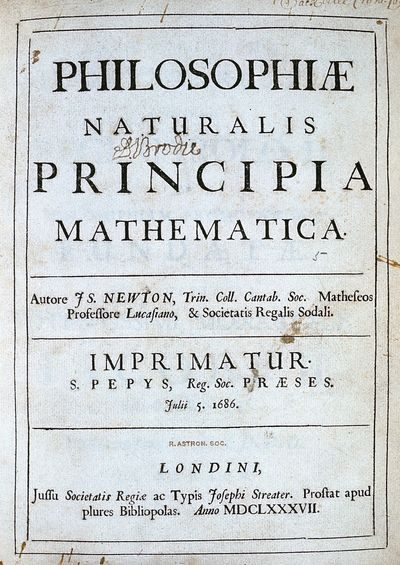
Isaac Newton didn’t just write equations. He gave us the rulebook for how the universe actually moves. Before 1687, when he published Principia, physics was a mess of conflicting ideas. Newton cleaned it up. He laid out three rules that still govern every object with mass, from a coffee cup sliding off a table to a planet orbiting a star. These are the laws of motion, and they form the bedrock of classical mechanics.
You don’t need a physics degree to understand the first one. It’s the most counterintuitive.
Why objects keep moving (or staying still)
Newton’s first law is often called the law of inertia. It states that an object at rest stays at rest, and an object in motion stays in motion with the same speed and in the same direction unless acted upon by an unbalanced force.
Think about a hockey puck on ice. If you slap it, it glides for a long time. It doesn’t stop because it “wants” to. It stops because friction, an external force, fights its motion. In a perfect vacuum, with zero friction, that puck would slide forever. That’s inertia. It’s the tendency of matter to resist changes in its state of motion.
This concept breaks down our everyday intuition. We live in a world full of friction. Doors close. Cars stop. Balls roll to a halt. So we assume stopping is the natural state. Newton flipped that. Motion is just as natural as stillness. You don’t need a force to keep something moving. You only need a force to change how it moves.
What this means for everyday life
This isn’t just abstract theory. It’s why you lurch forward when a car brakes suddenly. Your body wants to keep moving at the car’s previous speed. The seatbelt provides the unbalanced force that stops you. It’s why you need to push a heavy box to get it moving, but once it’s sliding, it takes less effort to keep it going (though friction is always working against you).
Understanding inertia helps explain everything from why astronauts float in orbit to why you need a strong engine to move a massive truck. The mass of the object determines how much inertia it has. More mass means more resistance to change. A feather is easy to move. A train is not.
The first law sets the stage. It defines the baseline. If no net force acts on an object, nothing changes. From there, Newton builds the rest of the framework.

Why your coffee cup stays still while the Earth moves at 1,000 km/h
It feels obvious to us now. But for centuries, it wasn’t.
If you drop a ball, it hits the ground. If you push a box and stop, the box stops. Everyday life screams that motion requires a push. Stop the push, stop the motion. This is Aristotelian mechanics. It matches what your eyes see. It is intuitive.
It is also wrong.
The law of inertia, often called Newton’s first law, flips this logic. An object at rest stays at rest. An object in motion stays in motion at a constant speed in a straight line. Unless a force acts on it. No push needed to keep going. No push needed to stay put.
In classical Newtonian mechanics, there is no important distinction between rest and uniform motion in a straight line.
This is the part that trips people up. “Rest” is just “motion” seen from a different angle. If you are on a train moving at 100 km/h and you toss a coin straight up, it falls back into your hand. You see it go up and down. A person standing on the platform sees it trace a parabola. Both are correct. The coin’s state hasn’t changed. The observer has.
Galileo Galilei nailed this down. He didn’t just think about it; he rolled balls down inclined planes. He watched them climb the other side. He realized that if there were no friction, the ball would never stop climbing. It would keep going forever. That was the breakthrough. It wasn’t a guess. It was a deduction from experiment.
Why did this matter so much?
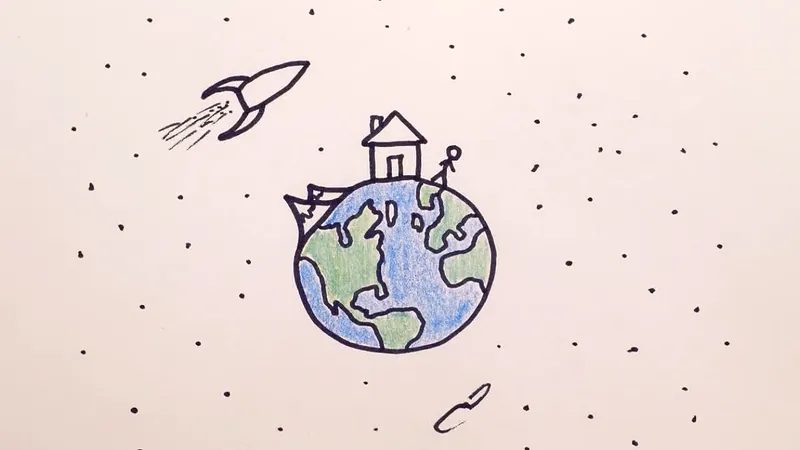
Imagine the Earth is spinning. Imagine it is orbiting the Sun. According to common sense, the ground should be flying away from our feet. We should feel the wind. We should be left behind.
We don’t.
Why do we not sense the Earth’s motion?
Because we are moving with it. The air, the ground, and your body all share that velocity. The law of inertia explains why the world feels still. We retain our motion. The Earth appears at rest to us because we are part of the system.
It wasn’t always accepted. This was a central issue of scientific contention. People resisted the idea that motion doesn’t need a cause to persist. They clung to the Aristotelian view because it matched daily experience. Friction and air resistance are everywhere. They mask the true nature of motion. Newton’s formulation clarified this: bodies stop not because they “want” to stop, but because unbalanced forces like friction act on them.
Once Newton sorted out the details, the picture became precise. The Earth’s surface isn’t moving in a straight line at a constant speed. It is rotating. That rotation creates small deviations. We feel them as the Coriolis effect or as changes in apparent weight. But the core principle holds. Inertia is the baseline.
The distinction between rest and uniform straight-line motion is an illusion of perspective. They are the same state of motion, viewed by different observers. One moves with the particle. The other moves at constant velocity relative to it. This equivalence is the foundation of classical mechanics. Without it, the rest of physics doesn’t work.
How Newton’s second law connects force, mass, and acceleration
Newton’s second law defines the quantitative link between force and the change in motion of a body. It states that the time rate of change of a body’s momentum equals the force imposed on it in both magnitude and direction. Momentum itself is a vector quantity, calculated as the product of mass and velocity. Because it has direction, a force can alter the magnitude of that momentum, its direction, or both simultaneously.
For objects with constant mass, the law simplifies to the familiar equation F = ma. Here, force and acceleration are vector quantities. If a net force acts on a body, it accelerates. If there is no acceleration, there is no net force. This principle stands as one of the most important in all of physics.
What happens when forces collide in the action-reaction pair
Newton’s third law describes the interaction between two bodies. It establishes that for every action, there is an equal and opposite reaction.
Newton’s Third Law: Action and Reaction in Practice
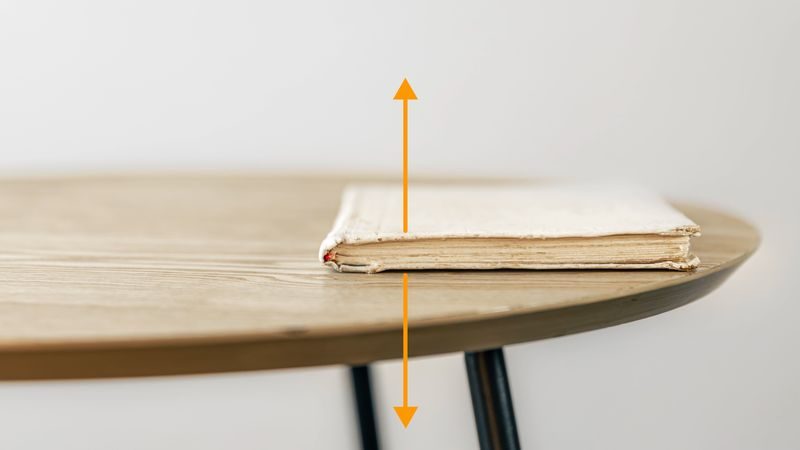
Newton’s third law dictates that forces always come in pairs. When object A pushes on object B, object B pushes back on object A with equal force, in the opposite direction. This is the law of action and reaction. It’s not just a theoretical abstraction; these are real physical interactions.
Consider a book lying on a table. The book’s weight presses down on the surface. In response, the table pushes up on the book with an identical force. Why? The book’s weight causes the table to deform slightly. That tiny compression turns the table into a makeshift spring, pushing back against the weight. This equal and opposite reaction keeps the book stationary.
This principle applies whether objects are standing still or moving. If a net force exists, the object accelerates (per the second law). If forces cancel out, the object remains in equilibrium. No acceleration? No net force. It’s a direct deduction.
From Copernicus to the Scientific Revolution
Newton published these laws in 1687 in Philosophiae Naturalis Principia Mathematica, or the Principia. But he didn’t build from scratch. The groundwork started in 1543 when Nicolaus Copernicus proposed the Sun, not Earth, as the center of the universe.
Between Copernicus and Newton, figures like Galileo, Johannes Kepler, and Descartes dismantled the old Aristotelian view. They laid the framework for understanding a heliocentric cosmos. Newton’s Principia synthesized this new science. He crafted his three laws specifically to explain why planetary orbits are ellipses, not perfect circles. He succeeded. But the implications went far beyond orbital mechanics. This entire shift, from Copernicus to Newton, marks the Scientific Revolution.
Why Newton’s Laws Still Matter
In the 20th century, physics moved on. Quantum mechanics and relativity became the new fundamental frameworks. Newton’s laws are no longer the ultimate truth.
But they still work. For everyday objects and speeds, Newton remains accurate. The exceptions are extreme: subatomic particles like electrons, or objects moving near the speed of light. In those regimes, you need quantum mechanics or relativity. For larger bodies and slower speeds, those newer theories simplify right back to Newton’s laws. They didn’t break the old rules; they expanded them.
So, is Newton obsolete? Not really. Just limited. And for most of what you interact with daily, his laws still hold up.