The story everyone knows is simple. It is scary. A train appears on screen. The audience panics. They scream and flee the room as if the locomotive is actually about to crush them.
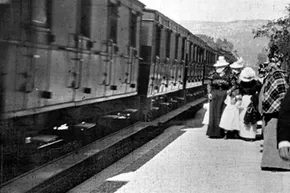
This tale traces back to January 25, 1896. The Lumière brothers showed L’Arrivée d’un Train en Gare de La Ciotat at the Salon Indien du Grand Café in Paris. It was a 50-second clip. Silent. Unedited. One continuous shot filmed on a cinematographe.
Was it the first movie ever? No. The Lumières had screened ten similar shorts just a month earlier. But it was one of the first public demonstrations of moving images for a wider audience.
Did the crowd actually panic?
Probably not.
Film historians Martin Loiperdinger and Tom Gunning have dug through the records. They found zero firsthand accounts of people running out of the building in terror. There was astonishment, yes. Surprised gasps, likely. But no mass exodus.
Ray Zone offered a different angle. He didn’t buy the total chaos narrative either. However, he noted the timing. A runaway locomotive had crashed at a Paris station just a couple of months before the screening. Fear wasn’t out of the question, even if the “running for their lives” version is an exaggeration.
Why does the legend persist?
Because it makes a good story.
It frames cinema as a magical, almost primitive experience that gradually tamed us. It lets us chuckle at the idea of sophisticated, urban Parisians regressing into a state of near-primitive fear. It highlights how quickly technology becomes invisible to us. What was shocking in 1896 is background noise today.
The legend serves a purpose. It marks the distance between “new and terrifying” and “second nature.”
We know the Lumières filmed everyday scenes. Trains, workers, street life. L’Arrivée d’un Train shows a train pulling in, passing close to the left of the camera, and stopping to unload passengers. It’s mundane. That’s the point.
So, did the audience run? The evidence says no. But the feeling of awe? That’s real. The shock of seeing a moving image project light onto a wall? Real. The specific detail of them fleeing? Almost certainly invented.
We don’t need the panic to appreciate the moment. The magic was in the projection, not the escape.