Jurassic Park lied to us.
Again.
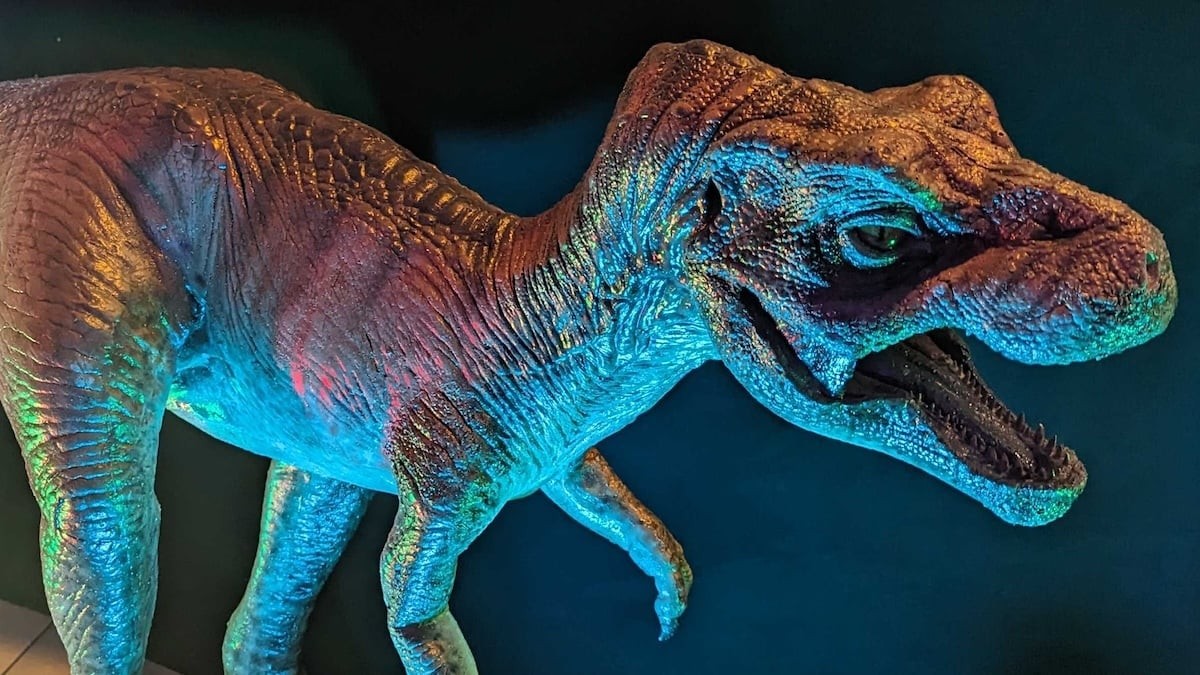
In that second flick, the hunters snag a baby T. rex. They use it as bait. Simple, effective, cinematic.
Reality is different. The baby was tiny. Smaller than a cat. And it wasn’t alone. The nest was likely crawling with dozens of its siblings.
Would one loss have triggered a parental meltdown? Probably not. Parents likely viewed mortality as just another Tuesday. Losing one or two cubs didn’t warrant throwing a research trailer off a cliff for attention.
Why update the timeline? Because paleontologists found the truth, buried in museum drawers.
The discovery is rare. Vanishingly so.
Nick Longrich from the University of Bath leads the charge. His team dug through collections most people ignore. They weren’t looking for giants. They were hunting for small, isolated bones. The stuff science usually skips.
“Paleontologists overlook these,” Longrich told ScienceAlert. “We favor the big skulls. The complete skeletons.”
It’s bias. Small bones are hard to study. Easier to label “unknown” and shove them back in the box.
Longrich’s team opened those boxes.
Expecting scraps from small dinosaurs. They found the foot bone of the king.
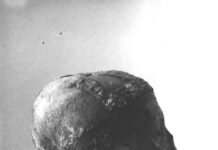
It was a third metatarsal. Middle of the foot. Theropod structure. But the surface told the real story. It was porous. Full of microscopic holes.
Why?
Blood vessels.
When a bone grows fast, it needs fuel. Those vessels pumped nutrients to cells building tissue. Dense vascularization means rapid growth. Which means immaturity.
Comparing it to other fossils, the fit was obvious. Only one species matched those traits.
A T. rex.
Not an adult. Not even a juvenile.
The smallest ever found.
That one bone opened a door. The team started re-examining other fragments. Teeth. Bones. Many fit the same pattern.
Eric Snively, a paleontologist at Oklahoma State, was surprised by the consistency. The baby’s foot bone had adult traits. Just narrower.
And the teeth?
Chunky. Worn down.
Babies were already biting through bone. Just like the 10-ton adults crushing Triceratops. No milk-teeth phase. Carnivory from day one.
These finds rule out Nanotyrannus as a separate species. They also prove these weren’t just embryos stuck inside an egg. This was life. Outside the shell.
The size estimate changed everything.
About 75 centimeters long. Roughly 30 inches.
Weight? Maybe 2.5 kilograms. 5.5 pounds.
If we scale back to hatching day, perhaps lighter. Around 1.7 kg. Much smaller than old estimates suggested. Those old theories placed hatchlings at a meter long. We were way off.
Small baby means small egg.
Small egg means you need many eggs to keep the species alive.
Longrich’s team calculated 20 to 30 eggs per clutch.
Think about that.
No complete T. rex egg has ever been found, but the math is telling.
Reproduction usually follows one of two paths.
r-strategists : Have a lot of babies. Don’t baby them. Most won’t survive. Rodents. Tuna. T. rex?
K-strategists : Few babies. High investment. Whales. Humans. Birds.
Since modern dinosaurs (birds) are K-strategists, scientists assumed T. rex parents hovered over the nest. Protecting the young. Feeding them.
The new data says otherwise.
Twenty babies at a time suggests an r-strategy. Dump the load. Hope for the best.
But it isn’t black and white. Longrich sees this as a transition. A bridge between crocodiles and birds.
During the Jurassic and Cretaceous, parental care evolved slowly.
T. rex wasn’t fully committed to either side. It had reptile-sized clutches. But also traits leaning toward bird-like care.
A mix.
The parents might not have abandoned them entirely, but they certainly didn’t treat them like fragile pearls. The odds were stacked against each individual hatchling.
The big takeaway isn’t just size. It’s the shift.
How life managed reproduction when the planet was changing.
We still have so many drawers unopened. So many bones mislabeled. The giants get the statues. The babies get the dust.
Until we stop looking only for the big things, the small truths remain hidden.