For 224 years, the display was wrong. A stout, bearded man stood behind the glass. Or at least that is who we were told to picture.
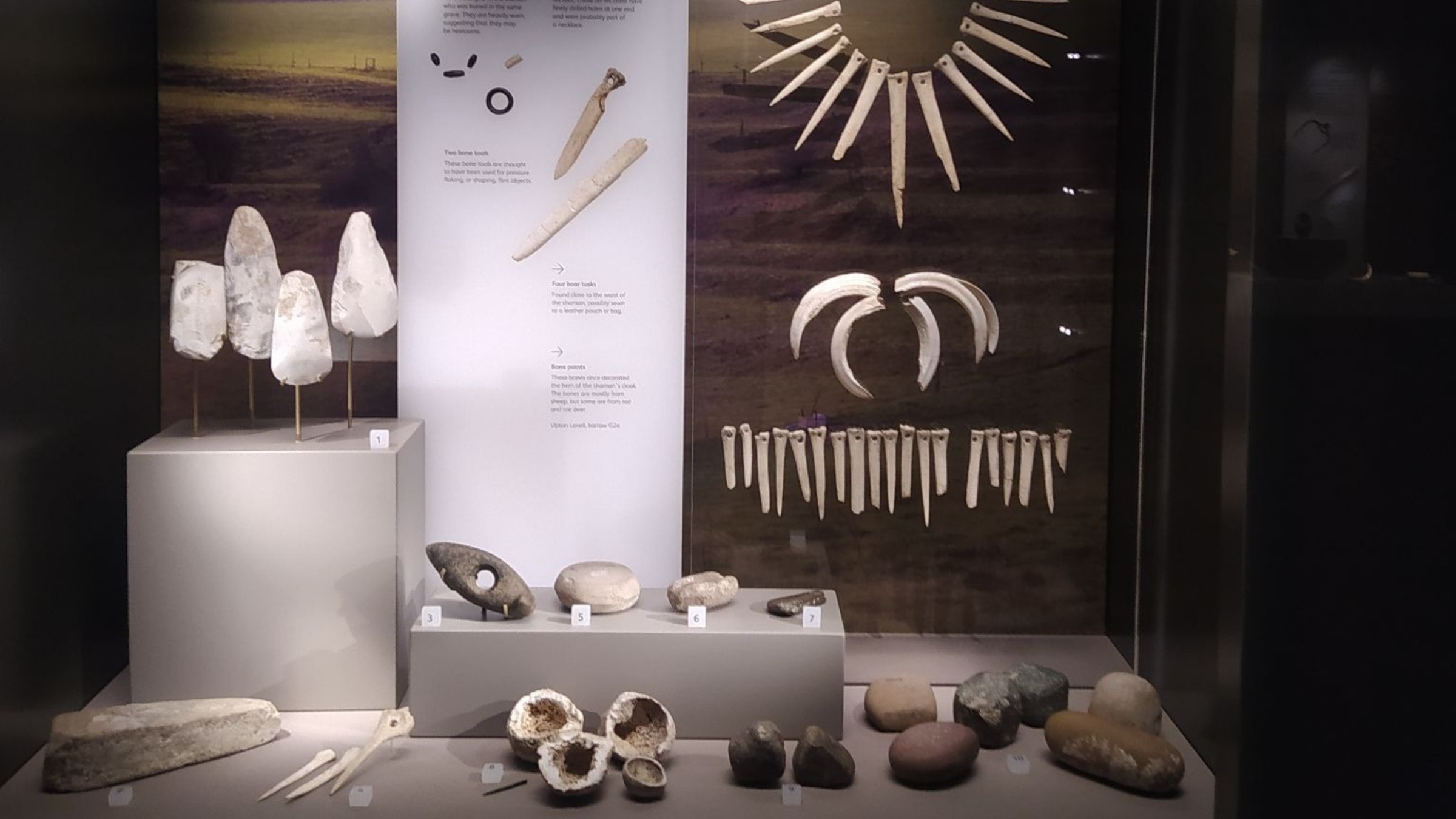
The remains were pulled from the earth in 1801, near Stonehenge in England. Lush with grave goods. Axes, gold traces, a ceremonial cloak of bones. William Cunnington dug them up and looked at the large bones.
“From the largeness of the bones… the burial appeared to be a stout man.”
He wrote that down. And for two centuries, nobody checked. We just assumed. Men lead. Men forge metal. Men wear the cloak. It was a simple world view, rigid and comfortable.
Until DNA spoke.
Researchers at the Francis Crick Institute got into the sample. They weren’t looking for sex chromosomes initially. Ancestry was the goal. But the code came back as XX. Not XY. A woman.
To be sure they tested a tooth. Then a toe. Same result. No second body in the grave. Just one woman, long buried and misunderstood.
David Dawson, who runs the Wiltshire Museum where the artifacts sit, didn’t hold back on the impact.
“It completely tears up previous assumptions. Here we have smoking gun evidence.”
Metalworking was the aerospace engineering of its day. The “smoking gun” matters.
Who was she? Roughly four thousand years old in terms of burial. She stood about five foot four. That was tall. Very tall for a woman back then. She died around age forty-five.
Look at the bones. The right wrist was ruined by arthritis. The left one? Fine. Why the imbalance? Repetition. Twisting tools. Hammering. Her body tells the story of a craftsperson who worked hard. A goldsmith. A shaman. Both? Maybe.
In 2022, researchers linked her to gold leaf techniques. Covering things in gold. A delicate, magical trick.
“A secret method known only to few people,” said archaeologist Susan Greaney.
Magic isn’t separate from craft here. The ability to transform metal felt like power. Real power. The kind that gets you a high-status burial with stone axes and pierced bones.
She was an outlier in height but central in skill. And she wasn’t the first.
History has a habit of seeing a beard where there was none. An elite warrior in Sweden buried with weapons was read as a Viking chieftain. DNA showed otherwise. High-status individuals in Copper Age Spain were mislabeled for the same reason. Assumption is a dangerous lens.
We built the narrative on bones size and weapon presence. We projected modern, or perhaps medieval, rigid gender roles onto a past that might not have held them. Or simply ignored the evidence.
Lisa Brown, the museum curator, notes this rewriting is necessary.
“Putting women front and centre in our understanding.”
It’s about time.
The exhibit will likely change. The beard goes. The narrative shifts. We are left with a robust woman who shaped gold and held ritual authority, buried near the most famous stone circle in the world.
Why did it take two centuries to read the biology?
Perhaps because seeing her required unseeing ourselves. We are used to the male leader. The female exception. But looking at her arthritis, her gold, her stature, the exception seems like the norm all along. We just hadn’t looked close enough.