Fuel. It’s the lifeblood of orbiting machinery.
Right now, satellites in high geosynchronous orbit just run out. Then they die. Or get moved aside. Becoming junk.
DARPA wants to change that math.
After years of slipping timelines and contractor exits, the Robotic Servicing of Geos synchronous Satellite (RSGS) program is actually going somewhere.
Launch window opens this summer. Summer 2024, specifically. May 20 marked the go-ahead from the Defense Advanced Research Projects Agency.
The Long Wait
Why now?
Because nothing in aerospace stays simple.
Originally announced in 2018, RSGS has seen it all. Maxar Technologies left the ship in 2019. The pandemic froze supply chains. SpaceLogistics, the new prime contractor under Northrop Grumman, had to wrestle the DARPA payload onto their bus. Integrations fail. Then they work.
“RSGS is at last ready to flight,” DARPA insists.
Assuming the rocket holds up, the robotic repair station travels ten months via electric propulsion. It arrives at its station in 2027. A decade since the idea was born.
Is patience a virtue or a failure of planning? In space, both.
Fixing What’s Broken at 22,000 Miles
The target zone is geosynchronous Earth Orbit (GEO). Roughly 22,367 miles up.
That is far.
Think about the International Space Station. It hangs low, at about 250 miles. GEO is roughly 90 times that height. The physics here matter. At that distance, the orbital period matches Earth’s rotation exactly.
One view. Always looking at the same patch of ground. Ideal for weather data. Telecoms. Military surveillance.
But you cannot just fly a crew up there to swap a part. Too far. Too dangerous.
Usually, when these behemoths run out of maneuvering fuel, their job ends. Even if the electronics are fine. Even if the antenna works perfectly.
It is a waste. These assets cost hundreds of millions of dollars each.
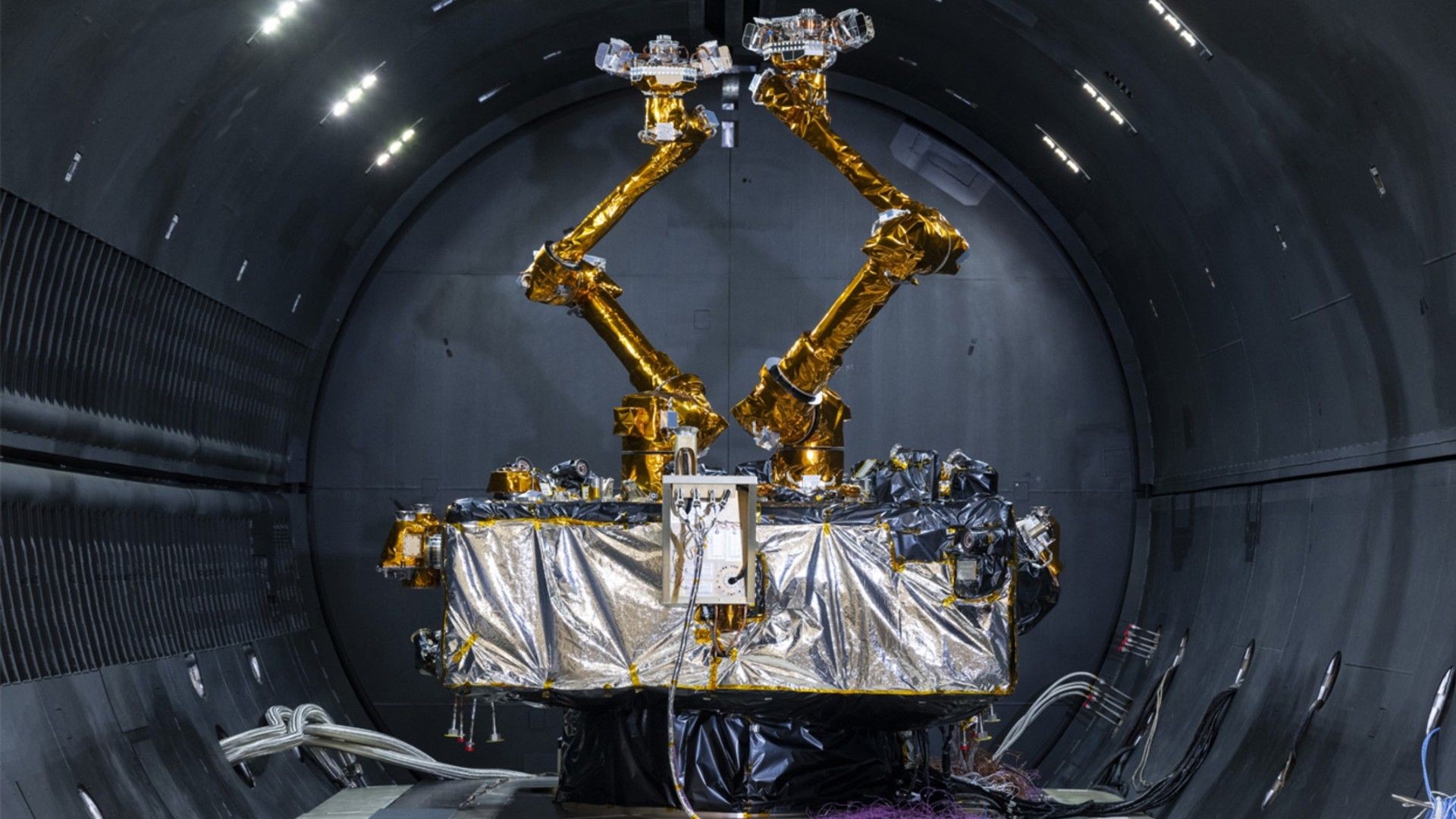
RSGS proposes a different endgame. A robotic servicing suite. Dexterous. Agile. It inspects. It re-fuels. It upgrades obsolete hardware.
It fixes things so you don’t have to buy new ones.
Beyond Just Gasoline
Refueling gets all the press. It does not tell the whole story.
Old payloads are a curse. A satellite launched in 2005 might be physically healthy but technologically obsolete today. DARPA notes this frustration explicitly. Owners pay top dollar for systems that are functionally dead because they can’t download new software or swap components.
So they add redundancy. More weight. More cost. Just to hedge against failure.
The RSGS robot cuts that waste. It swaps payloads. It adjusts orbits. It performs preventative maintenance before the anomaly hits.
A geostationary sat typically lasts fifteen years. Starlink satellites in low earth orbit last five, but they are cheap enough to replace rapidly.
GEO sats aren’t cheap. You cannot refresh the constellation every six months like SpaceX does in LEO.
The Race to Service Space
NASA and the US Naval Research Lab are aboard the train with DARPA. The goal is adaptability. Safety. Efficiency.
The market is moving, too. Competitors like Astroscale and Thales Alenia Space are already positioning themselves in on-orbit servicing.
This isn’t a lonely race anymore.
DARPA isn’t just trying to prove a point about mechanics. They are pushing for an operational shift. One where the lifecycle of a satellite is decoupled from its physical hardware.
Imagine a platform that lives for years while the tech inside changes every few months.
Expensive? Maybe.
Possible?
RSGS is launching in two months. The universe will wait. Or it won’t.