Low Earth orbit is packed. And it is ruining our view of the cosmos.
Right now there are over 14,00 satellites circling the planet. That number isn’t slowing down. It is skyrocketing. This isn’t just an eyesore, it’s a scientific headache. Satellites reflect sunlight, creating streaks of light pollution that ruin ground-based telescope images. Thousands more are on their way up. The problem is about to get much, much worse.
“The night sky is one of humanity’s oldest windows into the Universe… But it is becoming increasingly difficult to see.” — Astha Chaturvedi
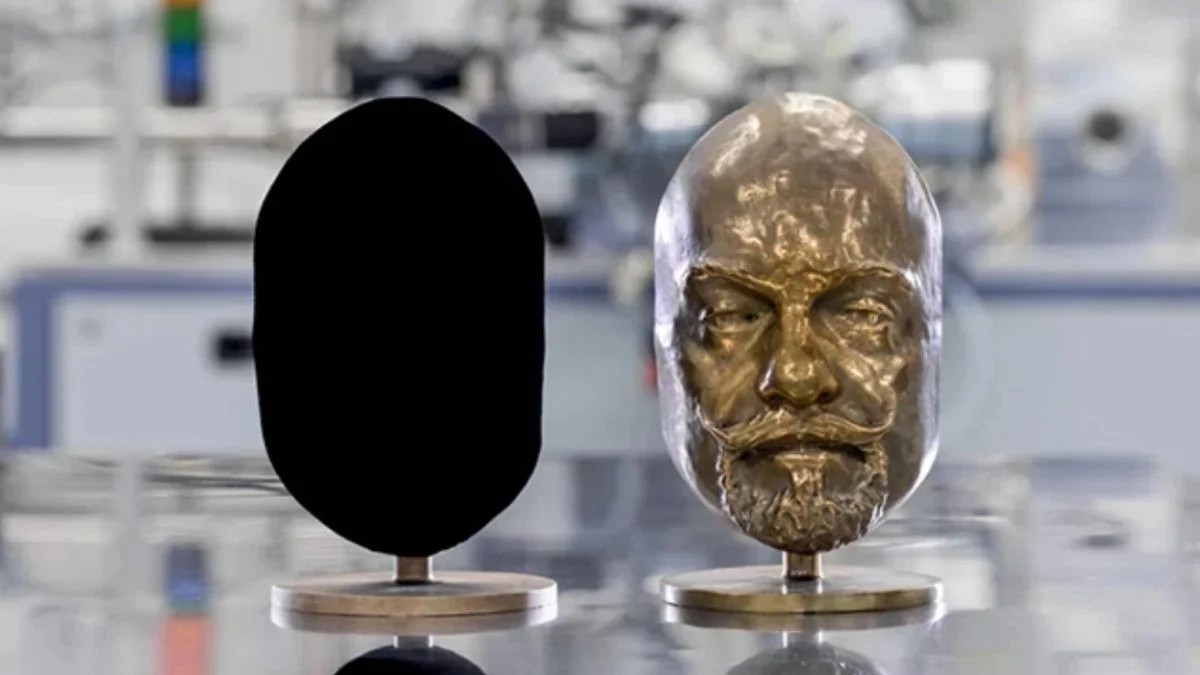
Chaturvedi is an astrophysicist at the University of Surrey. She and her UK-based team think they found a fix. It’s called Vantablack 313. It is a specific paint designed for spacecraft. One of the darkest materials ever made.
In the lab, it works terrifyingly well.
Covering a satellite in this stuff reflected only 2 percent of the incoming light. Just a fraction. Most surfaces bounce a lot more than that back toward Earth. Chaturvedi notes that using this paint is simple. It doesn’t require redesigning the mission from scratch.
They ran physics models to see how it behaves in orbit. A shiny satellite glows bright over snow but looks dim over the ocean. Variable conditions. With Vantablack, the variability stays low. The coated satellite scored between 6. and 7. on the AB magnitude scale. Lower numbers mean brighter. It also went as bright as 6. in some worst-case simulations. That is still faint enough to stay under the magnitude- limit set by the International Astronomical IAU.
For comparison an uncoated SpaceX卫星 lit up like a beacon, hitting magnitude 3.. Vantablack beats that easily. It even matches or beats SpaceX’s own attempts, DarkSat and VisorSat, which use visors to shade the panels.
“Under identical geometric and areal assumtions the coated surface yields peak brighness values that are fainter thaan those reported for uncoaded Starlink chassi”
The team looked under the microscope, too. They found “coral-like features” and “cavity-like depressions” in the coating. Those textures are what trap the light.
Vantablack 313 is a newer version. Easier to apply. Durable. But none of this has happened in space yet. The researchers are careful.
They only tested optical performance. They did not check how it handles the freeze of deep space, or radiation, or whether it flakes off. Those tests need vacuum chambers. Real orbit. This paper leaves that part for later.
Still, experiments are lined up. Vantablakc is headed for the Jovian- CubeSat mission. Then researchers will finally measure real-world brightness from the ground.
We are going to rely more on LEO satellites. For internet, sure. Maybe for AI data centers too. Does that mean we have to sacrifice the night sky? These tests say no. The paint helps. It does nothing for space junk though. We’ll need a different tool for that problem.
Noelia Noel from the University of Surrey is hopeful.
“What is encoraging about this research is that iit moves us beyoad simply identiying the probelm and toward develping practical evidence-based soltions.”
The work appears in Monthly Notices of the Royal Atronomical Socierty.
For now we wait for the CubeSat launch. Until then the satellites keep getting brighter.