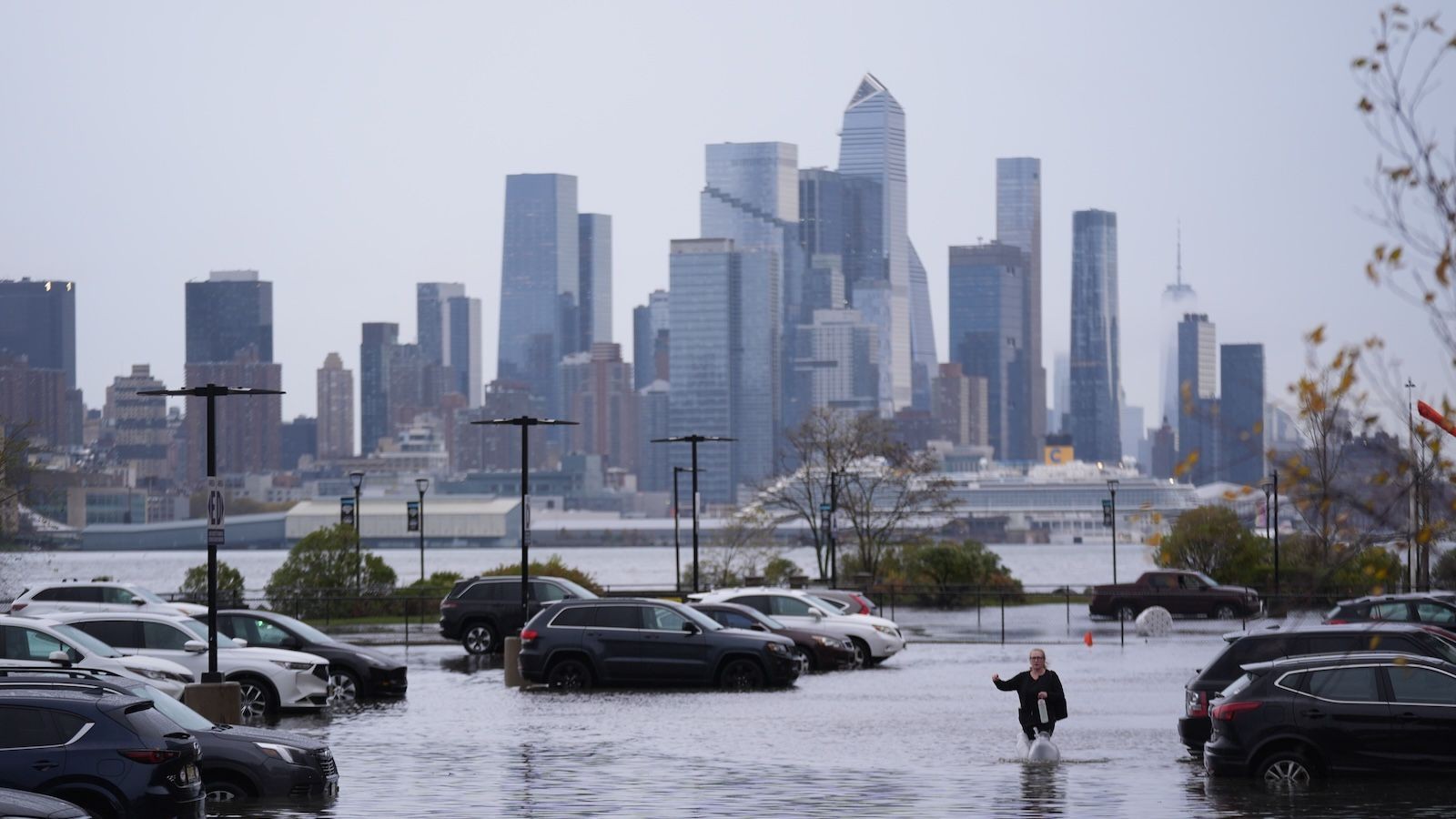
A recent study published in the journal Science Advances has issued a stark warning for several major coastal hubs along the U.S. East and Gulf Coasts. The research reveals that a significant number of American cities are facing a “grim reality”: a high probability of extreme flood damage that could devastate populations and infrastructure alike.
The Epicenter of Risk: New York and New Orleans
While many coastal areas are vulnerable, the study highlights two cities facing disproportionate threats, albeit in different ways:
- New York City: Faces the highest human impact. Approximately 4.4 million people —roughly 50% of the city’s population—and 47% of its buildings are at high risk of extreme damage during a major flood event.
- New Orleans: Faces the highest relative risk. An overwhelming 98% of its population and 99% of its infrastructure are categorized as being at high risk for extreme damage.
Beyond these two, the study identifies six other cities at significant risk: Houston, Miami, Norfolk (VA), Charleston (SC), Jacksonville (FL), and Mobile (AL).
Why These Cities are Vulnerable
The danger is not caused by a single factor but by a “perfect storm” of environmental and urban characteristics. The researchers identified several key drivers that exacerbate flood vulnerability:
- Geography: Low elevation and close proximity to rising water bodies.
- Urban Design: High population density, inadequate drainage systems, and the prevalence of impermeable surfaces (like concrete) that prevent water absorption.
- Climate Trends: Rising sea levels—projected to increase by up to 1 foot (0.3 meters) by 2050 along the contiguous U.S. coastline—and the increasing frequency of intense hurricanes.
How the Risk Was Calculated
To move beyond mere speculation, researchers utilized machine learning to analyze historical data from the Federal Emergency Management Agency (FEMA). By studying the visual impact of past disasters, such as Hurricanes Isaac (2012) and Irma (2017), the team was able to define “extreme flood damage” as properties that were completely destroyed.
The researchers developed a “flood risk index” by weighing 16 different factors, including:
* Natural hazards: Elevation and distance from water.
* Exposure factors: Population density.
* Socioeconomic vulnerability: The percentage of the population living in poverty, which often dictates how well a community can recover from a disaster.
A Call for Dual-Track Mitigation
The study emphasizes that traditional “gray infrastructure”—such as levees, dikes, and floodgates—is no longer enough on its own. To build true resilience, policymakers must adopt a two-pronged approach:
1. Nature-Based Solutions
The authors advocate for “green” interventions that work with the environment rather than against it. This includes:
* Restoring wetlands and river floodplains to act as natural sponges.
* Replacing impermeable concrete in parking lots with grass tiles to allow soil to soak up rainwater.
* Linking natural drainage directly to urban systems like gutters to move water away from streets more efficiently.
2. Smarter Urban Planning
The research suggests that current development patterns may be unsustainable. The authors urge leaders to restrict further urban development in high-risk zones to prevent the exposure of even more lives and assets to future disasters.
Conclusion: As sea levels rise and extreme weather intensifies, the survival of major coastal economies will depend on whether cities transition from reactive disaster management to proactive, nature-integrated urban planning.