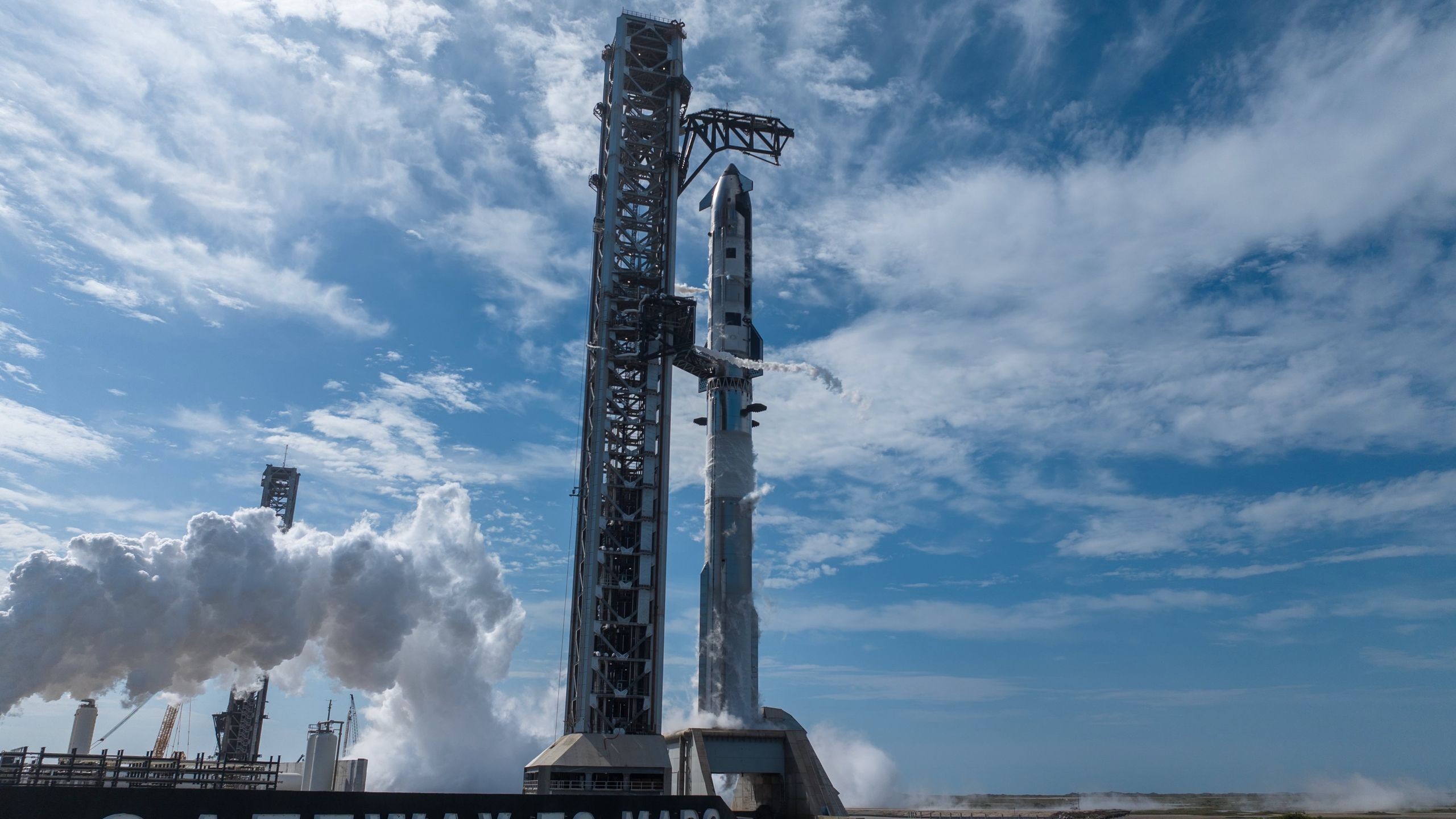
SpaceX has officially announced that the debut launch of its next-generation Starship V3 is scheduled for May 19. This upcoming flight, designated as Flight 12, marks a critical milestone in the company’s long-term strategy to make space travel routine, affordable, and capable of reaching deep space destinations like the Moon and Mars.
While this will be the twelfth overall flight of the Starship system, it represents the first launch of the Version 3 hardware. The V3 iteration introduces significant structural and functional upgrades designed to enhance reliability, increase payload capacity, and streamline the path toward full vehicle reusability.
The Launch Window and Location
The launch is targeted for a 90-minute window beginning at 6:30 p.m. EDT (5:30 p.m. Central Time) on Tuesday, May 19. The vehicle will lift off from SpaceX’s Starbase facility in Boca Chica, Texas.
This launch serves as the maiden test for not only the upgraded rocket but also Pad 2, a new launch complex at Starbase. Pad 2 features faster fueling capabilities and modified “chopsticks” (the mechanical arms used to catch the booster), signaling an operational shift toward more rapid turnaround times.
Key Upgrades in Starship V3
The transition from previous versions to V3 involves a comprehensive redesign aimed at solving specific engineering challenges encountered during earlier test flights. The improvements focus on three main areas: the Super Heavy booster, the Ship upper stage, and the propulsion systems.
Super Heavy Booster Enhancements
The first stage, known as Super Heavy, has undergone substantial modifications to improve its ability to return to Earth safely and be reused quickly.
- Larger, Stronger Grid Fins: The booster now features three grid fins instead of the original four. However, these new fins are 50% larger and significantly stronger. They include new “catch points” to assist the mechanical arms in grabbing the booster mid-air. Additionally, the fins have been lowered on the booster body to reduce heat exposure from the engines during the “hot staging” separation process.
- Integrated Hot Stage: Previously, the structure separating the booster from the upper stage was discarded during flight. In V3, this hot stage is integrated into the Super Heavy booster and remains attached throughout the mission, reducing debris and simplifying the separation sequence.
- Redesigned Fuel Transfer Tube: The tube that channels cryogenic fuel to the 33 Raptor engines has been completely re-engineered. It is now roughly the size of a Falcon 9 first stage, allowing all 33 engines to start up simultaneously and more reliably. This redesign also supports faster and more stable “flip maneuvers” required for the booster’s return trajectory.
Ship Upper Stage Improvements
The upper stage, which carries the payload, has received a “clean-sheet” redesign of its propulsion system.
- Enhanced Propulsion and Safety: The new system introduces a revised Raptor engine startup method and improves the reaction control system used for steering in the vacuum of space. Crucially, the redesign reduces internal volumes in the aft section of the vehicle that could previously trap leaking propellant, thereby improving safety and reliability.
- In-Space Refueling Capability: The V3 Ship features new propellant feed connections. These are essential for in-space propellant transfer, a technology required for deep-space missions where the rocket must refuel in orbit to reach the Moon or Mars.
More Powerful Engines
The entire V3 stack is powered by the Raptor V3 engine, which offers higher thrust and improved performance compared to previous iterations. This increase in power is necessary to lift heavier payloads and facilitate the complex maneuvers required for orbital refueling and planetary landings.
Mission Profile: Flight 12
Despite the significant hardware changes, the mission profile for Flight 12 remains conservative to ensure the new systems perform as expected.
- Liftoff and Ascent: The rocket will launch eastward on a suborbital trajectory.
- Payload Deployment: Approximately 17.5 minutes after liftoff, the Ship will begin deploying 22 dummy Starlink V2 satellites. This deployment phase is expected to last about 10 minutes.
- Note: The last two dummy satellites will capture imagery of the Ship’s heat shield during re-entry, providing valuable data for future mission planning.
- Engine Relight: The Ship will perform an in-space relight of one of its six Raptor engines. This is a critical test for operational missions, as engine restarts are necessary for orbital insertion and landing.
- Splashdowns:
- Super Heavy: The booster will attempt a soft splashdown in the Gulf of Mexico about seven minutes after launch. SpaceX has confirmed that no catch attempt will be made on this first V3 flight, allowing the team to focus on the integrity of the new fin and staging designs.
- Ship: The upper stage is expected to splash down in the Indian Ocean, likely off the coast of Western Australia, approximately 65 minutes after launch.
Why This Matters
The success of Starship V3 is pivotal for SpaceX’s broader ambitions. While previous versions proved the concept of a massive, reusable rocket, V3 is engineered to unlock the vehicle’s core operational functions.
“Together, these new elements are designed to enable a step-change in Starship capabilities and aim to unlock the vehicle’s core functions, including full and rapid reuse, in-space propellant transfer, deployment of Starlink satellites and orbital data centers, and the ability to send people and cargo to the moon and Mars.” — SpaceX
By refining the grid fins, integrating the hot stage, and enabling reliable in-space refueling connections, SpaceX is moving closer to a system that can land, refuel, and launch again with minimal turnaround time. This level of reusability is essential for reducing the cost of access to space and enabling sustainable infrastructure on the Moon and Mars.
Conclusion
The May 19 launch of Starship V3 represents a bridge between experimental testing and operational readiness. While the mission itself is a controlled suborbital test, the hardware it carries is designed for interplanetary travel. A successful flight will demonstrate that SpaceX has solved critical engineering hurdles related to reuse and refueling, bringing humanity one step closer to becoming a multi-planetary species.