The year 2020 was extraordinary enough to go down in cinema history. The pandemic disrupted theaters and brought many films to the screens at unexpected times. Greenland is one of the most striking examples of this chaotic period. Before we get to that first reaction that comes to almost everyone’s mind, let’s discuss the facts behind this production, the cast and why it is talked about so much.
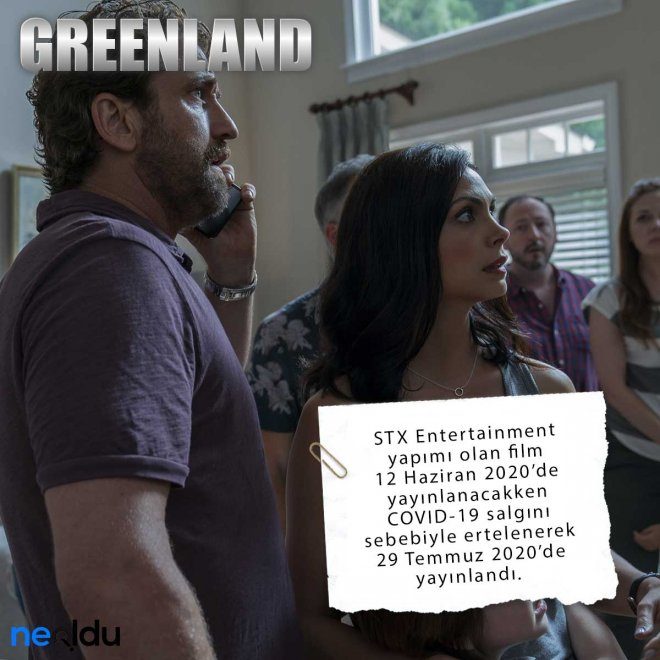
This thriller, produced by STX Entertainment, was originally planned to be released on June 12, 2020. However, developing epidemic conditions forced the distributor company to take a step back. As a result, Greenland was released into cinemas on July 29, 2020. This process of postponement directly shaped the film’s impression in social memory. While viewers retreated to their homes for fear of going out, they had to watch an apocalyptic scenario on the screens. This contrast made the experience unforgettable.
Subject and Flow of the Movie
This action-packed road story, which lasts two hours, stars strong names such as Michael Shannon, Gerard Butler and Morena Baccarin. The story revolves around the approach of a comet that will destroy the Earth. The official statement was that only one percent of the Earth’s population could survive. The rest will disappear.
John Garrity, played by Butter, resorts to a last resort to save his family. He has to take them to the authorities, that is, to that safe zone known as Greenland. But not everything goes as planned. Traffic congestion, panic, military interventions and the collapsing order… All these make a family’s struggle for survival even more brutal.
“IMDB scores are low, but we think you will like it.”
This sentence actually points out the disconnect between the film’s critics and the audience. So how big is this difference?
Criticisms and Audience Reactions
Although the film was technically a high-budget production, it received harsh criticism regarding its script and character development. IMDB scores remained low out of 10. Many critics noted that the film lacked exceptional dramatic depth and that the action scenes were implausible. The characters’ decisions sometimes make the audience angry.
However, the audience does not agree with these criticisms.
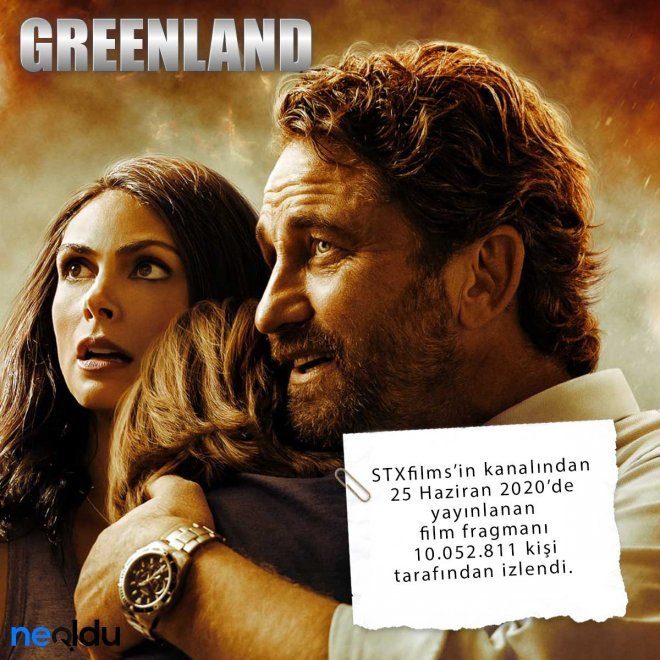
STXfilms’ June 25 Trailer: 10 Million Viewers, One Reaction
The trailer, uploaded on STXfilms’ YouTube channel on June 25, 2020, attracted attention beyond a simple promotional video. 10,052,811 people watched the video. Although the number seemed huge, the return was not that bright. Comments pointed out the artificiality of the film rather than its structure. Viewers debated not how gripping it was, but how ordinary it was.
Why Was It Perceived So Ordinary?
The focus of the discussion, as always, is based on the fact that the movie consists of clichés. People are looking for something new in cinema. This visual feast from STX repeated a familiar routine rather than meeting expectations. The majority in the comments were “again?” he was asking the question.
Viewers’ Real Reaction
Many people stated that they did not feel the excitement that the trailer promised. Features:
– Story line is predictable
– Character development is superficial
– Visual effects are technically successful but lack emotion
This is a sign not only for this movie, but also for STXfilms ‘s overall strategy. Big-budget productions keep their marketing spend to a minimum and load up on trailers in the hope of going viral. However, the audience takes this seriously.
Which Movies Contain Less Clichés?
Among films with similar budgets, viewers turn to those that offer more original narrative. The comparisons focus on which productions did and did not take risks. This big breakthrough expected from STX actually met the audience with deeper dissatisfaction.
A Question Instead of a Conclusion
Trailers are now used not only to sell the movie, but also to create a community. However, this community showed how long it was waiting. The audience prefers not to repeat. But what about next time?
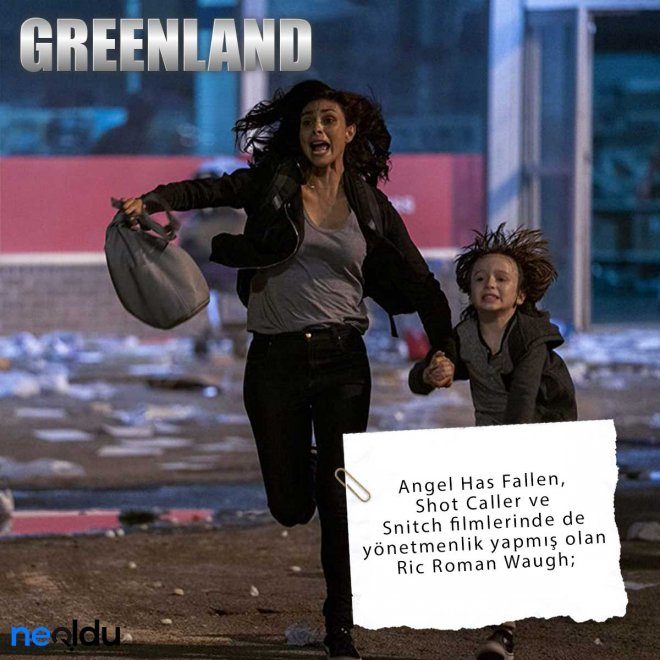
Ric Roman Waugh is back in the director’s chair. You might recognize him from his work on Angel Has Fallen, Shot Caller, and Snitch. The film brings together a familiar ensemble of producers. Gerard Butler returns, having starred in the Angel and London Has Fallen series, alongside Olympus Has Fallen. Joining him are Basil Iwanyk, known for John Wick (2014), The Town, and Wrath of the Titans. Sebastien Raybaud and Alan Siegel also round out the production team.
The screenplay comes from Chris Sparling.
Who is behind the action?
The creative lineup leans heavily on proven action franchises. Waugh’s direction provides continuity with the political thriller genre Butler has helped define. But the core question remains about the narrative direction. Sparling’s script will determine if this project stands on its own or just rides the coattails of previous hits.
“The chemistry between Butler and Waugh suggests a gritty, high-stakes environment.”
It’s not just about who is producing. It’s about how the story unfolds. Sparling has handled complex character dynamics before. The question is whether this script offers enough new ground. Or will it feel like another entry in a long-running series?
The production values look strict. But the real test will be the pacing. Waugh knows how to keep things moving. Does the script support that energy? Only time will tell.
The Cast Behind the Mask
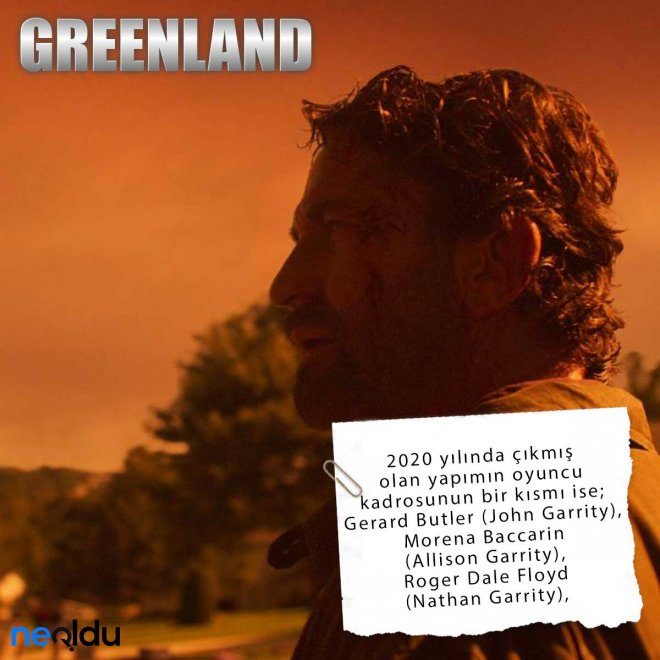
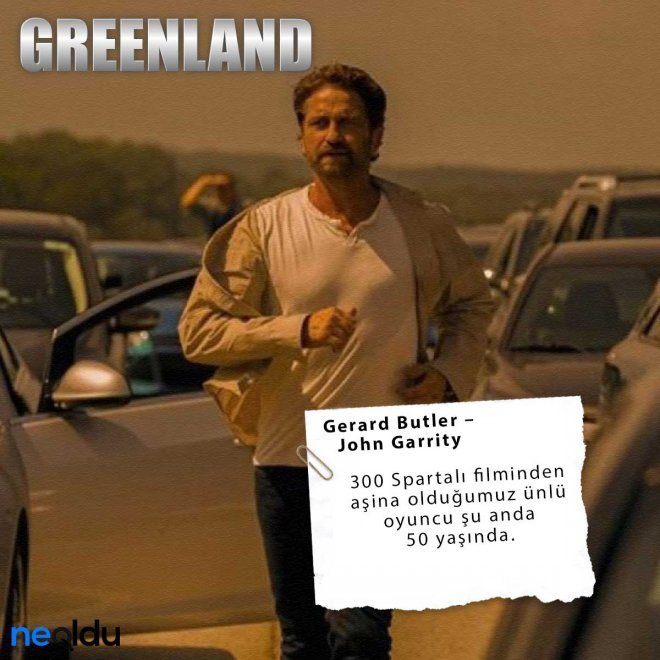
The ensemble that breathed life into the 2020 release wasn’t just a random collection of names. It was a specific grouping that anchored the film’s gritty reality. At the center stood Gerard Butler, stepping into the shoes of John Garrity. You know the look. You know the voice. He brought that familiar intensity to the role, grounding the chaos in something tangible.
Butler wasn’t alone in the fray. Morena Baccarin joined him as Allison Garrity. Their dynamic drove much of the emotional weight in the story. Then there was Roger Dale Floyd, playing Nathan Garrity, adding another layer to the family unit at the heart of the conflict.
But the film relied on more than just the leads. Scott Glenn appeared as Dale. A veteran presence. His involvement signaled to audiences that this wasn’t just a one-note action flick. He brought gravitas.
The supporting cast filled out the world with necessary texture. Randal Gonzalez played Bobby. Scott Poythress took the role of Kenny. And Claire Bronson rounded out the key players as Debra Jones.
Why This Lineup Matters
Looking back at who played who helps explain the film’s tone. It wasn’t just about the main protagonists. The inclusion of seasoned actors like Glenn alongside newer faces created a hierarchy. A realism. When you watch it now, that contrast stands out. It separates the seasoned pros from the fresh faces.
Who else was involved in the wider circle? The list stops there for the core group. But their interactions defined the narrative arc. Garrity’s struggle wasn’t isolated. It was surrounded by these specific characters. Each one played a part in the unraveling.
The chemistry between Butler and Baccarin is what people still discuss. It wasn’t always smooth. Sometimes it felt forced. But it worked enough to keep you watching. The rest of the cast held the edges. They provided the context.
Did anyone surprise you? Probably not. Butler does what he does. But seeing Glenn in a supporting role always adds a weird comfort. You trust him to anchor things. Here, he anchored the periphery.
The story moves fast. There’s no time to dwell on the casting choices. But when it’s over, you’re left with these faces. Garrity. Allison. Nathan. Dale. Bobby. Kenny. Debra. They stick.
It’s a specific mix. Not perfect. Not flawless. But effective enough to make the 2020 release memorable in a crowded year. You remember the action. But you also remember the people in the frame.
Family’s 48-Hour Escape Race
The main plot of the film revolves around a massive meteorite rising towards Earth and capable of destroying the planet. The timestamp is harsh: The family’s chance of survival is only 48 hours. This section focuses on what happened in those last two days and the desperation the family faced.
Why 48 Hours?
Time limit tension is reaching its peak. The family feels how critical every second is. As the threat in the sky grows, the conflicts inside deepen.
“Time accelerates everything. Conflicts, fears and hopes converge on one point: survival.”
The family’s reactions are realistic. Not panic, but bitter acceptance. Every decision is like a last chance.
Sky and Internal Conflicts
The meteorite becomes visible in the sky. Lights, shadows… Every detail reflects those last 48 hours. Dialogues between family members carry the burden of the past.
This isn’t just a disaster movie. A period when family dynamics are tested.
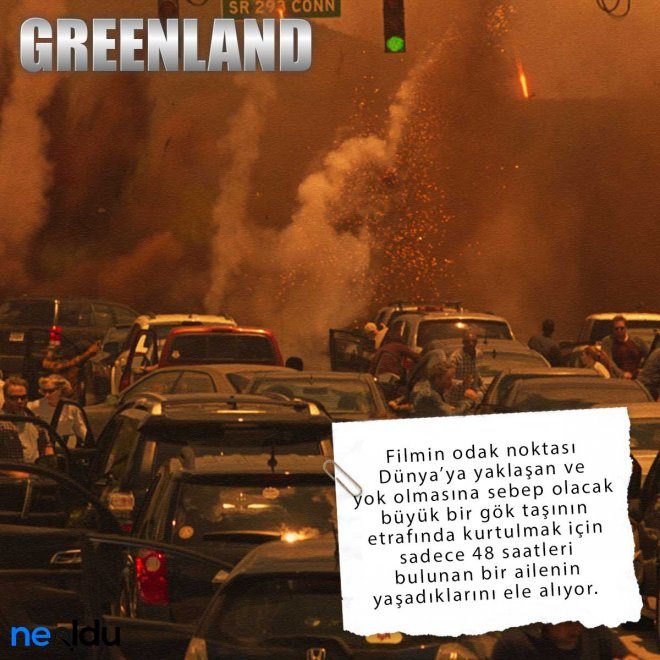
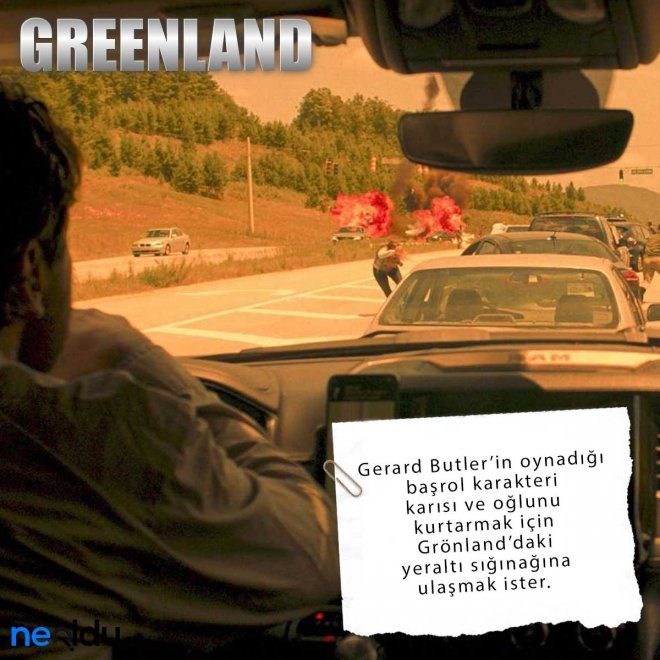
The goal of the character played by Gerard Butler is clear: to keep his family alive. His wife and son. Delivering them to the underground bunker in Greenland.
This task is not easy.
As NeOldu.com writers noted, the troubles during that dangerous journey in the movie are reflected on the screen very well. The chain of negative events does not progress one by one. One door closes, another opens. But each one is more dangerous.
It’s real chaos.
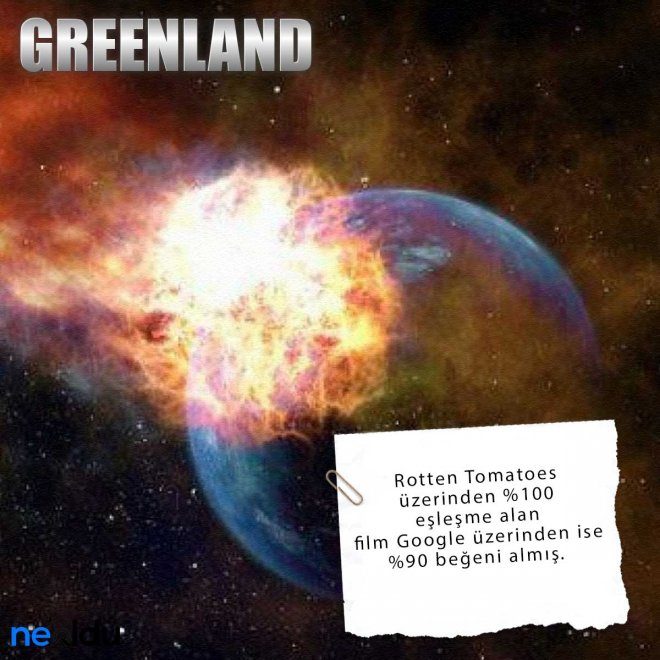
It’s a cinematic paradox that doesn’t make immediate sense. A film can achieve a perfect 100% critics score on Rotten Tomatoes while simultaneously pulling in a 90% audience approval rating on Google. That kind of universal acclaim usually signals an instant classic. Yet, the same movie hovers around a mediocre 6.5 on IMDb.
That’s right. Out of 5,288 voters, the star rating fails to clear a seemingly arbitrary digital bar. Should you care? We think not.
The discrepancy tells a specific story about how different platforms measure value. Rotten Tomatoes measures consensus among professional critics. A 100% score means every single reviewer found something to love, even if their reasons differed. It’s a purity metric, not an average. Meanwhile, Google’s aggregate rating reflects general public sentiment, capturing the casual viewer’s immediate reaction. When those two align at 90%+, it suggests the film works on an emotional level, regardless of technical critique.
IMDb, however, operates on a simple average. With only 5,288 votes—a relatively small sample size for a global platform—the score is volatile. A handful of 1s can drag a 7.5 down to a 6.5. The sample size is the culprit here, not the quality of the film.
“High critic scores on RT and Google suggest strong thematic resonance, while low IMDb scores with small vote counts often reflect sampling error rather than poor quality.”
This is one of those titles you add to the watchlist without hesitation. The data points contradict each other, but they point in the same direction: the movie is good. The critics liked it. The casual Google searcher liked it. The only people who didn’t rate it—or rated it poorly—are the tiny sliver of the IMDb community that bothered to vote.
Skip the algorithmic hesitation. Watch it.
Gerard Butler and Morena Baccarin carry the weight of a collapsing world in Greenland. It’s a 2020 doomsday movie. The action doesn’t stop until the final frame. You watch it in one breath. If this movie came out five years ago, people might have overthought it. This year? There wasn’t much else. It was the only option.
The premise is simple. An asteroid is coming. It’s going to wipe the planet clean. We have hours left. You’d expect Bruce Willis to be back for another rescue mission. He’s not. He’s under house arrest. So we follow Butler and his family. They are trying to reach a sanctuary in Greenland.
The rest of the world is losing its mind. Neighbors are smashing stores for toilet paper. Others are throwing the ultimate end-of-the-world party. Meanwhile, John Garrity just wants to get his wife and son to safety.
Is Greenland Worth Watching?
Butler has a reputation. In the last few years, his name has become synonymous with film flops. It’s a streak. A bad one. Angel Has Fallen wasn’t terrible. It wasn’t great either. It was just there.
I went into Greenland skeptical. I had to. But somehow, Butler’s recent choices have been smarter. This movie is actually fun.
It balances realism with pure frustration. And that frustration is the point.
The script takes some shortcuts that make you roll your eyes. Take the medical clearance scene. You’d assume the government knows who qualifies for the bunker. They don’t. They just pick names. It’s arbitrary. It’s annoying.
Then there’s the scene where the couple steals their wedding rings. Why not take both? Why leave one behind? It feels like bad writing. But it also feels human. Panic makes people stupid. We’ve all been there.
If you’re looking for a 10/10 masterpiece, skip it. It’s a 5/10. But it’s fun 5.
Why the Criticism Flows
Disaster movie fans have low expectations. That’s the rule. I expected a pleasant surprise. I got a sour one.
Everything is cliche. The twists are predictable. Even when the director tries to shock you, you see it coming miles away.
“This is a movie that shouldn’t be in theaters. It belongs on a streaming service.”
Normally, I love Butler films. This one disappointed me. The script wasn’t strong enough to save it.
The worst part is the pacing. The opening sequence sums up the whole movie. A giant comet appears. An automated warning goes off. People keep shopping. They pack clothes for hours. They forget the essentials. They forget how to survive in the cold darkness.
Who writes this stuff?
There is almost no action. For a film with this cast and budget, you’d expect “WOW” moments. There are none.
I’d rather watch Deep Impact again. Anyone.
Who Should Watch Greenland?
Ignore the hate for a second. Let’s look at why it works.
It’s not just an adrenaline ride. It’s a smart, surprisingly realistic take on collapse. Think The Towering Inferno (1974). Think The Wave (2015). Think The Impossible (2012).
Leave the Independence Day alien invasions to the side. This is different.
The story is tight. It doesn’t over-explain why things are happening. It doesn’t dump exposition on you. The questions? They come later. The tension builds without the chatter.
The Cast: Gerard Butler as John Garrity
Gerard Butler is the anchor. He’s Scottish. He studied law. He started in the 90s with small roles in Mrs. Brown and Tomorrow Never Dies. He also did Tale of the Mummy.
We know him from 300. He’s been playing warriors and leaders for two decades. He’s 50 now.
He plays John Garrity. A father fighting for his family. It’s not his best performance. But it’s his most grounded.
The movie doesn’t ask you to believe in miracles. It asks you to believe in fear. And in that, it succeeds.
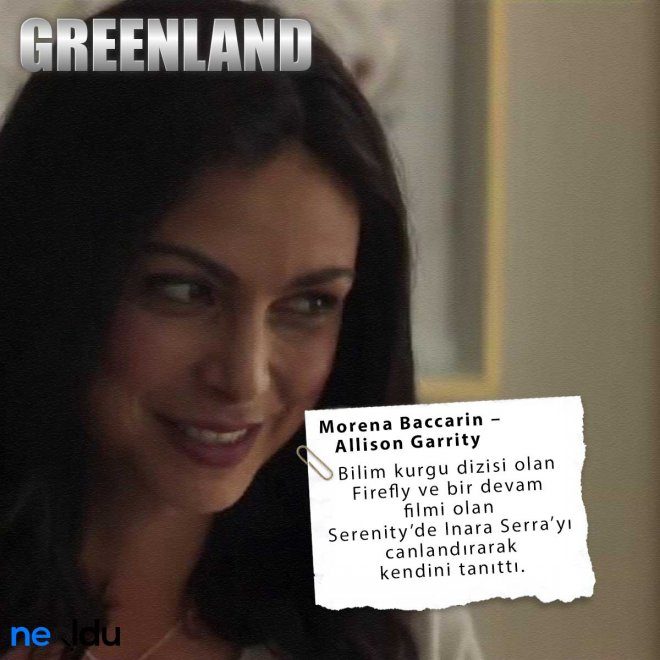
You probably know her as Inara Serra. If you loved Firefly, you remember the calm, composed companions who could hold her own in a fight. Morena Baccarin played that role with such quiet intensity that it became her signature. Now 41, she has done more than just one iconic sci-fi role. In fact, she’s been in over 50 productions. That is a lot of screen time.
She didn’t stop at space operas. She moved into big-budget blockbusters. You might recognize her in Deadpool and Deadpool 2. She played Vanessa, Wade Wilson’s love interest. It was a fun, grounded counterpoint to the chaos on the screen. But her range goes further. She starred in Homeland. That show required a different kind of tension. High stakes. Espionage. Close calls.
Then there is Gotham. She played a villainous figure in that gritty prequel series. Each role shows a different facet of her acting chops. Some people only know her for Firefly. They miss the rest of her filmography. That is a mistake.
“She brings a steady presence to every scene, whether it’s a spaceship or a dark city street.”
Her filmography reads like a best-of list for character actors. She doesn’t need the spotlight to command it. She just takes up space and makes it hers. From the dusty planets of Serenity to the modern streets of Marvel films, she adapts. Fast. Effortlessly.
Why do we keep seeing her? Because she works. Consistently. With precision. There is no fluff in her performances. Just solid, reliable storytelling. Whether she is saving the galaxy or solving a murder mystery, she delivers.
The list of credits keeps growing. New projects. Old favorites. Fans look for her in every new cast announcement. They know what to expect. Quality. depth. A face they recognize but still find interesting. That is hard to do. Even harder when you’ve been typecast for years. She broke out of that box. Slowly. Steadily.
What’s next for her? The industry doesn’t say. But given her track record, it will likely be something unpredictable. Something that challenges the audience. You can bet on that. The next role might surprise you. Or it might just be another reason to tune in. Either way, you will be watching.
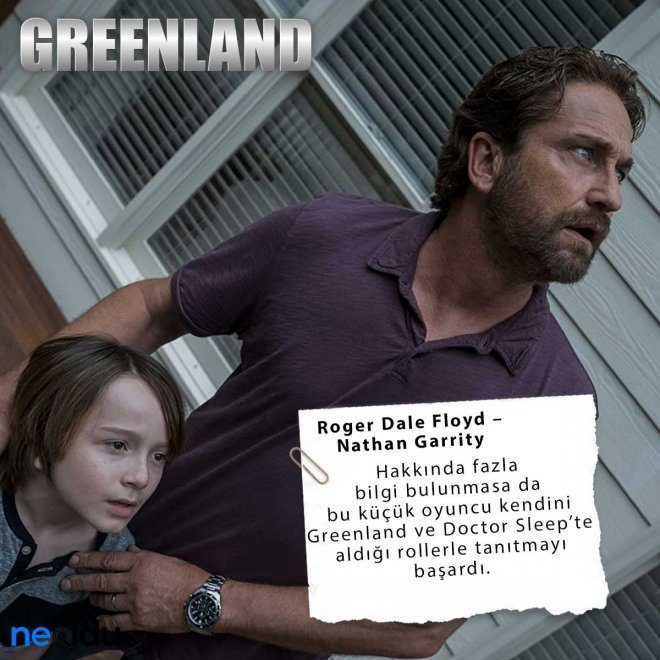
The Quiet Strength of Nathan Garrity in Greenland and Doctor Sleep
There isn’t a Wikipedia deep-dive waiting for Roger Dale Floyd’s character, but that anonymity works in his favor. He disappears into roles that demand grit rather than charisma. Take Nathan Garrity in Greenland. It’s not a blockbuster villain arc. It’s survival.
The movie puts him in the middle of a global collapse. The script doesn’t waste time on exposition. Floyd’s Nathan just reacts. He protects. He breaks. You watch him navigate the chaos of the evacuee transport and feel the weight of a father with nowhere to run.
Then there’s Doctor Sleep. The setting shifts. The tone gets darker. Floyd steps into the role of a man caught between supernatural horror and human frailty. The movie relies on atmosphere, but its performance grounds it.
“Sometimes the best acting is just being present in the storm.”
Fans of the Shining universe might not catch his name in the credits immediately. They’re too busy watching Ewan McGregor wrestle with his own demons. But Floyd’s Nathan is part of that texture. He adds to the sense of dread. He’s the everyman facing the impossible.
It’s rare to see an actor with such sparse public info deliver two contrasting yet equally intense performances in quick succession. One sci-fi thriller. One psychological horror sequel. Both leave a mark.
You don’t need to know his name to remember the character. That’s the goal, isn’t it? To be invisible until the moment it matters.
What do you think defines a compelling supporting role? Is it the dialogue or the silence? The answer might change how you watch these films next time.
July 29, 2020. The world was locked down. Theaters were dark. And Hollywood? It was trying to figure out how to film a movie without letting anyone sneeze.
This wasn’t just a release date. It was a deadline for chaos.
We’re looking at the intersection of action, thriller, and sci-fi. Genres that demand precision. Stunts. CGI. Explosions. All of it ground to a halt by a virus that couldn’t be staged.
Why 2020 Was Different for Action Fans
If you’re wondering why this specific window matters, look at the calendar.
Most of the summer blockbusters were dead on arrival. Postponed. Cancelled. The industry held its breath. But some films were pushed through. Not because they were brave. But because the contracts said so. Or because the studio refused to let millions in production costs go to waste.
The Safety Protocols That Changed Everything
You didn’t see the masks. You saw the result.
But behind the camera? It was a different world.
- Temperature checks at every gate.
- Social distancing on set. Hard when you need actors close together.
- Test kits are everywhere.
- Crews split into pods.
One pod for cameras. One for lighting. One for the stars. They never crossed paths. It was like filming a ghost story where the ghost is the health department.
The Resulting Films
What came out of that pressure cooker?
Some were fine. Some were flawed. But all of them carried the weight of a production that felt like it was running on fumes and fear.
The action sequences were tighter. Less expanding. The thrillers were cozier. Claustrophobic. Even the sci-fi felt more grounded. Why? Because budgets were frozen. You couldn’t just build a bigger set. You had to be clever.
A Genre Shift
Action and sci-fi didn’t disappear. They adapted.
They became more intimate. More focused on the human element. Because when you can’t have a car chase through three countries, you focus on the argument in the car.
It wasn’t a loss. It was a constraint. And constraints breed creativity.
Looking Back
Fast forward from that July date.
We didn’t get the spectacle we expected. We got something else. Something quieter. But still gripping.
The industry survived. The fans kept watching. And the movies? They kept getting made.
Even when the world stopped.