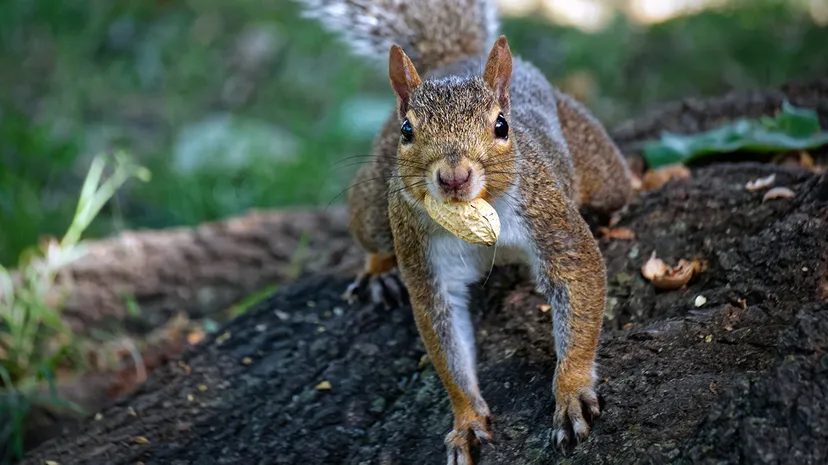
You see them every day. They can jump from branch to branch in your backyard, graze on your city sidewalks, or relentlessly raid bird feeders. Eastern gray squirrels and their relatives are so ubiquitous that we no longer think of them as complex animals. You only see vermin and cute props on the streets.
But they are not simple.
Several studies have shown that these rodents handle food storage in a surprisingly sophisticated way. This involves memory. This includes strategy. It requires cognitive planning that can make your own kitchen organization look lazy.
The myth of hibernation
Let’s clear up the biggest misconception first. Most people think that tree squirrels hibernate. They don’t.
When you think of long, deep hibernation, you probably think of chipmunks, like California chipmunks. Those guys went out of business. However, eastern gray squirrels, Eastern fox and flying squirrels are still active. They are awake. They are moving. And they are hungry.
It is also a myth that their lodgings are like human pantries. You know this idea. A cozy nest full of jars of acorns is waiting to be eaten as the snowflakes fly.
This doesn’t happen either.
Decentralized hoarding and space partitioning
So how do they eat it?
According to a 2017 study by psychologists at the University of California, Berkeley, published in the journal Royal Society of Open Science, tree squirrels use a memory technique called “spatial chunking.”
This is more than just randomly burying food. This is a complex sorting system. Squirrels sort cachings by size, type, and sometimes nutritional value or taste. They are essentially creating a mental map of their pantry. Although hunger strikes in winter, they do not dig holes unnecessarily. They retrieve specific items from a specific location based on their memory.
This is advanced memory.
Diet and challenges
To understand why we need this kind of memory, we need to look at diet. These squirrels are opportunistic omnivores. The menu changes according to the season.
In autumn, they eat seeds, nuts, acorns, tree buds, berries, leaves and some pine cones. They also eat bird eggs and chicks. If you’ve ever seen a squirrel eat a half-eaten pepperoni pizza, you know they’re not picky about human scraps.
But they don’t eat everything at once.
As winter approaches, food becomes scarce. Instincts kick in and you need to collect enough food to survive, but you also need to find enough food. This created a logistical nightmare. You need to store food for later, but you also need to find food now. The frenetic activity seen in the fall is a result of this pressure.
Caching strategies and cheating
A squirrel is an animal that collects scattered matter. This means not putting all your eggs in one basket. They spread their food over a wide area.
The typical range of eastern gray squirrels and fox squirrels can be up to 7 acres. They usually stick close to their nest or den, but they cover ground. They bury their goods about an inch into the soil. This is called “caching”.
Sometimes the nuts are split before burial. Why? To prevent germination. Sprouted acorns are not as good as dormant acorns.
But there are risks involved in burying food. Other squirrels are watching. They have a keen sense of smell and can detect the scent of nuts buried in the soil. To solve this problem, squirrels have developed what researchers call a “deceptive caching”.
A 2008 study revealed this behavior. A squirrel digs a hole. pretend to drop an acorn into the ground while actually holding the nut in its mouth. It covers the cavity. Then go to another location to bury the real prize.
This is a trick. This is a lie told to other animals.
The question is not whether squirrels are smart. The evidence is too strong for that. The question is whether we pay attention to how smart they really are.
Next week, we’ll see what happens when their memories fade, and how climate change disrupts these ancient ways.
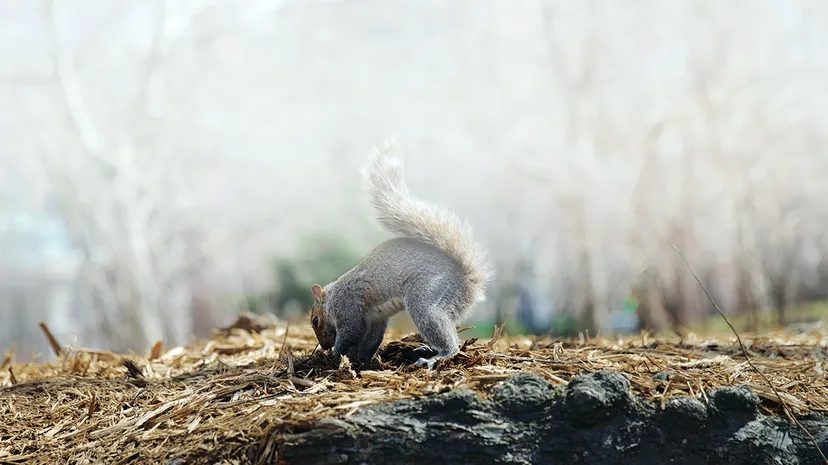
A 2017 study led by Mikel M. Delgado and Lucia F. Jacobs at the University of California, Berkeley showed that squirrel caching requires much more cognitive ability than simple instinct. The field test was carried out for 19 months in 2012–2014. The researchers fed nuts to 45 tagged, free-ranging fox squirrels. Each squirrel was given a total of 16 nuts. There are many types. Use almonds, hazelnuts, pecans and walnuts.
If the squirrels don’t eat the nuts right away, the researchers track their movements using GPS. They buried the prize and the researchers followed. What emerges is evidence of spatial chunking.
Squirrels place certain nuts in similar places to facilitate memory recall. Almonds went to one general area. Hazelnuts went elsewhere. This memory strategy reduces memory pressure. The accuracy of the search improves. Researchers describe this as a cognitive strategy to scatter hoarders. It also happens in rats.
Squirrels have a lot to think about. They need all the memory tricks available.
Michael A. Steele, a biology professor at Wilkes University in Pennsylvania, agrees. He was the investigator of the 2008 study on fake-burying. He found that the new results were consistent with existing data on distributed hoarding. Squirrels solve foraging and caching problems beyond human expectations. He noted that these findings may also apply to eastern gray squirrels because of their similar eating habits.
Gray squirrels evaluate seed quality. They selectively move valuable seeds to open sites. The risk of predation is higher there, but the risk of being stolen from other squirrels is lower. They trade off safety for security of the stash.
The Berkeley study controlled for several variables. Squirrel sex. Nuts pick-up order. Weight and nutritional value of each nut. Everything is taken into account.
The next time you see a squirrel digging a hole, take a closer look. He had probably just taken some nuts that he had planned to keep.
Squirrel lifespan and survival risk
The life of an eastern gray or fox squirrel is full of dangers. Rural and urban environments pose significant threats. Predators and cars are the main killers. Their lifespan in the wild is from 11 months to 6 years. Squirrels do much better in captivity. They can live more than 20 years.
Frequently asked questions about feeding and caring for squirrels
** What kind of nuts are good for squirrels? **
Squirrels like acorns, walnuts and almonds. These must be included in the shell. The hard shell helps meet their gnawing needs. Peanuts are consumed, but peanuts are legumes and not true nuts. It should be given in small portions as a snack, not as a main meal.
What are squirrel nuts?
Squirrel nuts typically refer to hard-shelled foods such as walnuts, hickory nuts, pecans, and beech nuts. These mimic a natural diet.
Do almonds kill squirrels?
No. Almonds do not kill squirrels. They are among their favorite foods.
Can squirrels eat shelled nuts?
Yes. Both shelled and unshelled varieties are accepted. Avoid using dried corn or sunflower seeds. Regular feeding can cause nutritional deficiencies.