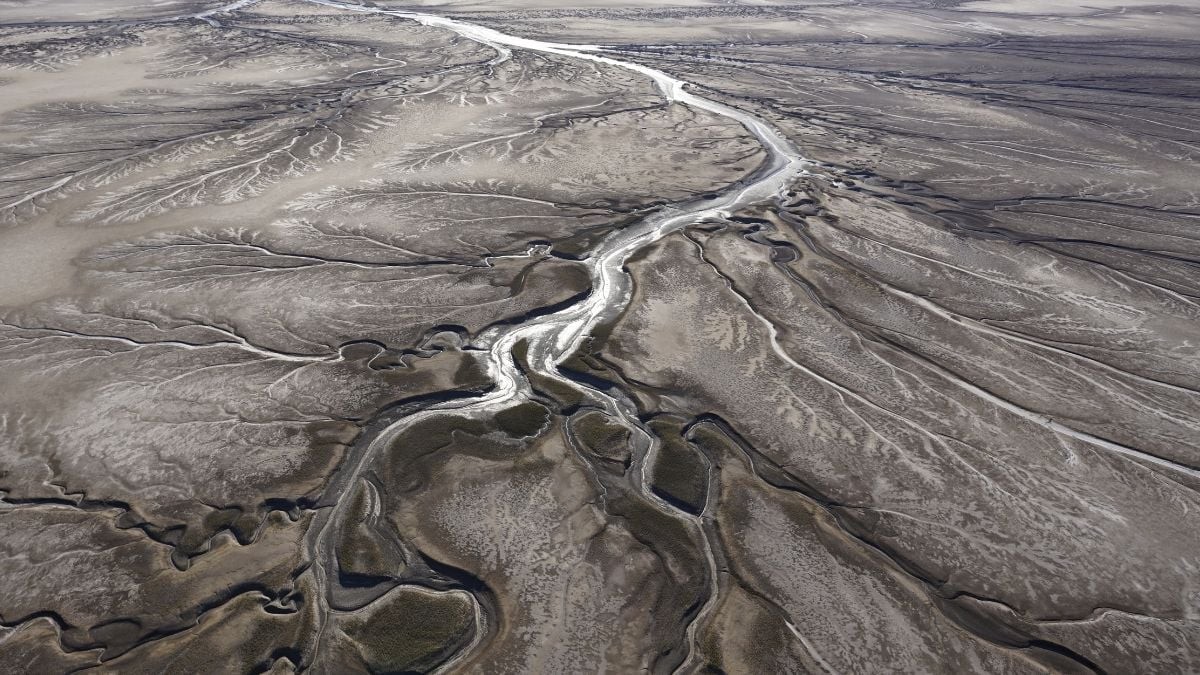
River sand is disappearing. Fast.
We are stripping riverbeds at a rate that defies logic, let alone natural science. Industrial mining is sucking up sediment far faster than Earth can replace it. The result? Our rivers are literally running out of sand.
A massive new review of 411 studies paints a grim picture. Scientists examined data from 1974 onwards. The conclusion is inescapable. The global hunger for river sand and gravel—essential ingredients for concrete—is not just heavy. It’s unsustainable.
The Mekong’s Rapid Erosion
Look at the Mekong Delta. This river cuts through Cambodia and Laos before spilling into Vietnam’s southern tip. Here, the extraction is visceral. A crane-equipped barge pulls 300 cubic meters of sand in three hours. That is 79,250 gallons in less than time it takes to make a sandwich.
Vietnam’s current mining rates sit about 11.8 times higher than natural sediment replenishment. The river naturally deposits roughly 6.18 megatons of sediment annually. Humanity is taking far more than that.
The math gets ugly fast.
Between 2015 and 22, Vietnamese operators extracted 366 million cubic meters. The riverbed lost ground. Mean incision hit 0.48 meters. That is roughly 0.053 meters lost per year. Hydrologist Dung Duc Tran, a study author from Singapore’s Nanyang Technological University, highlighted the deficit to ScienceAlert.
0.48 meters doesn’t sound like much. Until you realize it alters water flow. It shifts river health. It undermines bank structure.
In the Vietnamese Mekong, over 1,800 homes collapsed between 2018 and two thousand twenty. Riverbank erosion didn’t just chip the edges. It devoured them.
By 2023, officials identified 585 major erosion hot spots across 741 kilometers of river. The land is falling apart.
Saltwater Invades Upstream
This isn’t just about losing ground beneath your feet. The riverbed changes amplify the “backwater effect.”
Saline water pushes further inland. Agriculture suffers. Freshwater ecosystems collapse.
If the Mekong’s mining pace holds, experts warn of a total sand exhaustion by 2035. Five years away. Less than that if trends accelerate.
The Mekong is not unique. It is a canary in the coal mine. The international construction boom requires sand. Concrete needs sand. Roads need sand. Buildings need sand.
China’s Poyang Lake shows changes visible from orbit. Indian waterways are sinking. The Mayurakshi. Kollidam. Subarnarekha. Ajay. All compromised.
In Brazil, the Paraná and Tocantins rivers—part of the Amazon Basin—have been progressively altered by pits dug into their beds.
Even in France, the Seine bears scars. Dredging pits from the early 1900s remain. Today they are static floodplain lakes. Echoes of extraction.
Why River Sand Matters
Global demand has skyrocketed over the last two decades.
“Sand and gravel are the world’s most heavily extracted solid materials,” Edward Park, lead author and geographer at NTU Singapore, noted. They are fundamental to urbanization. Essential for infrastructure.
Together, these materials make up more than 70% of concrete by volume. Asphalt. Roads. Foundations.
Why river sand? Why not desert or ocean?
River sand grains interlock well. They provide friction. Desert sand grains are wind-smoothed and round. Too shifty for concrete. Marine sand is salty. Salt corrodes rebar. Destroys structures.
River sand is non-saline. It works.
“Construction companies, property developers, and contractors benefit from this essential raw material,” Park explained. They profit from housing, roads, land development.
But the costs? They land elsewhere.
In poorly governed areas, the balance tilts dangerously. Illegal operators and corrupt officials capture profits. River-dependent communities suffer the damage. Social inequality fuels the depletion.
Data Gaps and Regulatory Failures
Here is the uncomfortable truth. Many countries lack the basic data needed to make decisions.
They do not know the balance between economic need and environmental cost.
“Extraction should be restricted,” Tran argued. It needs to happen in carefully selected locations. Volumes must align with sediment budgets and natural replenishment.
Yet the data is sparse.
Of the 411 studies reviewed, only 27% mapped mining extents. Only 24% looked at the socioeconomic drivers. We are flying blind in the dark.
Park suggested solutions. Improved monitoring. Stronger enforcement against illegal mining. Seasonal limits. Sustainable zones. These measures reduce damage. They do not stop it entirely.
“Meaningful reductions are achievable,” Park said. But they require coordinated efforts. Technology. Regulation. Demand management. No single silver bullet exists.
The riverbeds are thinning. The banks are crumbling. Salt is creeping inland.
Can we slow it down? Maybe.
Or will the sand be gone before we even figure out how to replace it? The clock is ticking.