I’m not an astronaut. I’ve never floated in zero-G. But lately, my brain keeps drifting toward the cosmos. Maybe it’s the music. Maybe it’s the sheer, frustrating mystery of what’s out there. You start thinking about how strange microgravity actually is, how silent the void really feels. You Google things like “when will commercial rocket launch cost the same as a JetBlue flight” just to cope with the isolation. It’s a weird habit. But a month before turning thirty, I finally stopped just thinking about space and went to the International Space Station instead.
Where to Experience Space Explorers: The ISS VR
If you want to see this, you don’t need to wait for economy rocket seats to become affordable. You just need to head to Manhattan and visit Eclipsio. That’s where the exhibit “Space Explorers: The ISS Experience” by Felix & Paul Studios lives. It’s the closest thing we have to leaving the planet without wearing a spacesuit. And honestly? It’s worth the trip.
The location isn’t the only detail that matters. The immersion is what sticks with you. You put on a headset, follow voice instructions, and step into a simulation of the ISS. Your “hands” in the digital world are yellow outlines that mimic your real movements. Mine glitched a bit. A little unstable. But that’s a minor tech hiccup, not a dealbreaker. Once you’re in, the world goes dark. Then, the structure appears.
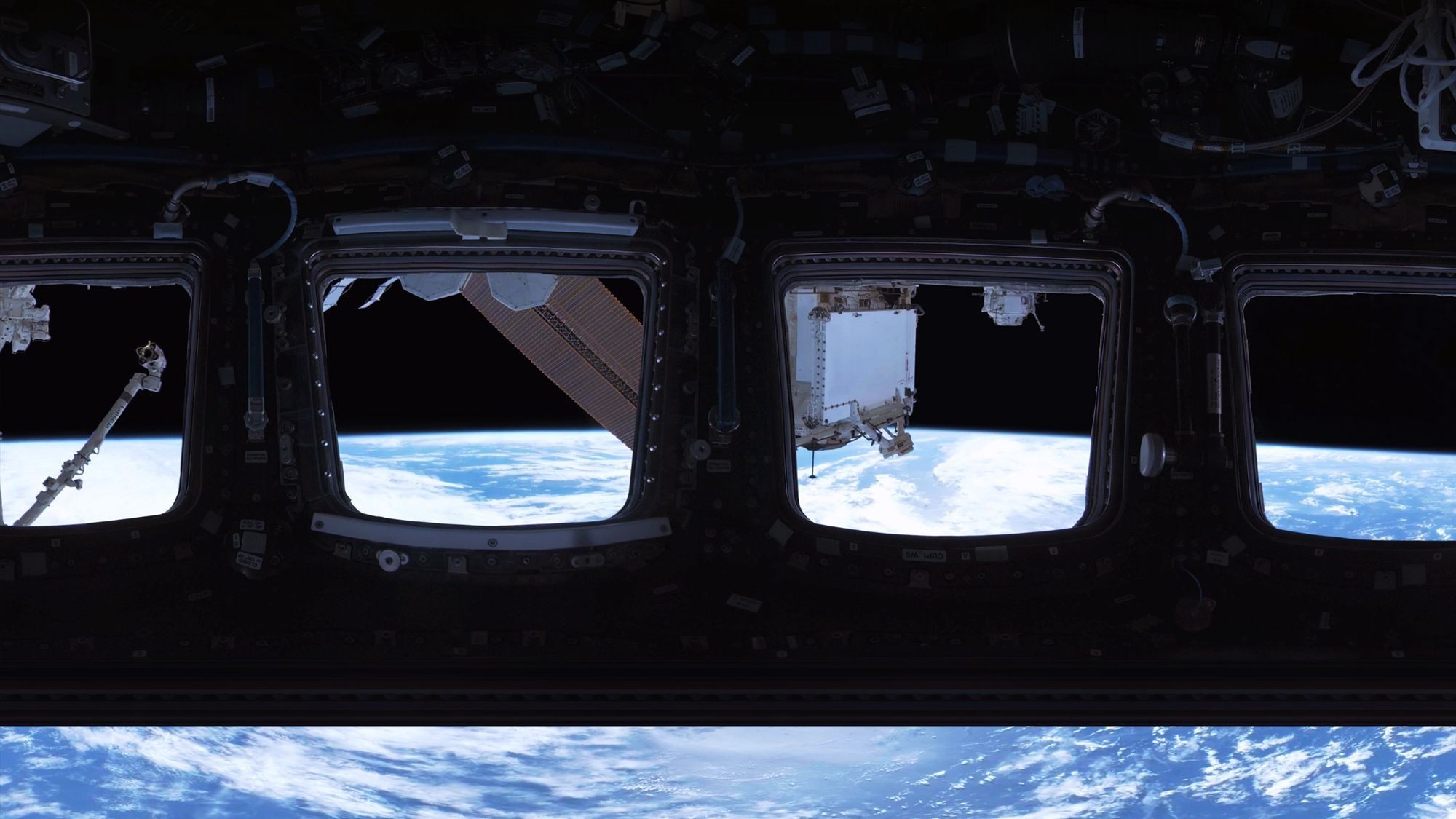
It’s not a perfect 1:1 replica of every bolt and wire, but the scale is right. It’s a translucent, gray rendering of the interior, yet it feels massive. The cupola —that famous seven-windowed corner for looking at Earth—is bigger than you imagine. Solar panels loom over you like rust-colored skyscrapers. The floors look like they might give way, tricking your brain into fearing gravity even though you’re standing still. It’s scary. It’s exposed.
Why This VR Experience Stands Out
What makes this show different from other virtual reality experiences? The footage.
Floating in the virtual corridors, you’ll find glowing orbs. Touch them. They trigger short video clips. These aren’t CGI. They are real, recorded footage from the actual International Space Station. That’s the hook.
One orb near the gym might drop you right into a training session with Christina Koch, an Artemis II specialist. Another might float you eye-level with the station’s robotic arm. You see a spacewalker outside the hull. Earth looms large and majestic in the periphery. The sunlight hits the worn white walls of the laboratory with such realism that you might actually squint.
The details are staggering. It’s not just a tour; it’s a window into a life we can only dream of.
How the ISS VR Footage Was Filmed
I asked Félix Lajeunesse, co-founder of the studio, how they pulled this off. It wasn’t simple. The project took three years to produce. They shipped three cameras into orbit across six NASA expeditions. Two went inside the station. One went outside, mounted on the Canadian robotic arm.
Ground operators remotely controlled the exterior camera to get those cinematic, floating shots. But the interior? That required the astronauts themselves. They used a special VR camera designed to mimic human eye-level.
“This kind of anthropomorphic idea that the camera is as a person really resonated with the astronauts.” — Félix Lajeunesse
The camera wouldn’t block experiments or take up table space during breakfast. Instead, it was placed where a person would be. The crew got a “shooting script” every day, telling them exactly where the lens should be. If a spot didn’t work, they suggested better ones. It felt like a real film set, just in orbit.
This collaboration was personal. The astronauts wanted to show their families this place they called home for months at a time. When Lajeunesse premiered the show in Houston, Texas—the hub of NASA training—he showed it to the crew first. Almost all of them cried. They said it felt like going home.
Is the ISS VR Worth It Before 2030?
Here’s the sobering part: the International Space Station won’t be there forever. Unless we launch a boosting mission (which looks unlikely soon), it will be de-orbited in 2030. It will burn up in the atmosphere, with charred remnants landing in the Pacific. Some pieces might end up in museums.
People who visit those museums decades from now won’t have seen the ISS in its prime. They won’t know the hum of the fans or the smell of recycled air. They won’t have lived during the time when this giant lab was humanity’s outpost.
This VR experience, therefore, is becoming a time capsule. As Lajeunesse notes, VR creates simulations that are as rich as reality. It’s deeply human.
The team is already working on “Interstellar Arc,” a futuristic VR show in Las Vegas that’s even more interactive. But the ISS project holds a special weight. It was built through cooperation. Political opponents on Earth joined forces to create a microcosm of humanity in the sky. They maintained it through cooperation.
“Just the fact that it exists… We should marvel at that.”
We’re standing on the precipice of losing that piece of our history. If you haven’t tried this experience, do it. Not just because it’s cool, but because it might be one of the few ways future generations will understand what it actually felt like to be up there.
The lights go down. You put on the glasses. The darkness fades. And for a moment, you’re not in Manhattan anymore.