


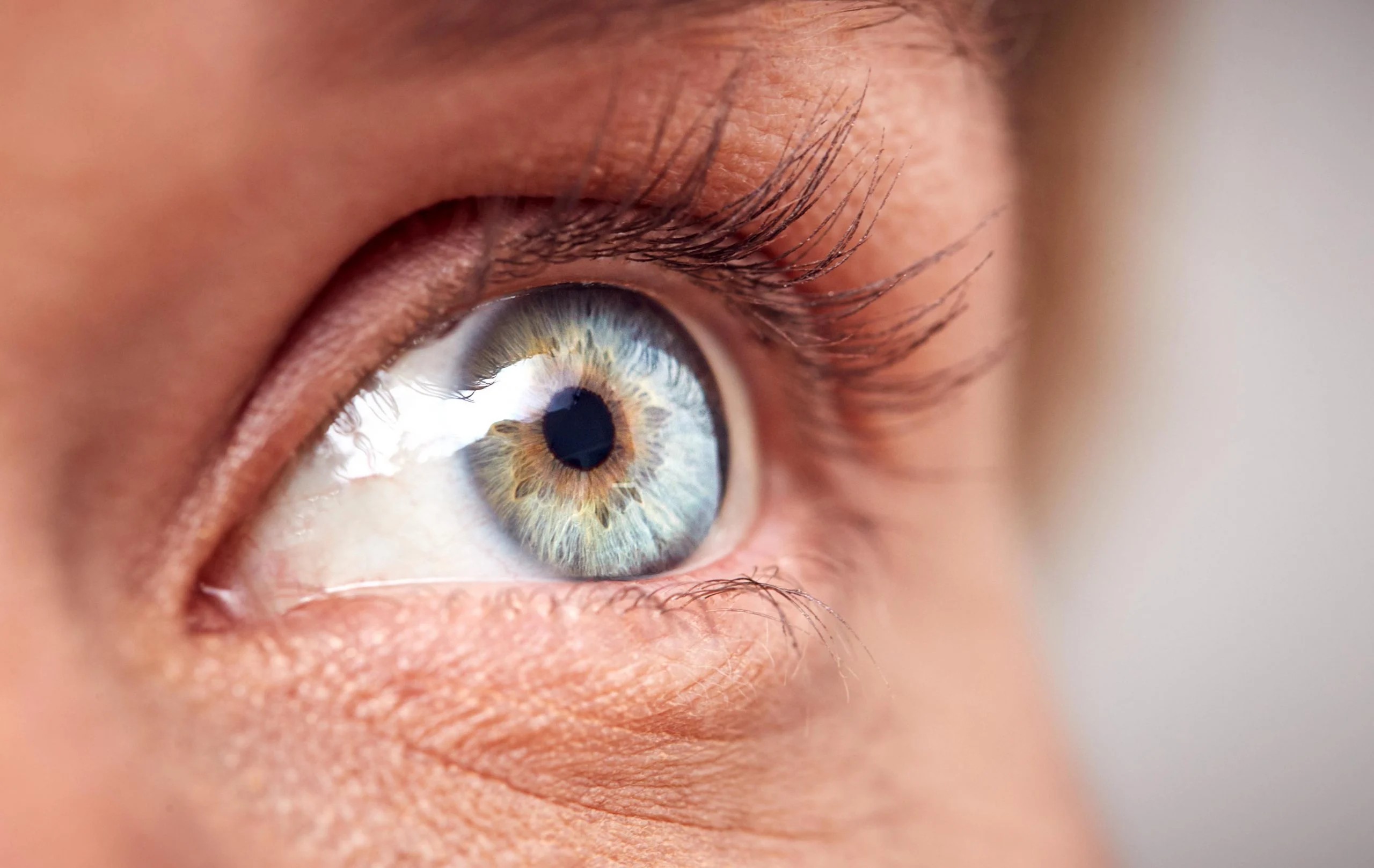
For over a century, science held onto a stubborn myth: the eye has no lymphatic system. It was thought to be an isolated bubble, sealed off from the body’s immune and waste management networks. We were wrong.
Now, a newly identified drainage route—called the posterior ocular lymphatic out flow, or POLO pathway—changes everything.
This discovery doesn’t just add a footnote to biology textbooks. It offers a potential lifeline for millions of people with glaucoma and age-related mac degeneration. These are the leading causes of permanent blindness worldwide, often driven by fluid buildup and toxic debris accumulating behind the retina. Until now, no one really knew how the eye cleaned itself up.
The Mystery of the Retina’s Trash
The retina is a metabolic beast. It works harder than almost any other part of the body. This constant activity generates waste. Lots of it.
Proteins, inflammatory debris, excess fluid—this junk has to go somewhere. If it stays behind, pressure rises. Tissues swell. Cells die. Result: blindness.
Dr. Neeru Gupta, head of ophthalmology at the University of British Columbia, puts it simply. The retina is busy generating byproducts. The eye needs to flush them out. For decades, scientists stared at the back of the eye, saw fluid pooling, and assumed the mechanism was invisible. Or nonexistent.
In 2009, Gupta and Dr. Yeni Yücal from the University of Toronto started digging. They’d already found a lymphatic-like drainage route at the front of the eye, known as the uveolymphatic pathway. But the back? The retina? That remained a dark zone.
“The retina is responsible for vision, and it’s also where many of the most serious vision loss diseases occur,” Yücal said. “Understanding how this part maintains balance is critical.”
Tracing the Tracer
You don’t guess where lymphatics hide in the back of the eye. You track them.
The team used mice as their testbed. They injected fluorescent tracer molecules into the narrow space behind the retina. Then, they watched. Using MRI, near-infrared fluorescence, and microscopic analysis, they tracked the glow in real time.
The result was unexpected.
The tracers didn’t pool. They moved. They slipped through small lymphatic vessels embedded in the choroid—the vascular layer beneath the retina. From there, the fluid traveled into nearby orbital tissue. Within minutes, it reached surrounding lymph nodes.
The eye connects to the rest of the body’s lymphatic network. Directly. Rapidly.
The vessels had been there all along, masked by the assumption that they couldn’t exist.
“This is a foundational discovery,” Gupta noted. “It gives us a new map.”
Why This Changes Treatment for Glaucoma and Macular Degeneration
Why does this matter for you? Or for the 2.5 million Canadians with macular degeneration alone?
Most eye diseases involving vision loss share a common thread: stasis. Fluid doesn’t drain. Waste accumulates. Inflammation sets in. Glaucoma is partly a pressure issue. AMD is partly a waste-clearance failure.
If the POLO pathway exists, it means the body has a built-in cleanup crew for the back of the eye.
The current treatment models focus heavily on suppressing fluid production (eye drops) or injecting drugs into the vitreous. Both are blunt instruments. They fight symptoms. They don’t fix the plumbing.
If we can identify how to enhance this lymphatic outflow, we aren’t just managing disease anymore. We’re addressing the root cause: the inability to clear metabolic trash.
The researchers are asking the obvious question now: How can we exploit this cleanup system?
The Human Question
The mice work. The pathway is visible. But will it work in humans?
That’s the next hurdle. The researchers need to confirm the mechanism functions the same way in the human eye. Safety is another big variable. Stimulating lymphatic flow could be powerful, or it could cause swelling. The line between therapeutic drainage and pathological edema is thin.
But the potential is massive.
Better drug delivery to the back of the eye is one possibility. If drugs can hitch a ride on this lymphatic route, they might bypass the blood-retina barrier more efficiently.
Improved fluid removal is another. Therapies that specifically target the choroidal lymphatics could reduce the inflammatory load in macular degeneration without harsh steroids.
And a better understanding of pressure dynamics? That could redefine glaucoma treatment from day one.
The Window Breaks
This isn’t the end of the story. It’s the beginning of a new one.
The eye is not a closed box. It’s an active participant in the body’s immune and fluid dynamics. The POLO pathway proves it.
For scientists, it’s a fresh set of questions. For patients with degenerative eye disease, it’s a shift from passive waiting to active intervention. The machinery is there. We just needed to see how it runs.
Now, the race is on to see if we can fix it when it clogs.


