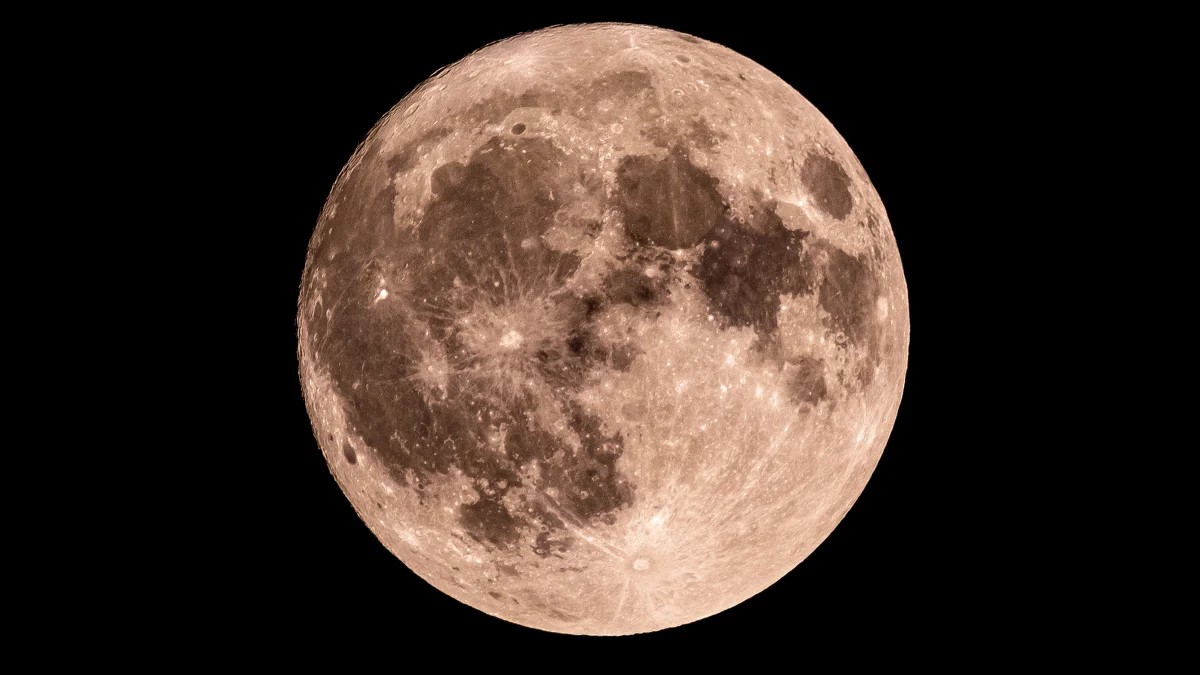
It is almost there. The big reveal. Just three days away from that peak brightness, we are sitting in what astronomers call the Waxing Gibbous phase. Today is June 26. Look up. It is huge. Eighty-eight percent of that surface is lit, glowing against the dark. No special gear required. Just eyes. Maybe binoculars if you really want to get lost in the details.
Tonight 88% of the lunar face is illuminated by the sun.
You do not need a telescope to start seeing stuff. With nothing but your eyes, the Mares Crisium and Imbrium are clear. They stand out, dark patches against the bright rock. The Copernicus Crater is visible too, sharp and defined. Grab a pair of binoculars. You catch more. The Clavius Crater, the Apennine Mountains, even the lunar Alps. If you are serious about this, if you own a telescope, the view opens up entirely. The Rima Ariadaeus ridge becomes visible. The Fra Mauro Highlands. And right there. The Apollo 17 landing site. Human history stamped on dust.
What is actually happening up there? It is not magic. It is mechanics. The Moon takes about 29.5 days for one orbit. During that loop it shifts through eight distinct phases. We only ever see one face, yes, but the sunlight hits it differently as it moves. That shifting angle creates the shapes. The illusion. The lunar cycle is just light and shadow playing on a constant object.
The next Full Moon hits on June 29. A short wait. Three days to get that total illumination.
But why does it change? Why do we care about a rock spinning around us? It marks time. It controls tides. It has driven myths and calendars for millennia. The phases themselves tell a simple story.
- New Moon – It hides between us and the Sun. Dark side facing down. Invisible.
- Waxing Crescent – A sliver appears. Right side for us in the north.
- First Quarter – Half lit. A stark D-shape.
- Waxing Gibbous – Nowhere near full but close. More light each night.
- Full Moon – Complete disk. Bright. Dominating.
- Waning Gibbous – Light recedes from the right. The decline begins.
- Third Quarter – Half lit again but now on the left. A C-shape.
- Waning Crescent – The last bit of light. Before the fade out.
We watch it shrink now. Before it dies in the New Moon. And starts over. Again. Is there anything more repetitive than a calendar that refuses to stop? The sun moves. The angle changes. We watch.