Diana Reiss wanted to see if a whale knows it exists.
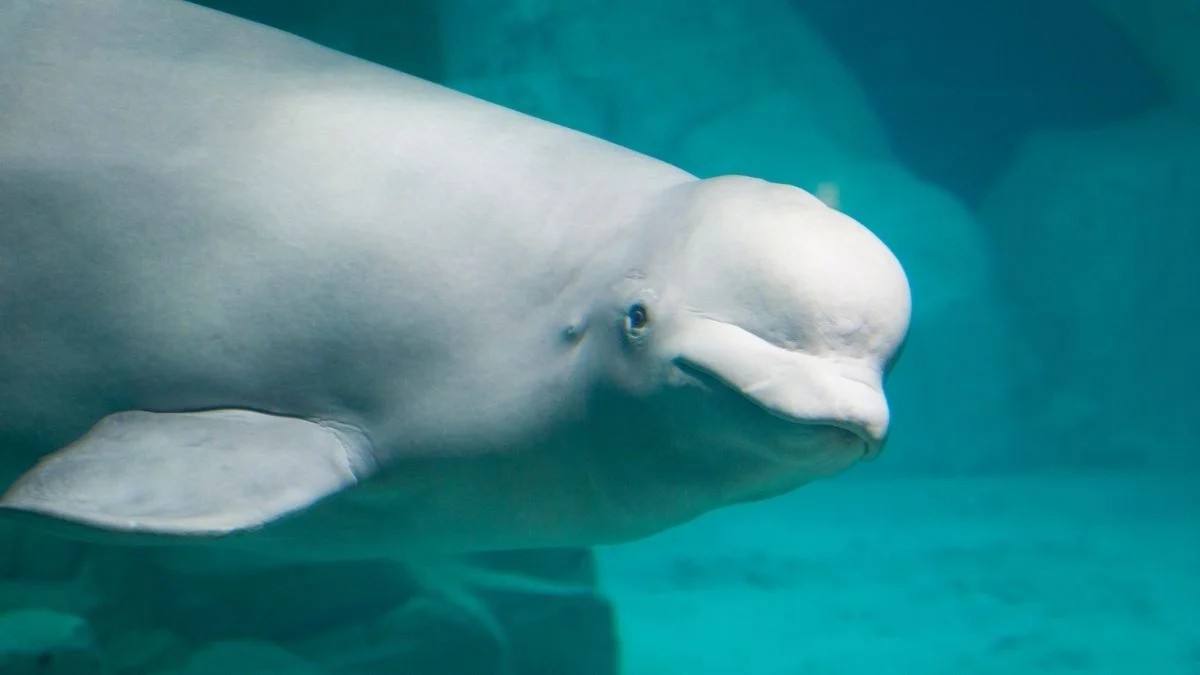
Twenty years ago, she got her chance at the Wildlife Conservation Society’s New York Aquarium. The setup was specific. Four female belugas shared the tanks. Kathy, Marina, and Natasha had been pulled from the wild. Maris was different. She was Natasha’s daughter born in 1994 inside the concrete walls of the tank.
This was rare. You don’t get four related belugas every day. Especially not in one place.
The team ran the mirror test. It’s the old trick for measuring self-awareness. Put a subject in front of a mirror. Mark their face with something harmless but invisible to them. If they look in the mirror and touch the mark on themselves, not the glass, they pass. They realize the reflection is a copy.
Chimps pass it. Magpies. Cleaner fish even. But whales? Especially belugas? They’re loud, social, and weirdly clever. They mimic human speech. They copy bottlenose dolphins. They form tight little societies in the ice.
“Their proclivity for spontaneous imitation… provides strong evidence for high social awareness.”
Reiss thought they’d pass. So they started testing.
Phase one wasn’t about marks yet. It was about behavior. The researchers hid behind one-way glass in the visitor windows. They watched for contingency testing. Nods. Head shakes. Wiggles. Do they interact with the image because it moves when they move?
Natasha and Maris stood out. Natasha did everything. Bubble blowing, neck stretching, pec shimming. She treated the mirror like a gym equipment piece. Maris joined in, mostly biting her own bubbles while staring into her own eyes. The rest? They didn’t care much.
That put Natasha and Maris in the next round. The real test.
Trainers painted non-toxic marks on spots the whales couldn’t see without the mirror. Behind the ear is a classic spot.
Natasha walked right to the glass. She tilted her head. She pressed that specific marked ear against the viewing port. She rubbed it. She knew something was wrong on her. She passed.
Maris didn’t quite make that leap. She showed plenty of interest, sure, but she didn’t touch the mark. Still, her behavior screamed recognition. Just not full proof.
You might argue these were captive animals. Plexiglass is reflective. They saw reflections before they saw scientists. Wild belugas wouldn’t get that advantage.
But that misses the point. The paper published now says belugas possess high-level self-awareness. That’s the big takeaway. It used to be a trait we thought was almost exclusively ours. Now? We know better.
It matters because awareness implies complexity. And complexity deserves protection. Wild populations are shrinking. Climate change is melting their habitat. Noise from ships drowns out their songs. Pollution fills their lungs.
We have over 300 belugas in cages today. Live capture is banned in the US and Canada. Too late for many.
Natasha lives. She’s 42, arguably an old lady in whale years. She swims in Connecticut.
Maris is gone. She died in Georgia in 2015 at just 21. A short life. A separated daughter.
The New York tank doesn’t hold them anymore. But the data remains. And so do the whales, somewhere else, watching us back through the glass.
Do we notice them watching?