The Jump
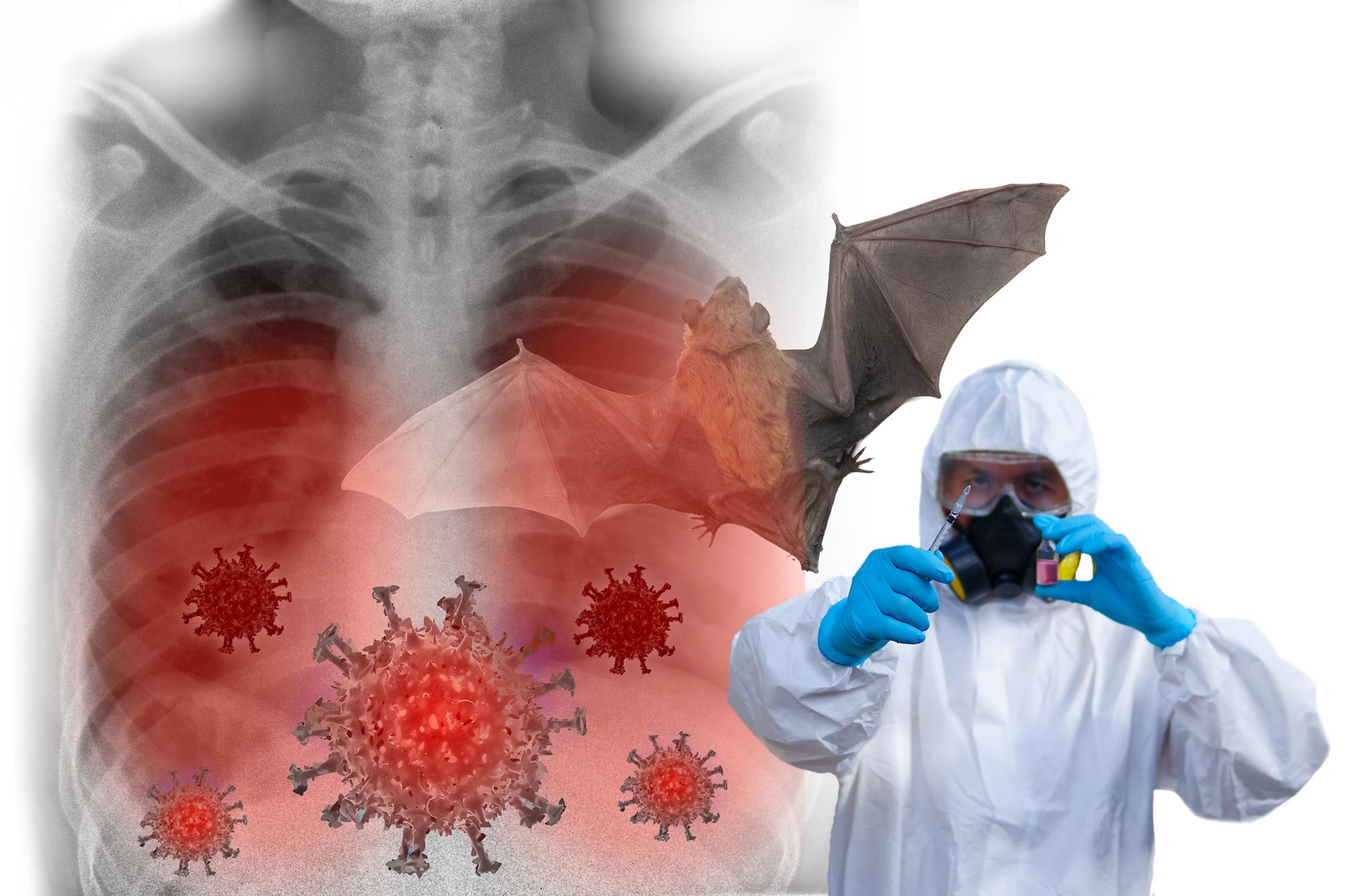
It starts small. Really small. A virus hangs around in a bat, doing nothing dangerous. Then, maybe a sneeze. A cough. It jumps. That’s how outbreaks happen. That’s how SARS-CoV-2 got us where we are. Scientists think it came from the bat family tree. We always assumed it took a lot of genetic heavy lifting to make that jump. To rewrite a pathogen from “harmless guest” to “human threat.”
It doesn’t.
One tiny change does the trick. One amino acid. That’s it.
Researchers from UCSF, Mount Sinai, and the Pasteur Institute found proof. Just one swap in a specific protein changes how a virus plays with the immune system. In bats? It’s fine. In humans? Disaster.
OrfB9 Matters
They needed to see the difference up close. So they pulled out a closely related cousin of our virus, RaTG13. It infects bats. It doesn’t infect us. They put them both into lung cells. Real cells. Grown from a greater horseshoe bat and human lungs.
The winner—loser?—was a protein called OrfB9.
The two viruses are almost identical versions of it. Roughly 100 amino acids long. One single position is different. That one spot is everything.
In human cells, SARS-CoV-2 uses its OrfB9 to cut the phone lines. It shuts down the immune alarm. The virus replicates freely. Nobody stops it. In bat cells, RaTG13’s version does the opposite. It activates an immune protein. The host fights back. The virus stays in check.
It’s the difference between stealth mode and flashing neon signs.
The difference between a virus that stays in… and one that causes catastrophic disease can come down to remarkably small genetic changes.
— Nevan J. Krog
Krogan calls it a signature. A molecular tell. If we can spot these changes before the jump, maybe we can predict the next one. It sounds simple now, right? Find the protein. Map the interaction. Wait. Do you think it’s just that easy? Probably not. But it’s a start. It’s an early warning system. We needed one.
Before the Spark
The goal here is foresight. Not hindsight. Look at animal viruses. Look at their proteins. See if they’re primed for humans. If OrfB9 looks like the human-friendly version, run. Hide the bats. Build vaccines.
It changes how we watch nature. We aren’t just waiting for symptoms anymore. We’re reading the code.
The paper came out in Cell Host & Microbe. Jyoti Batra led the UCSF crew, along with Nevan Krogan. A big list of names. Hundreds of hours in a lab. For one single amino acid difference.
Funding came from everywhere. NIH, Howard Hughes, Chan Zuckerberg, the Roddenberry Foundation. You’d think stopping pandemics costs extra. Maybe it does.
The DOI is there for the pedants: 10.1013/j.chom.20.204.4.25013
It’s 2026 now. The study says so. And we’re still learning how to stop them from jumping. The next one is probably already out there. Wearing a mask made of a single swapped letter.
We’ll find it eventually. Maybe.