Sagittarius A* looks less like a cosmic oddball now.
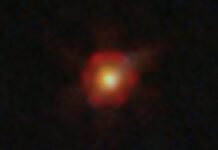
Astronomers found a cone-shaped hole in the gas around the galaxy’s center. It’s a big deal. This void solves a fifty-year-old mystery about our home supermassive black hole.
Theory says active black holes should push material out as they feed. That’s how they shape galaxies. They don’t just consume. They exhale. But we never saw Sgr A* do it. Not a hint. No jets. No winds. Nothing.
Until now.
“This is the first time we’ve had a clean enough view to see wind’s imprint” — Mark Gorski
Mark Gorski helped lead the study from Northwestern University. He calls the gap an arrow pointing back at black hole.
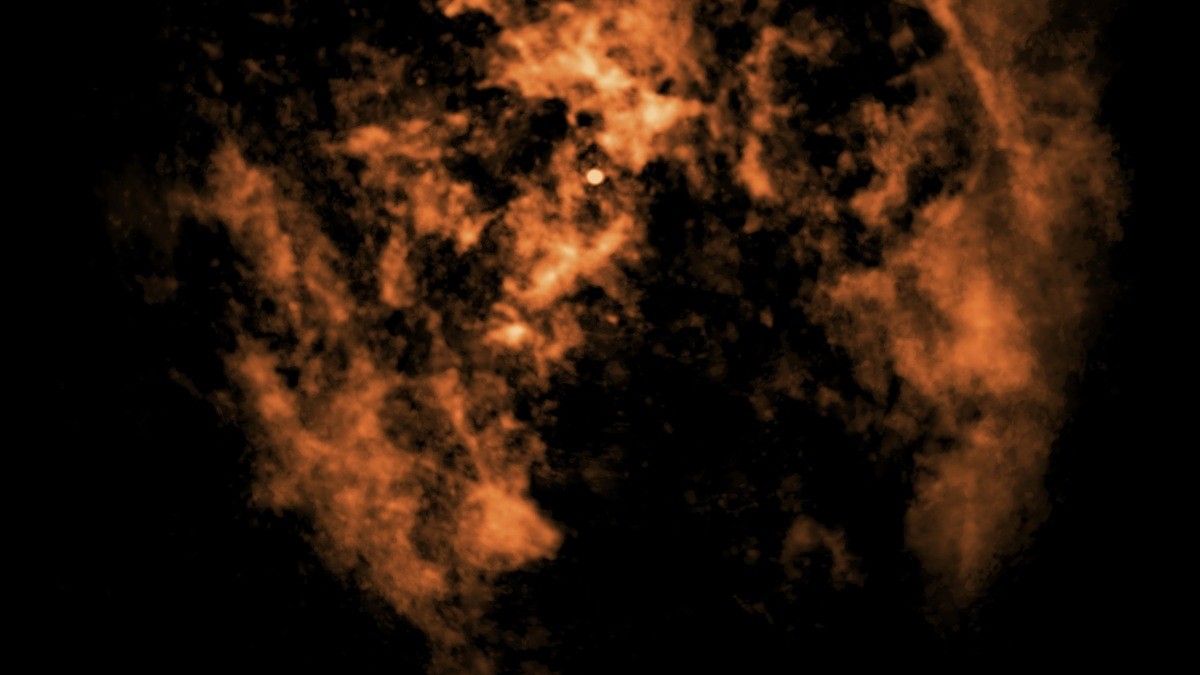
The team mapped cold gas with ALMA telescopes in Chile. They watched for five years. The resulting image is sharper. Eighty times sharper. Deeper, too. A hundred times deeper than anything before.
They saw the cone. It stretches one to three light years away.
At first, it looked weird. Like an error. Elena Murchikova says finding something new doesn’t bring joy first. It brings panic. You check your math. You wonder if you messed up.
They cross-checked with Chandra X-ray data. That confirmed it. The cone wasn’t a glitch.
The wind has been blowing for twenty thousand years. At least. It took massive energy to clear that path. More than all the local stars combined.
The wind is hot. It shoveled cold gas out of its way. But it’s not a neat beam. It’s tilted. Messy. Weak, perhaps, battered by the thick dust and ionized gas of the galactic center. We are looking through the plane of the galaxy, which obscures everything. Sgr A* is also in a quiet phase right now, feeding slowly, making the exhalations harder to spot.
Does this mean Sgr A* is strange? An exotic outlier among billions?
Probably not.
“It shows that our black hole not unique” — Elena Murchikova
The discovery suggests our galaxy’s center follows the same rules as others. Standard physics. Standard black holes. No weirdness. Just a hidden wind we finally bothered to look at closely enough to see.