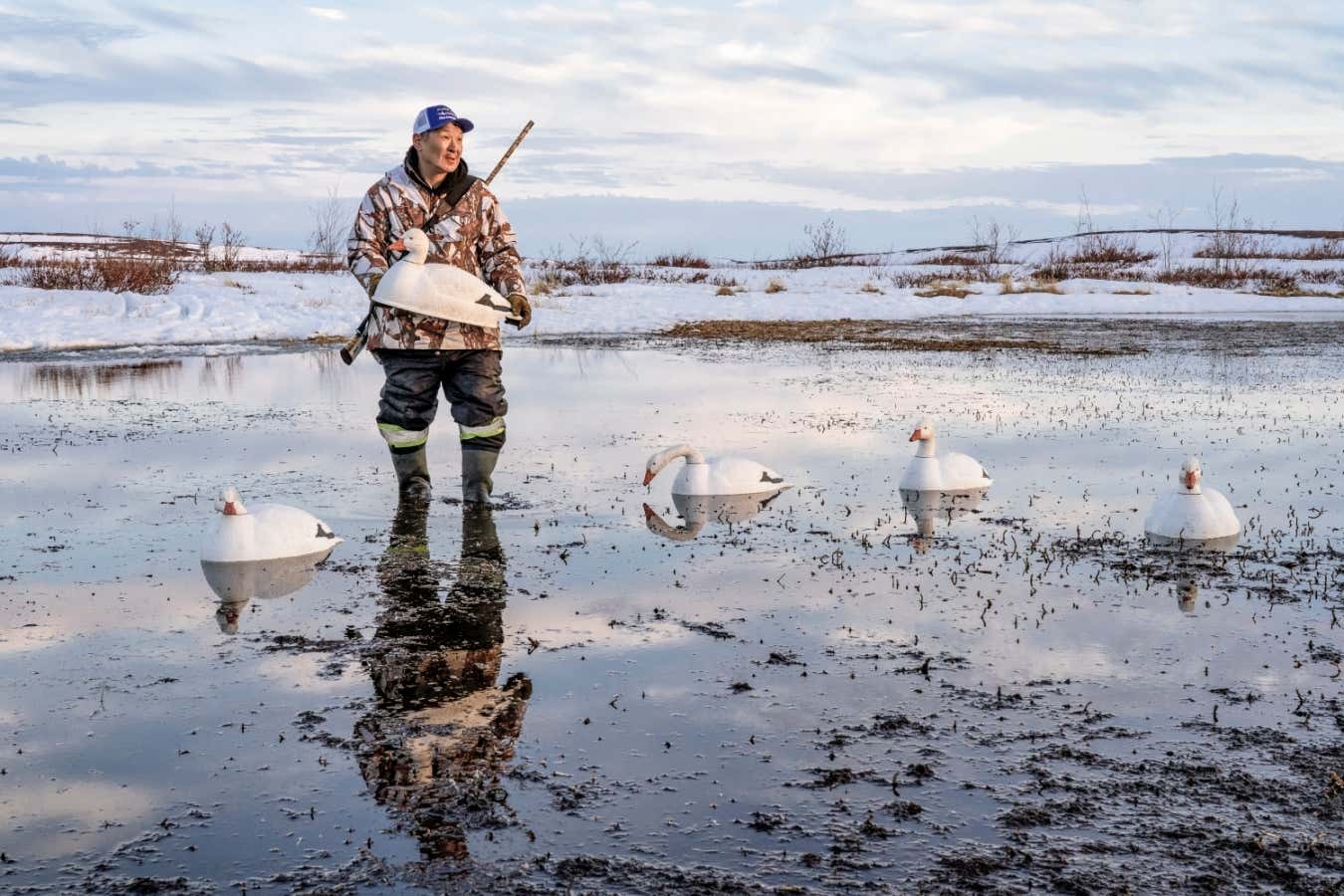
Natalya Saprunova won the New Scientist Editors’ Award. The category was Earth Photo 20206. Her winning series is a collision. Tradition versus climate chaos. All shot in the Canadian Arctic.
Take the opening image. It’s icy blue, cold even through a screen. A hunter from the Inuit community in Tuktoyaktak stands there. He’s holding a goose decoy. Usually made from reeds, this one isn’t. Materials shift first. But the problem isn’t just craft supplies. Rising temperatures mess with bird migration. Patterns shift. Birds get harder to catch. Saprunova sees this. She focuses on the permafrost, which is doing its own slow burn.
The thaw is not just melting ice. It reshapes the map people rely on.
Below that, another scene. Victoria Island. A resident handles fish. Fish are essential here. Climate change changes behavior. That’s a broad statement. Let’s look closer. Permafrost thaws. Coastal erosion speeds up. Mercury—bad stuff—leaches into fish habitats. The food supply is compromised. Not theoretical. Immediate.
Look at the wider shots. The land itself is unraveling. Sunken polygons fill with water. Ice-cored hills pop up occasionally. When permafrost goes, the ground gets uneven. Caribou struggle to move. It’s a messy, broken landscape.
Sachs Harbour is worse. Whole cliffs are vanishing. Cracks run through the permafrost right next to neat houses. The contrast is stark. Homes built for permanence. Ground giving up. Canada holds the longest inhabited Arctic coast in the world. Some folks here might become the country’s first climate refugees? Maybe. The risk feels real.
Pelly Island is disappearing too. Saprunova knows it’s going. Black rock cliffs stand bare. A tiny human figure stands by the water. Gray veins in the rock show the wounds. Greenhouse gases escape from melting permafrost there. This speeds up warming. Which melts more ice. It’s a feedback loop. Devastatingly simple.
These photos aren’t just pictures. They are evidence. An exhibition at the Royal Geographical Society will show them in London. Through 24 July. You can look closely before the land looks back.