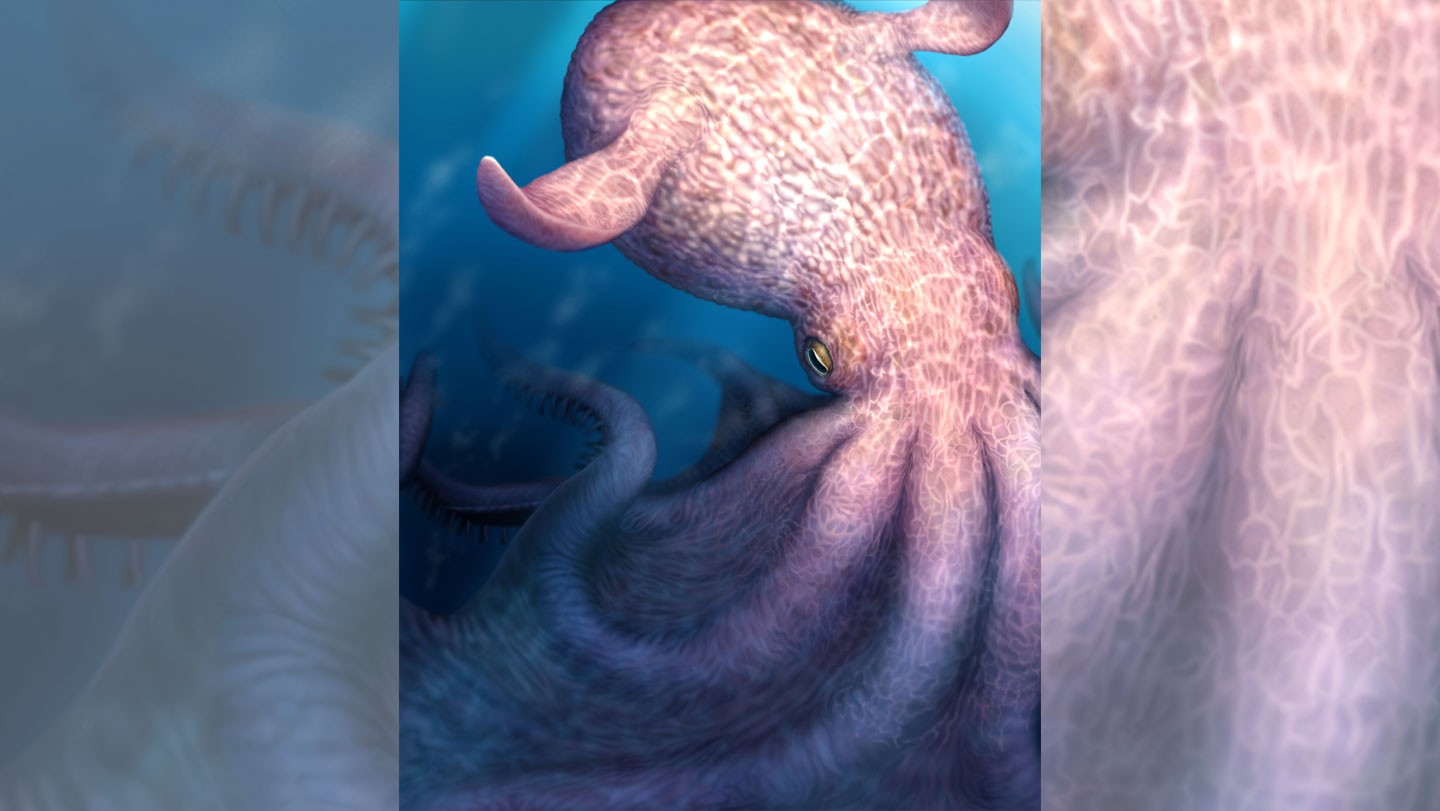
Imagine a squid the size of a school bus.
Not cute. Not curious. Big.
For a long time, paleontologists knew about Architeuthis ancestors. They knew the creatures existed in the late Cretaceous period. But the details? Fuzzy. Until now.
Scientists just found a massive new clue.
A single claw.
It wasn’t much. Just one hooked sucker. But it belongs to something that would make even Jaws look like a goldfish. This thing was huge. We are talking about an octopus that rivaled the biggest mosasaurs of the era. The ocean wasn’t just shark-infested back then. It had predators that redefined the word behemoth.
The Clue Was Tiny. The Beast Was Not.
The fossil was found in Montana. Not exactly the middle of the Pacific, right? But millions of years ago, that land was submerged. The ecosystem was rich. Chaotic. A feeding ground for the insane.
When you measure a cephalopod, you don’t have bones. You have soft bodies that rot. Or fossilize under very specific conditions. Getting a complete skeleton of a giant octopus? Rare. Almost mythical. But this claw tells us the scale.
It suggests these animals grew far larger than we thought possible.
Current giant squid top out around 40 feet. Maybe a bit more if you’re generous. These prehistoric giants? We are looking at lengths that could swallow a whale whole.
Wait, can you even do that?
Sort of.
A New Food Web
The late Cretaceous was a strange time. The climate was warm. Mild. Forests grew near the poles. Flowering plants were just emerging. And the oceans were teeming with life. But also teeming with death.
Plesiosaurs lurked in the shadows. Mosasaurus patrolled the open water. Now, add an octopus with a beak sharp enough to pierce steel and suckers strong enough to crush rock.
Who is at the top of the food web now?
It complicates the narrative. We tend to think of the extinction event 66 million ago as a clean break. The asteroid hits. Dinosaurs drop dead. But the ocean survivors? They weren’t just hiding. They were evolving. Adapting.
Some regions cooled. Dinosaurs down there grew feathers. Not for flying. For staying alive. In the water, pressure mounted. Competition spiked.
This giant octopus wasn’t alone.
It shares a lineage with the squids and cuttlefish we know today. But the size? That’s the shock. It hints at an era where energy flowed differently. Where growth wasn’t limited by the constraints we see in modern marine biology.
Why Do They Shrink?
Did they shrink later? Or did they just vanish?
Most of these leviathans didn’t make it through the asteroid impact. The shockwave. The darkness. The collapse of the food chain. It wiped out half of all plant and animal life on Earth. The invertebrate population took a hammer blow.
But some survived. The ancestors of our modern octopi lived on.
Maybe size became a liability. Too much food required? Too visible? Or maybe the ecosystem just reset itself. The niche they filled closed up.
It leaves us wondering about what we haven’t found yet.
We have one claw. Just one.
Imagine the rest of the animal.
Waiting in the sediment.
Waiting for someone to dig.
The deep keeps secrets. Not just down there now. Down there then, too. 🦑