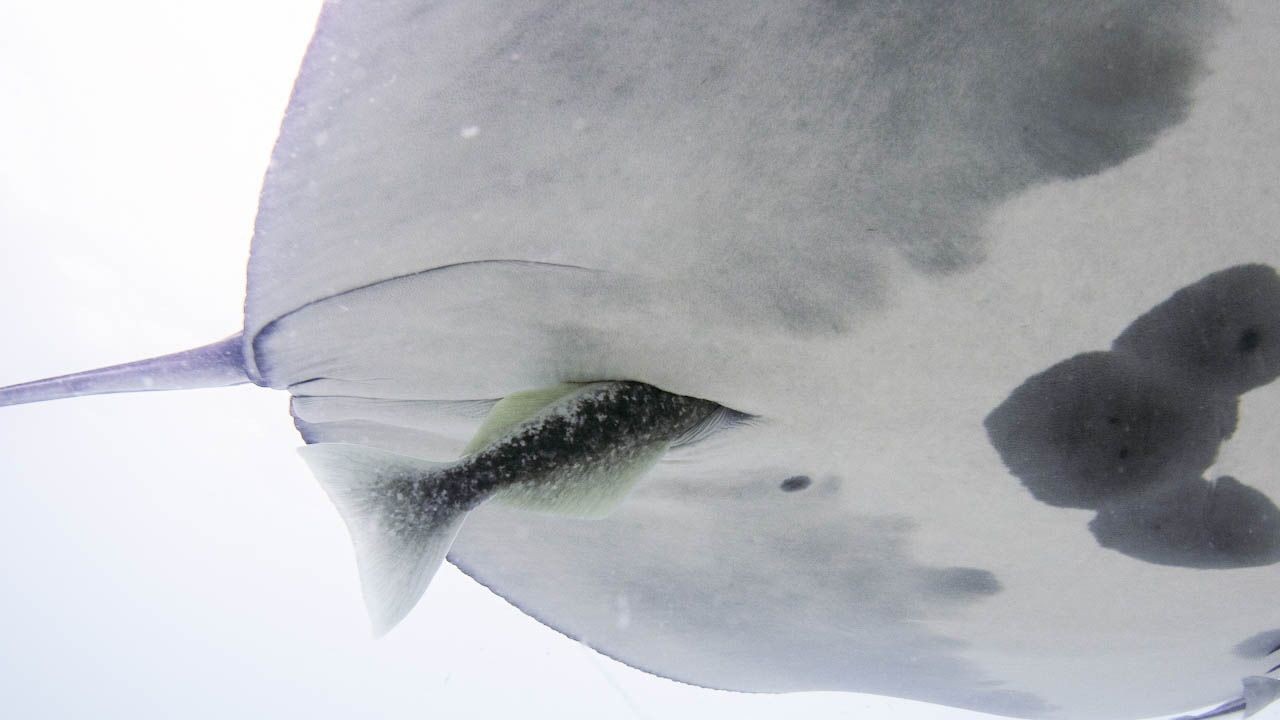
For decades, the ocean’s most famous “hitchhikers” have been viewed through a lens of harmless convenience or mutual benefit. Remoras, small fish equipped with suction discs on their heads, are widely believed to travel on sharks, whales, and manta rays to pick off parasites—a service that suggests a cooperative relationship. However, new research challenges this benign narrative, revealing that remoras may actually be engaging in behavior that is intrusive, potentially harmful, and fundamentally parasitic.
A Shocking Discovery
The study, led by Emily Yeager, a doctoral candidate at the University of Miami, documents a startling behavior: remoras inserting themselves into the cloaca of manta rays. The cloaca is a multifunctional opening used for reproduction, waste elimination, and excretion.
The discovery was made serendipitously when a free diver startled a common remora (Remora remora ) near an adult Atlantic manta ray (Mobula yarae ). In a rapid defensive or opportunistic move, the fish slipped into the manta’s cloacal opening. The manta ray reacted with visible distress, shuddering briefly before continuing to swim with the fish still lodged inside.
“My first reaction was a combination of amazement and horror — it’s so cool that remoras can do that, but I imagine it’s no fun for the manta,” said David Shiffman, an independent marine conservation biologist not involved in the study.
Beyond “Harmless” Hitchhiking
Historically, scientists categorized the relationship between remoras and their hosts as either mutualism (both benefit) or commensalism (one benefits, the other is unaffected). The assumption was that remoras provided a cleaning service, making them useful companions.
Yeager’s findings suggest this view is outdated. By entering sensitive internal cavities, remoras may be causing:
* Physical injury or discomfort to the host.
* Increased energetic costs, as manta rays have been observed leaping out of the water or scraping against sand to dislodge the fish.
* Potential interference with reproduction, given the location of the intrusion.
“If you look at the images and videos of remoras sliding up manta ray behinds, it may not be a harmless relationship,” Yeager noted. “The manta’s ability to remove the remora is probably pretty non-existent.”
A Widespread but Hidden Phenomenon
While the behavior sounds extreme, data collected from manta ray scientists worldwide indicates it is more common than previously thought. Over a 15-year period, researchers recorded seven instances of remoras entering manta cloacae across three different manta species (M. yarae, M. birostris, and M. alfredi ) and in both juvenile and adult rays. These incidents spanned multiple oceans, from the Maldives to Florida.
Previous studies had hinted at similar behavior—such as small remoras found in the gill cavities of sailfish or the cloaca of a whale shark—but this is the first comprehensive documentation of the practice in manta rays. The rarity of observation is likely due to the difficulty of witnessing such private, internal interactions in the wild.
Rethinking Symbiotic Relationships
The implications of this study extend beyond remoras and manta rays. Yeager argues that symbiotic relationships should not be viewed as rigid categories but rather as a continuum. Much like human family dynamics, where relationships can shift between supportive and conflictual, ecological partnerships likely vary in nature depending on context and behavior.
“This is evidence of more of a parasitic relationship, which is new to our kind of understanding of what these relationships are and how they function in the wild,” Yeager explained.
Conclusion
This research forces a reevaluation of one of the ocean’s most iconic symbiotic pairs. What was once considered a harmless or beneficial hitchhiking arrangement may, in fact, be an intrusive parasitic interaction. As scientists continue to observe these complex dynamics, it becomes clear that nature’s partnerships are far more nuanced—and occasionally uncomfortable—than previously assumed.