The sky wasn’t enough for the Soviets. It wasn’t enough just to spin in capsules or endure G-forces. By mid-1962, the race had shifted. It was about what happened when the floor disappeared.
On July 27, 1 Human spaceflight was still barely a year old. Methods were guesswork. Physics books didn’t account for the chaos of a human body in microgravity. You didn’t just float. You vomited. You drifted into walls. You struggled to eat, to sleep, to function.
So, two cosmonauts, Andriyan Nikolayev and Pavel Nikolayev, took off. Not on a rocket. Not yet. On a jet.
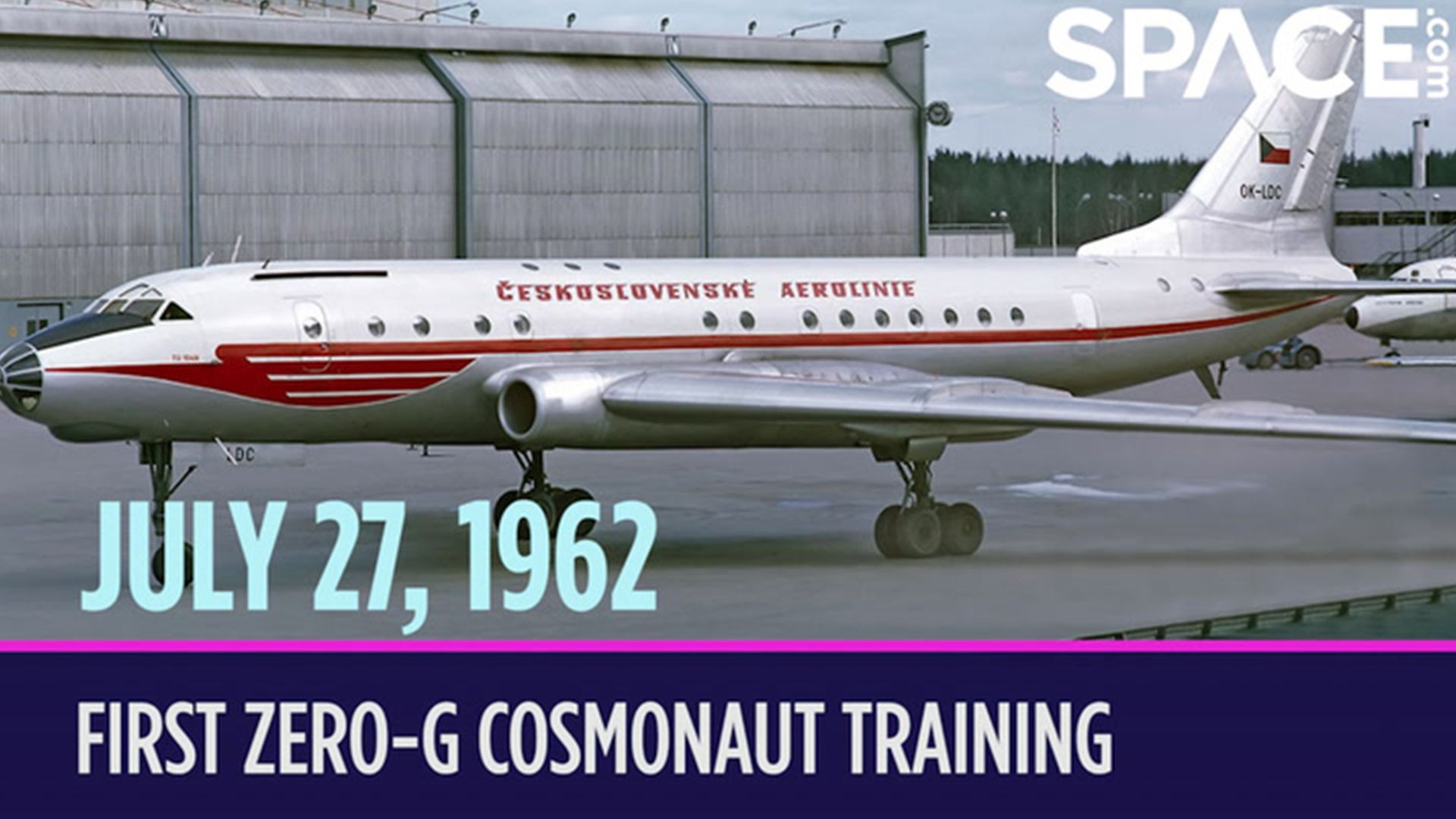
This was the first zero-g cosmonaut training flight in Soviet history. And it happened on a modified Tupolev Tu-104 airliner.
The Plane That Flew Parabolic Arcs
The Tu-104 was built for 50 passengers. A sleek, terrifying machine of the early jet age. It was loud. It was fast. But for this mission, it was a laboratory.
The cabin was stripped. Rows of seats removed. Why? Because the plan was simple. The pilot would pull up, dive down, and pull up again. Parabolas.
Each maneuver bought them 6 to 25 seconds. No more. No less.
Six seconds feels like an eternity when you are spinning out of control. When your breakfast is floating toward your face. When your body doesn’t know where “up” is.
Nikolayev and Popovich were not sightseeing. They were preparing. For what?
Why This Flight Mattered
July 1962. The Space Age is a toddler.
NASA is figuring it out too. But the Soviets were ahead. Or at least, they were trying harder to simulate the unknown.
The effects of weightlessness were not theoretical anymore. They were physiological nightmares. How does the vestibular system handle constant rotation? How does muscle tone fade? The training had to be real. Sitting in a chair did nothing.
Nikolayev was prepping for Vostok 3. Popovich was prepping for Vostok 4.
This was the first-ever dual spaceflight. Two single-person capsules. Two men. In space. At the same time.
Imagine the pressure.
Vostok 3 lasted nearly four days. Vostok 4 lasted three. These were marathons. NASA’s Gemini program wouldn’t touch these durations until 1965.
During their orbits, the two craft flew within 4 miles of each other. Can you see them? Tiny dots against the black. Two humans, alone in metal bubbles, separated by only four miles.
The Legacy of the Parabola
That 1962 flight proved one thing. You could simulate the void. You could buy the ticket.
You still can.
Today, NASA and Roscosmos use modified jets. The Zero Gravity Corporation flies these same parabolic arcs. Scientists run experiments inside them. Volunteers pay money to feel the drop.
But think about what Nikolayev and Popovich did. No cameras. No commercial thrill-seekers. Just two men in a stripped-down airliner, testing the boundaries of human endurance before they ever left the atmosphere.
They didn’t just fly. They survived the absence of gravity.
And when they finally launched? The weightlessness wasn’t a surprise. It was just another part of the job.
The sky remains a frontier. But the training never stops.