Fire and fury. That’s all the internet got for a few minutes Friday night.
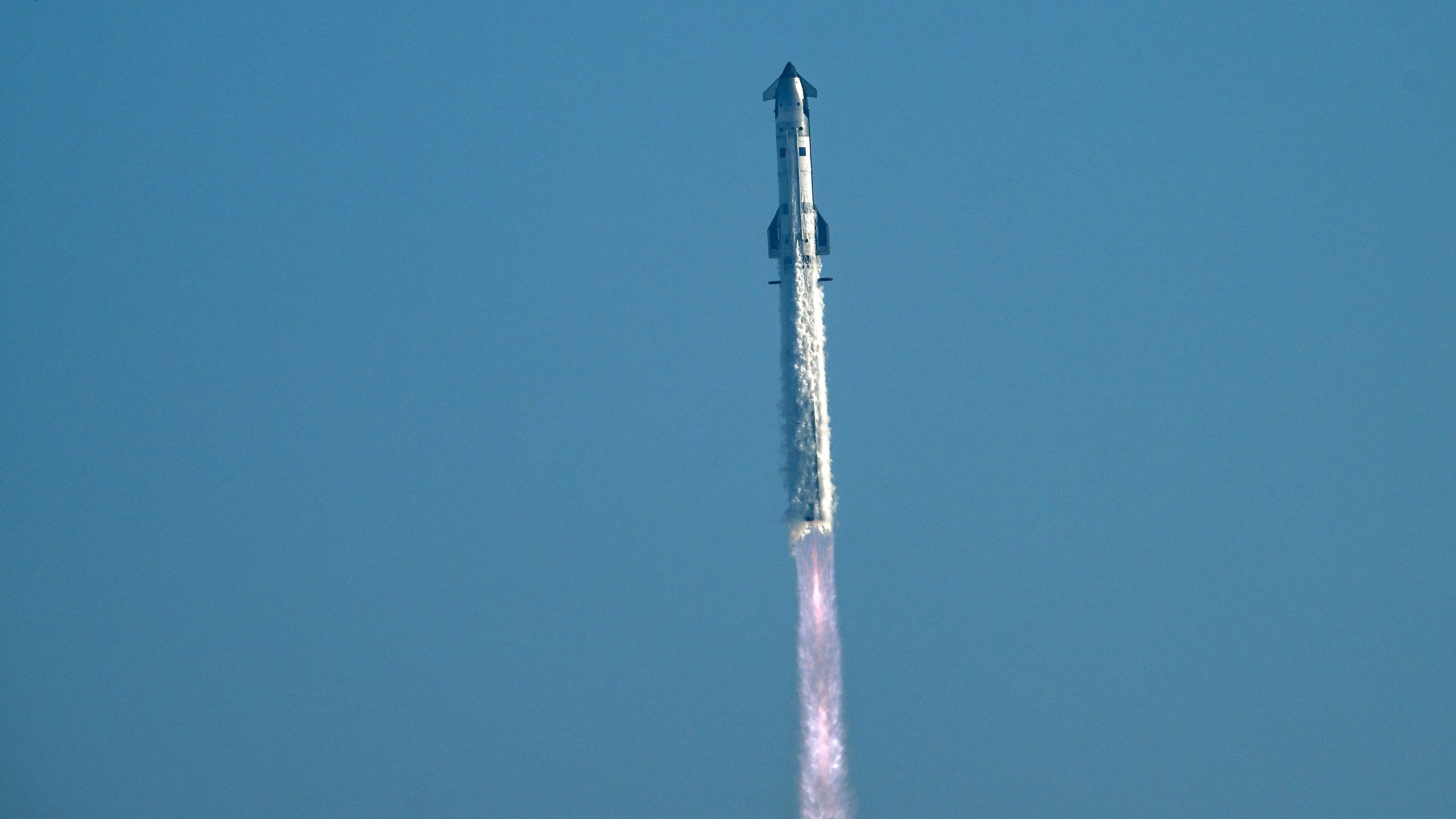
SpaceX launched its Starship V3 rocket. The 12th test flight ever. But the first time this specific version ever flew. It tore off the pad in Texas at 6:30 p.m., a 408-foot monstrosity roaring into the Texas sky.
It was supposed to happen Thursday. It didn’t. A glitch. So they waited. A day.
Then it went.
Elon Musk posted on X afterwards, keeping it simple.
“Congratulations SpaceX team on an epic first starship V3 launch & landing!”
He added a flourish that sounds grand until you read the post-mission report.
“You scored a goal for humanity.”
Sure. Let’s look at the goals missed, shall we?
The Flight: Beautifully Messed Up
Three hundred thirty engines lit up. One died instantly.
Super Heavy, the booster stage, lost power on a Raptor engine right out of the gate. Then came the boostback maneuver. The part where the giant lower half turns around to come home. It missed it.
Something broke. Or something didn’t start. SpaceX didn’t say which, exactly, just that the burn didn’t happen as planned. The booster fell out of the sky and smashed into the Gulf of Mexico. Hard.
But they didn’t crash on the launch tower. Good enough, for now. They aimed for a soft splashdown, then gave up when the controls failed and let it crash into a safe zone instead.
Meanwhile, up top, Starship’s upper stage lost one of its six engines too. It kept going with five. Dan Huot, speaking live during the flight, called the orbital insertion “within bounds.”
Translation: We are still here, but not in the spot we wanted to be.
“I wouldn’t call it nominal orbital deployment…”
Huot admitted they are working through steps with an engine out. It’s not ideal. But it flew.
V3 vs. V2: Why The Change?
Here is the thing about V3. It looks different.
Previous versions used an interstage ring. V3 throws that out the window. Instead, it has a ring of hardware fixed to the booster. Think of it as a fence. It protects the upper stage’s engines during separation, giving them room to light up without melting their own face.
“Hot staging” still happened. The upper stage fired while attached, pushing itself away.
Separation went fine. Then the booster failed.
The upper stage, Ship 39, kept flying.
Deploying the Toys
Ship 39 had baggage. Twenty-two payloads. Twenty dummies. Two real Starlink satellites.
These weren’t normal comms sats. These had cameras. SpaceX nicknamed the camera-drones “Dodger Dogs.” They were designed to snap pics of the heat shield tiles as they flew away.
They deployed. They took pictures.
The images were… striking.
“That is a starship in space.”
Huot said it while staring at screens showing a metal tube floating above a blue planet. It works. The cameras work. The heat shield looked mostly okay, at least from the perspective of a camera flying away from it.
One thing skipped.
Originally, they planned to reignite an engine in space. Proof that they can turn the thing around in zero-g. With an engine already dead on the way up? Too risky. They canceled the test.
The Return to Earth
Reentry came about 50 minutes in. Plasma. Bright fire. The belly of the ship turned white-hot.
They did stress tests. They tilted. They banked. It mimicked the move needed if SpaceX ever wanted to catch the whole rocket with its “chopstick” launch towers again.
Two engines ignited for the landing. The third? Remember, it died on liftoff. So they flew on two.
They touched down in the Indian Ocean.
Then the ship exploded. A magnificent fireball. Everyone cheered. This is how they do it. Test flight means destroy the hardware, learn from the debris, build it back stronger.
Why V3 Matters Now
You might ask, was this groundbreaking?
Technically? No. The previous flights did similar things.
But V3 is a completely different animal. It was supposed to be ready in 2024. A delay. Then another delay. A prototype exploded in testing in November last year.
They have been catching up for six months.
NASA is waiting.
Artemis. The moon landing program. They need Starship. They might use Blue Origin’s Blue Moon lander too. But Starship is the heavy hitter. It has the docking ports now. Four passive ports on the leeward side, ready for refueling ships to attach in orbit.
Refueling.
That’s the big hurdle. You cannot go to Mars with a full tank from Earth. You need tanker ships. A dozen launches per moon trip, maybe. Starship hasn’t done orbital refueling yet. It hasn’t even done a full Earth orbit yet.
NASA Chief Jared Isaacman came to Texas to watch.
He’s going to space soon enough himself. On Artemis missions.
After the crash, he posted: “Congrats SpaceX team and one step closer to the moon… one step closer to Mars.”
The Clock is Ticking
Here is the timeline.
Artemis 3 lands astronauts on the Moon. Mid to late 2026? 2027?
NASA wants to see uncrewed landings first. Both Starship and Blue Origin must prove their vehicles can touch down without a human inside and survive.
2028 is the target for the first human landing with the private landers.
SpaceX had to promise speed. Musk said back in 2025 he wanted a weekly launch cadence for V3 within a year.
The road was rocky. One launch failed in testing. Now Flight 12 succeeded in spirit, if not in perfection.
The next launch can’t be too far behind. They need to prove the orbital maneuver. They need the refueling.
If they slip up again, does NASA wait? Or do they shift focus?
Starship is back. V3 flew. It broke pieces. It deployed satellites. It burned bright and exploded loud.
That is progress, I guess.