It’s hard to wrap your head around it. Forty years since James Cameron unleashed his military-heavy sequel to Ridley Scott’s 1979 sci-fi horror classic. Most critics still call Aliens the greatest sci-fi action film ever made. Maybe we’re biased. Maybe they’re right. The point is, it changed everything.
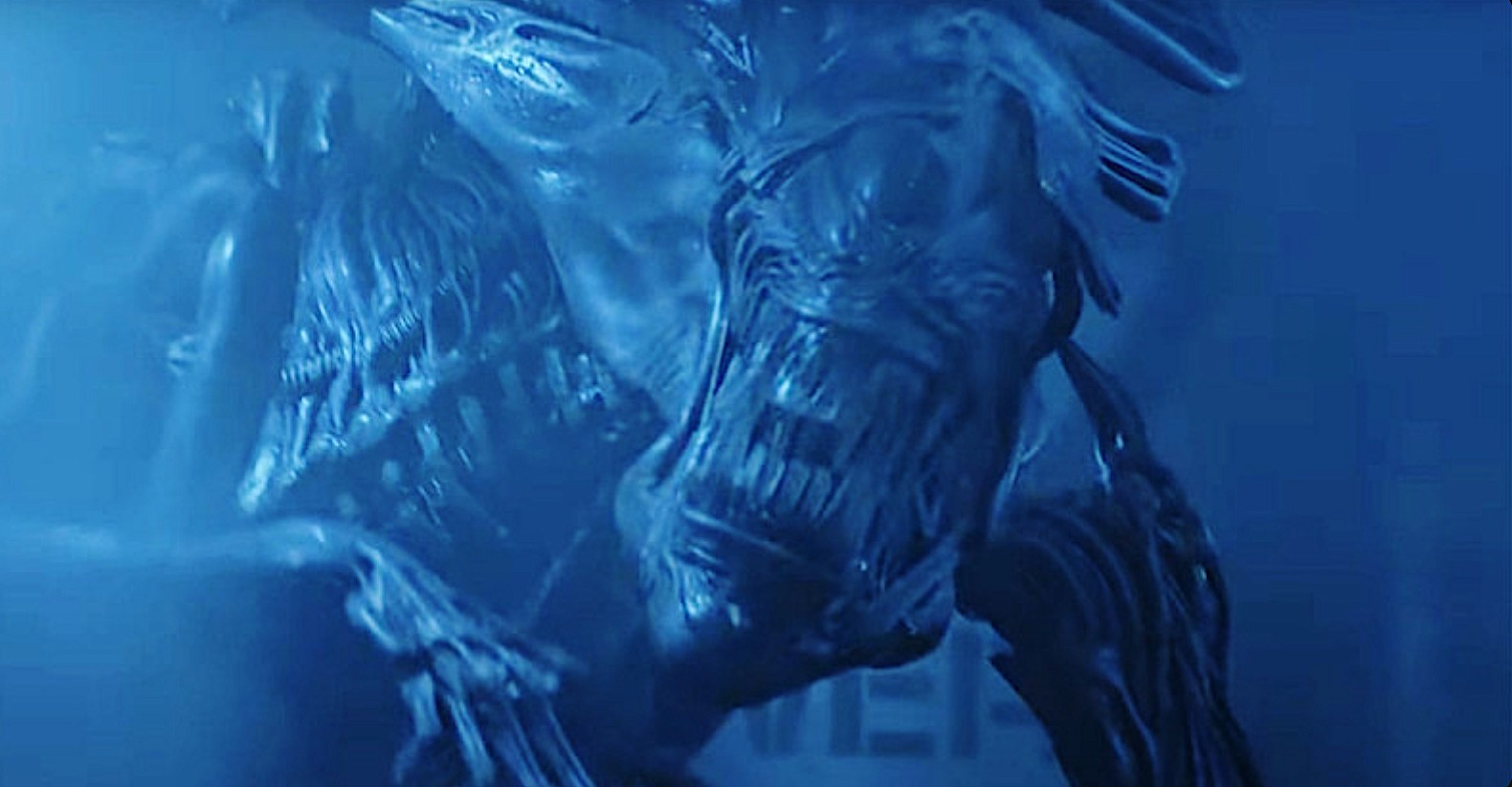
The movie needed a monster that outclassed the original xenomorph. Cameron’s screenplay didn’t ask for a beast. It asked for a matriarch.
“A massive silhouette in the mist… glistening black insect-Buddha… six limbs, four arms and two powerful legs.”
To bring that specific, horrifying vision to life, Cameron turned to Stan Winston Studio. These were the same wizards who had just finished The Terminator. They went on to build the T-1000 in T2, the raptors in Jurassic Park, and the aliens in Predator. But Aliens was different. It required scale.
Enter the Alien Queen. A 14-foot tall, hydraulic puppet made of fiberglass, foam rubber, and sheer will.
The Garbage Bag Test and the Pinewood Hustle
Shane Mahan and Lindsay MacGowan were young. Very young. Mahan had been at Stan Winston’s shop since the first Terminator in 1983. He’d seen Cameron’s sketches for the Power Loader and knew immediately what was coming.
“It was clearly an alien of that world,” Mahan says. “I had no idea that seven years later we’d be in England doing a sequel.”
The design phase happened in Southern California. But the proof of concept? That happened in a parking lot. They wrapped a flailing quarter-scale maquette in black plastic garbage bags. The “garbage bag test” wasn’t fancy. It was functional. It proved the puppet could move like the creature Cameron envisioned.
Then came the move. Windsor, England. Pinewood Studios.
For MacGowan, it was like a rock concert. The Americans showed up, loud and energetic. The British crew, typically more reserved, got caught up in the energy.
“It was incredibly cold,” MacGowan remembers. “No insulation in the warehouse. Giant propane jet heaters. They kept going out. You’d be nice and warm, then click, the flame dies.”
They were freezing their asses off. But they were building magic.
Why Practical Effects Still Matter in Aliens
Before they crossed the pond, Mahan and his team had to prepare. They made molds and castings based on the maquette. Everything was done by measurement. By eye. There were no computers milling perfect sections. There was just a focused artistic eye and a lot of sweat.
The build list was massive.
- 13 or 14 action suits. For when the Queen needed to run around.
- 8 eight-foot puppets. Spindly. Long. Made to be hit, blown up, and shot at.
- 1 articulated half-animatronic. The star of the show.
This was the era before CGI. There was no rod removal. No performer removal. You couldn’t just delete the puppeteers in post. You had to hide them. You had to make it believable that a 14-foot monster was moving on its own.
In the dropship scene, it’s chaos. Nine people are on her tail. Two guys are inside the torso. Puppeteers on the ground are manipulating the legs. Cameron’s eye for framing is what made it work. He shot the action in a way that concealed the support devices.
Directors today often don’t know how to do that. They rely on the fix-it-in-post mentality. Cameron relied on practical reality. That’s the magic.
Design Philosophy: More Than Just a Monster
Stan Winston’s rule was simple.
“These are not effects; these are characters. These are actors in the film.”
Whether it’s a robot from the future or a dinosaur, it has to have personality. Mahan notes that even the original xenomorph had a personality. Apathy. It doesn’t care if you live or die. It just kills.
The Queen was Jim Cameron’s design. Her entire look came from his vision. Winston’s team focused on execution. They wanted to honor H.R. Giger’s original biomechanical aesthetic while giving Cameron the imposing matriarch he needed.
MacGowan took the fit and finish seriously. The Queen had to look like a seething, egg-laying boss. She had to rip androids in half. It required precision.
Where Did the Queen Puppet End Up?
The original screen-used puppet has mostly vanished. It fell into disrepair.
“Jim has one in his museum,” Mahan says. “Collector Bob Burns had a head.”
The rest? It sat in containers at Pinewood for years. Rotting. They always wanted to get it back. They never did.
But the materials have improved. The head was fiberglass and foam rubber. Not very sophisticated stuff. The original idea was for translucent skin. They used clear urethane and foam painted to look like skin. It fell apart over time.
Modern materials are better. Like the ones used in Alien: Romulus. Translucent silicones. Lightweight 3D-printed parts. Stuff that feels like it’s from outer space.
The Legacy of the Queen
For Mahan and MacGowan, going back to work on Alien: Romulus was a trip. They hadn’t worked on an Alien film since 1986. But the memories came flooding back.
“It’s one of those movies where I remember every day,” MacGowan says.
You don’t forget building a 14-foot hydraulic nightmare in a freezing English warehouse. You don’t forget the garbage bag test. You don’t forget Cameron’s eye.
The Queen is gone. Rotting in a container somewhere, probably. But her influence? She’s still out there. Drooling. Hissing.
Maybe she’s in a museum. Maybe she’s in Bob Burns’ collection. Or maybe she’s just out there, waiting in the mist.