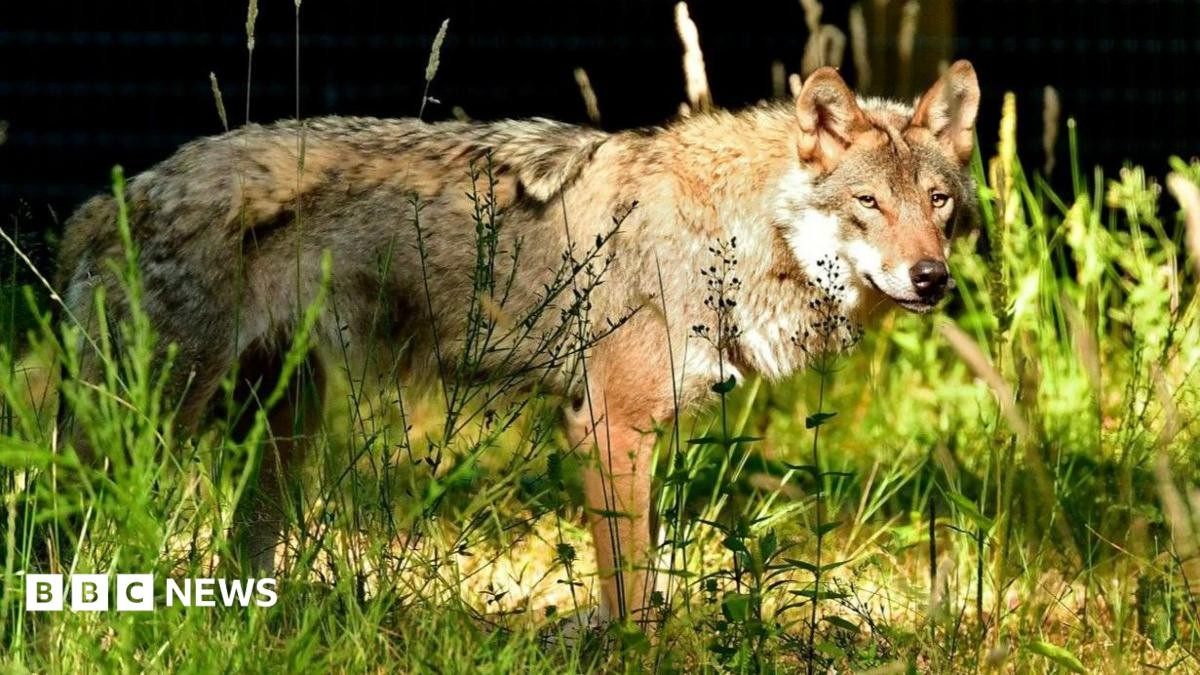
Wolves are back at New Forest Wildlife Park. It’s been nearly two years since the last of the original pack died, but the absence is over. The new arrivals settled into Hampshire this week, taking up residence in an enclosure designed specifically for them.
This isn’t just a simple swap. It was a logistical puzzle. The park had always planned to reintroduce the species, but post-Brexit bureaucracy slowed the process to a crawl. Moving animals across borders now means drowning in paperwork. The previous delay meant the public had to wait for the administrative knots to be untied.
Who are the new wolves?
The new pair arrived from different corners of Europe, but they bonded before the long journey began.
There’s a female, only two years old, pulled from the Reserve d’Animaux Sauvaages in Belgium. Beside her is a one-year-old male from the Parc Animalier de Sainte Croix, France. They didn’t just fly in together. They spent time in Belgium first, building the necessary social bond. Wolves need that connection. It’s survival instinct, really. Once that tie was formed, they made the trek to Hampshire together.
Jason Palmer, the park’s curator of collections, didn’t sugarcoat the difficulty of this operation.
“Wolves are a highly complex social species… they are one of the most challenging species you can keep well in captivity.”
It took months of coordination. Palmer worked directly with the European Association of Zoos and Aquariums to handle the species coordination. It wasn’t just about booking flights. It was about ensuring the animals could actually function as a pack in a new environment.
Why did it take so long?
The previous pack had been residents since 2010. They were older. Age took its toll. Cedar, Idaho, and Rocky all succumbed to age-related health issues first. That left only Chaser and Aspen.
When Chaser’s health declined sharply, the situation became critical. Wolves don’t cope well with isolation. They thrive on companionship. They need the pack structure to remain psychologically sound. If Chaser went, Aspen would likely suffer a breakdown. The staff had to act fast, but replacing a matriarch or alpha is never straightforward.
Brexit complicated everything. Permits. Health certificates. Transit regulations. All the stuff that makes international zoo transfers a nightmare in the current political climate.
Can they survive this time?
The new enclosure is purpose-built. That matters. It’s not a retrofitted pen from 2010. It accounts for the specific behaviors of European grey wolves.
The park is eager to let visitors meet the new pair. They’ve cleared the desk work. They’ve handled the stress of moving animals across borders. They’ve matched the animals based on compatibility. Now it’s just about observation.
Will they thrive? That depends on how well the bond holds in this new, enclosed space. Wolves are wild at heart, even when kept in captivity.