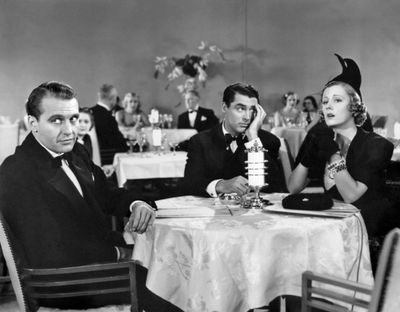
Ralph Bellamy didn’t just act. He lived through the entire evolution of American screen comedy, from the screwball era’s sharp-witted banter to the glossy blockbusters of the 1990s. Born in Chicago in 1904, he spent his life navigating the gap between the naive everyman and the sophisticated villain. He died in Los Angeles in 1991, leaving behind a legacy that feels surprisingly relevant today.
From Chicago Theatres to Hollywood’s Greed
Bellamy’s path wasn’t linear. He grew up in Winnetka, a Chicago suburb where he started performing as a teenager. By 1922, he had formed his own troupe, the North Shore Players. He didn’t stop there. He toured with repertory companies and eventually built the Ralph Bellamy Players in Des Moines, Iowa, running it from 1926 to 1929.
He tried Broadway in 1929 and 1930. The plays failed. But failure has a way of opening doors if you’re good enough. A film contract followed in 1930.
His first role was unglamorous. A gangster in The Secret 6 (1931). It was a start. Over the next decade, he refined a specific type of performance. He became the master of the sophisticated yet naive character. The guy who loses the girl. Not because he’s bad, but because he’s outmatched by the leading man’s charm or wit.
Think Hands Across the Table (1935). He lost Carole Lombard to Fred MacMurray. It happened again in Carefree (1938) to Fred Astaire. And again in His Girl Friday (1940) to Cary Grant. Bellamy was the foil. The straight man to the chaos.
The Award-Nominated Oil Baron
Critics noticed. Especially for The Awful Truth (1937). He played an oil baron that Irene Dunne toyed with before returning to Cary Grant. It was a nuanced performance. A man who thinks money buys love, only to learn it doesn’t.
This role earned him his only Academy Award nomination. He didn’t win. But the recognition stuck. He had proven he could hold his own against the biggest names in Hollywood.
He also starred in a string of Ellery Queen mystery movies. These roles showcased his ability to handle plot-driven narratives without relying solely on romantic dynamics. He could be the detective. The suspect. The victim.
Broadway’s Triumph and Political Portrayals
The 1940s shifted his focus. Bellamy favored the stage. He wanted the immediacy of live performance. In 1943, he secured his reputation as an antifascist professor in Tomorrow the World. It was a serious role. A departure from the comedic losers of his film career.
He followed it with a successful run (1945–47) in the comedy State of the Union. But his greatest acclaim came later. In 1958, he took on the role of Franklin D. Roosevelt in Sunrise at Campobello.
The play depicted FDR battling polio. It was dramatic. Emotionally charged. Bellamy won a Tony Award for the performance. It wasn’t just mimicry. It was an understanding of the man behind the wheelchair. The vulnerability beneath the political armor.
He reprised this role for the 1960 film version of the play. And again in 1983 for the TV miniseries The Winds of War. Three different generations saw Bellamy as FDR. It remains one of the most iconic portrayals of the president on screen.
Horror, Satire, and Final Roles
Bellamy didn’t stay in the past. He adapted. In 1968, he played a satanic doctor in Rosemary’s Baby. It was a horror film. A genre he hadn’t touched before. He brought his usual gravitas to a terrifying role.
Then came 1983. Trading Places. This film introduced him to a new generation. He played one of the wealthy Duke brothers. The other was Don Ameche. The duo was cold. Calculating. They bet on a social experiment to ruin a commodity broker. Bellamy’s performance was coldly efficient.