Scarred bark. Piles of rocks at the base. The trees remember.
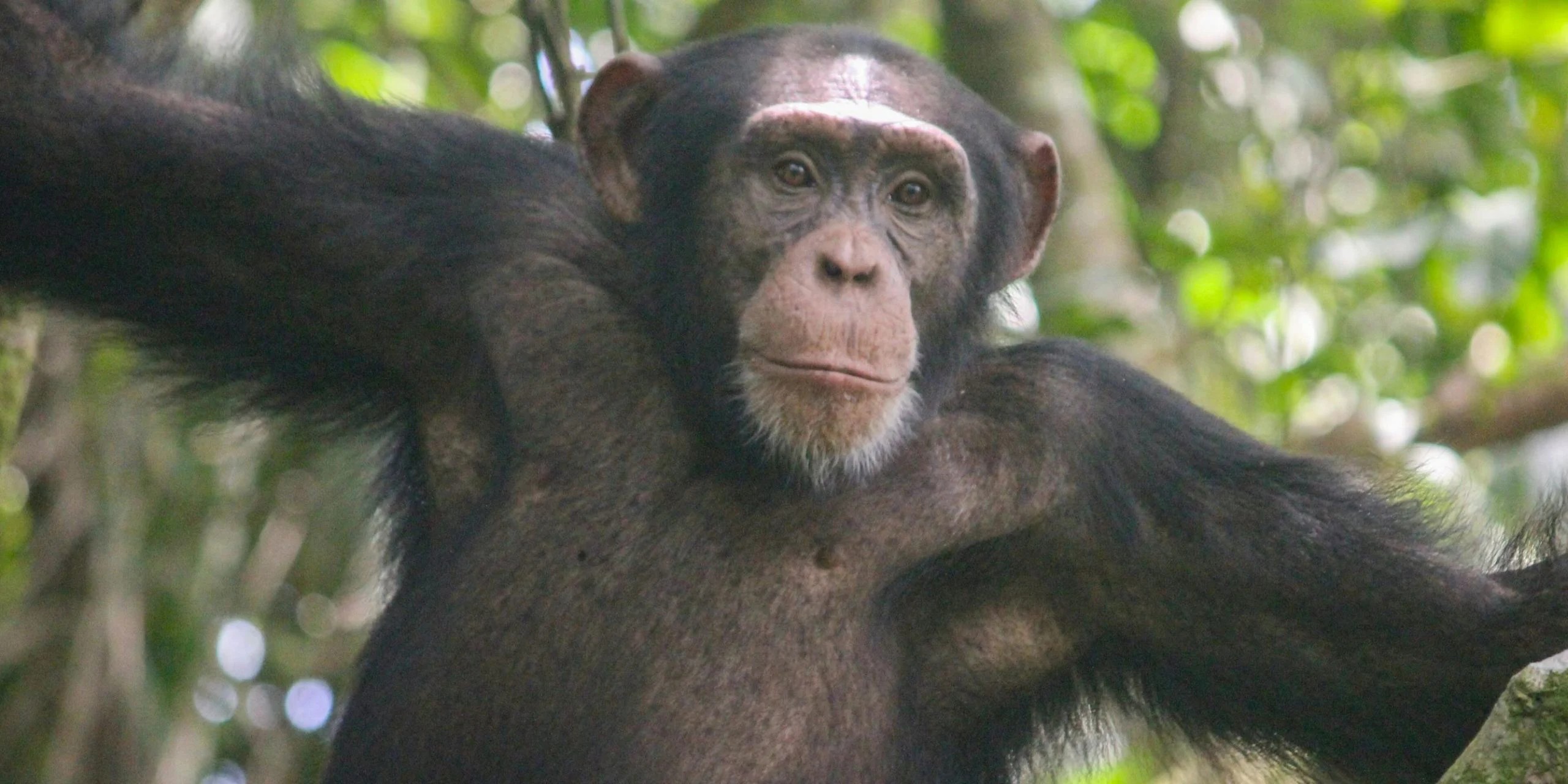
In Guinea-Bissau’s Boé National Park, the savanna holds strange secrets. You walk up to a tree and find evidence of violence that happened without any visible attacker. Adult male chimpanzees did this. They threw stones. Again and again.
“Accumulative stone throwing may preserve rare evidence of primate communication.”
It isn’t random vandalism. The chimps return to the exact same trees. Video footage catches them hurling rocks with precision. They aren’t just tossing them anywhere. They target specific spots on the trunk. While they throw they pant-hoot—a loud, rolling call that travels far through the dry air. Some even stomp and pound on the tree’s buttresses. Buttress drumming meets stone pelting. A full performance.
Why?
Scientists aren’t sure yet.
A Signal in the Noise
We know it’s rare. Only four chimpanzee groups in all of West Africa do this. You wouldn’t expect it everywhere just because rocks and trees are everywhere. Most chimps ignore the stones. Or they use them to crack nuts, sure. Food. But this? This is different. No calories gained. No meat on the table. Just noise and impact.
Some researchers think it’s symbolic. Like marking territory. Or sending a message to rivals across the valley. Pant-hooting and drumming are standard male displays. This looks like a twisted version of those rituals. A cultural trait. Learned, not inherited. If it’s culture it can disappear overnight if the chimps die out or the environment shifts.
Since chimps are our closest cousins their oddities matter to us. Maybe this stone-throwing holds a key to how early humans started communicating with objects. How tools became symbols. We are chasing ghosts. Our relatives are gone but their actions leave traces in the dirt.
Boots on the Ground (Kind of)
Our team camped near the Fefine River in the village of Béli. Solar power. A small NGO compound. Then we hiked 22km into the brush. Two local field assistants—Djei and Balu—and a grad student joined us.
Here’s the catch. These chimps hate humans. They’re unhabituated. If you walk up close they run. So we don’t watch them. We watch what they leave behind.
Camera traps. Audio recorders. We hid them at the sites. Two cams per tree. Mic placements carefully chosen. Then we waited.
6:30 a.m. starts. Coffee in the field? Forget it. Small breakfast then we move. Swap SD cards. Change batteries. Check for sabotage by animals or kids. We measure the trees. 3D scan the rocks. Data is fragile out there. Heat kills batteries. Dust kills lenses.
We also tracked nests. Feeding signs. Where did they sleep last night? Did anyone see another chimp while throwing stones? The audience matters. Is it a solo act or a show?
The data showed something surprising. Persistence.
Sites mapped years ago in 2017? Still active. These aren’t fleeting phases. They’re decades-old habits. A tree might get thrown at for ten years straight.
Mining the Future Away
This gets heavy fast.
Boé National Park is beautiful but fragile. And Guinea-Bissau has bauxite. Lots of it.
Industrial mining is coming. It brings money. Development. Growth on paper. On the ground? Habitat destruction. Pollution. Displacement.
We found boreholes. Exploration rigs. They were already here.
“Loss of primate heritage is as permanent as any archaeological dig site erased by progress.”
Look at neighboring Guinea. The damage there is severe. For chimpanzees other wildlife and local people. Governance in Guinea-Bissau isn’t exactly stable either. Regulations are hard to enforce when things change quickly.
If those stone-throwing sites disappear because of mines we lose more than a curious habit. We lose a piece of primate history. Material culture made by wild animals is vanishingly rare. Erasing it is a form of amnesia.
We study this not just because it’s weird. We do it to keep them safe. To highlight the biodiversity at stake. To remind people that chimps have traditions too.
What happens when the machines roll in? The trees might survive the noise. The stones might stop falling. But the signal will cut off abruptly. Leaving only scars in the bark for anyone left to interpret.