Clay holds memories. At least, that is the theory.
Europe wants to prove it.
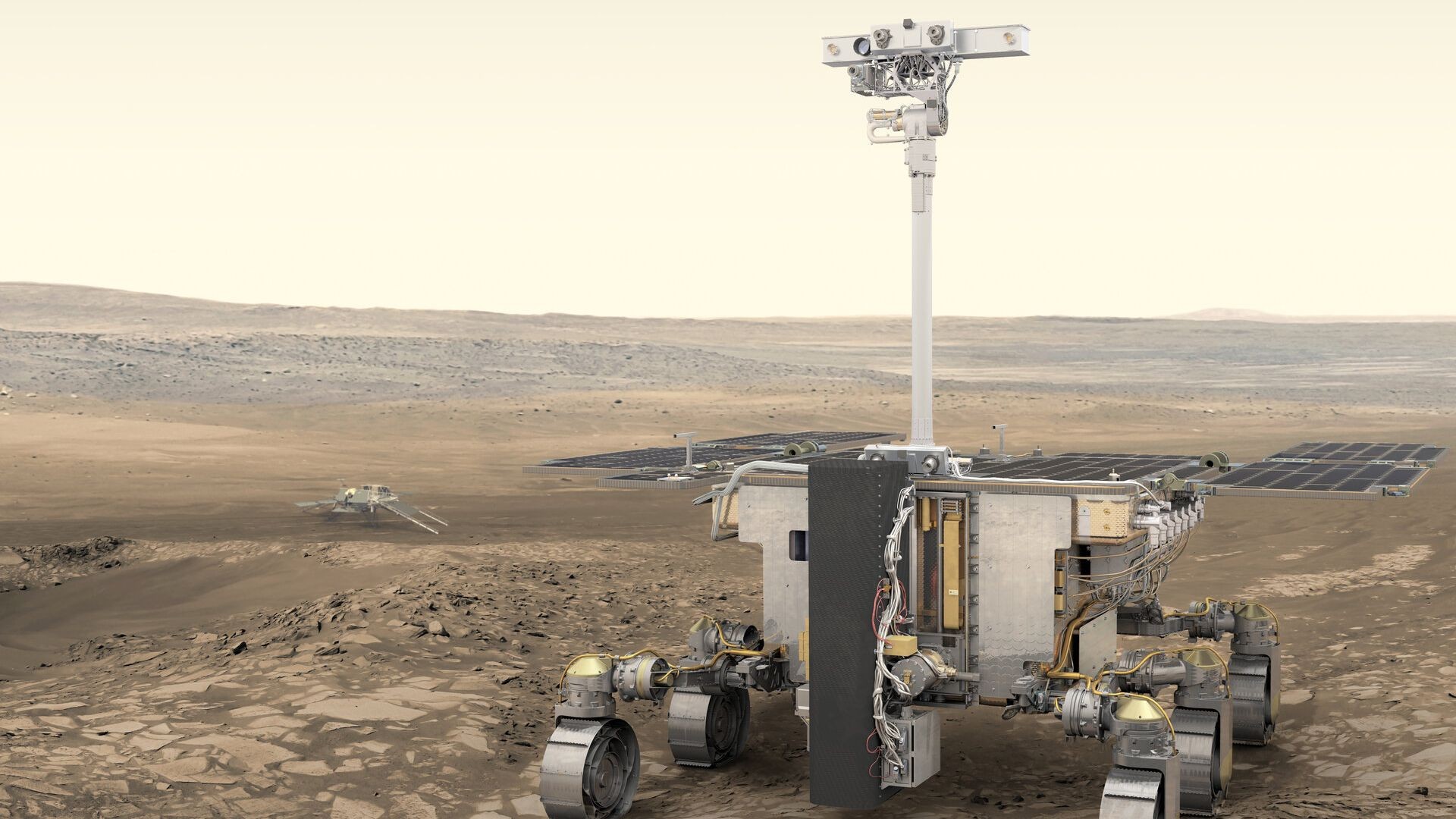
The European Space Agency is gearing up for the ExoMars Rosaland Franklin rover mission. The goal isn’t just tourism. It’s hunting. Searching for signs of ancient life in a specific spot called Oxia Planum. This is a depression on the Martian surface. Scientists suspect it was once a watery place. If you look closely at the mineral composition there, the clay seems to be the star player.
We aren’t talking about small puddles. We’re talking about an ocean. Or maybe catastrophic flooding four billion years ago. The clay deposits stretch 300 kilometers. That is 186 miles. They go from Oxia Planum all the way to Mawrth Vallis a vast Martian valley.
So where does the proof lie? In the dirt. Specifically the fine-grained stuff that formed in the presence of water.
Elliot Sefton-Nash, the deputy project scientist for ExoMars, put it simply. We need to “ground truth” what the satellites see from high up. Orbit tells us one thing. Touching the soil tells us another. The plan is to learn about the ancient environment. Did it have warmth? Nutrients? Those are the ingredients for early life. A seabed might have been the perfect incubator.
Mars was wet. Once upon a time, rivers flowed. Lakes filled with water. Then about three billion years ago the atmosphere thinned and the water vanished into space. But before the drying out many scientists believe life got a chance to start.
Have we found proof? Not yet. Last year researchers spotted what might be the strongest biosignature seen so far. But “might” is a heavy word. We still lack the smoking gun. That is why this new study matters. Inés Torres Auré from the University of Lyon points out that the clay formation wasn’t local. It was a massive, regional event.
“By landing at Oxia Planum we’ll uncover a large-scale process”
She says this helps explain how clay spread across so much of the planet. It suggests immense amounts of water were involved. Jorge Vago, the ExoMars project scientist agrees. They are targeting the oldest deposits. If life existed it would be here buried under billions of years of geological shifts.
Water is the rule. At least as far as we know it on Earth. Martian life could look alien. It might not need oxygen. But without liquid water biology as we understand it doesn’t kick in.
The hardware is ready. Or getting there. Rosalind Franklin launches in 2028 if the timeline holds. It won’t be alone. The Trace Gas Orbiter is already circling Mars acting as a comms relay and a sky-bound scout. The rover brings a drill. That’s the difference. Most Mars missions just scratch the surface. This one digs deep. It goes below the radiation-hardened crust looking for pristine samples.
Two angles. Orbit and surface. A combined effort.
Clay is stable. It preserves chemical signatures. It acts like a sponge for organic molecules. If life left a footprint this clay might hold it intact. If not? Then Oxia Planum is just a big depression in the dirt. But if we get lucky… well. That is why we build the rockets.