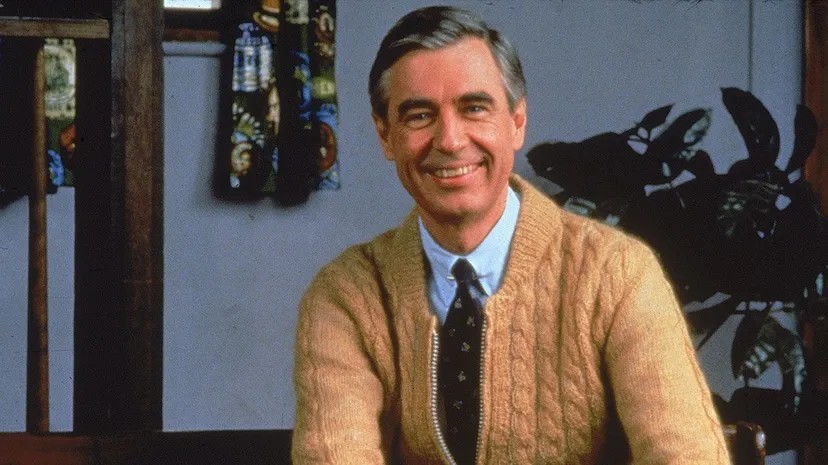
We know the sweater. We know the shoes. We know Tom Hanks played him in a movie that made millions of people cry. Fred Rogers is the poster child for gentleness in a world that usually prefers noise.
But the man behind the cardigan was complicated. He was shy, stubborn, and deeply religious in ways that didn’t always fit the secular image we hold of him now. He hated television. He was an ordained minister who used the medium to preach grace. And he made choices regarding race and sexuality that would draw fire today, even as he quietly pushed boundaries in the 1960s.
Here is the reality behind the legend.
He was bullied until one friend changed his life
Fred Rogers was not born confident. He was an only child. Shy. Chubby. An outsider in a way that feels painfully familiar to anyone who has ever felt like they didn’t fit in. Kids bullied him. He kept to himself.
The turnaround came in high school. A popular athlete named Jim Stumbaugh got injured and ended up in the hospital. Rogers volunteered to take his schoolbooks to him.
It wasn’t charity. It was connection.
Stumbaugh welcomed Rogers day after day. He actually wanted to know him. Rogers told him his deepest feelings, things he hadn’t trusted others with. When Stumbaugh got out of the hospital, he told his friends that “that Rogers kid is OK.” He pulled Rogers into his orbit.
Rogs became student council president. He edited the yearbook. He learned to trust himself because someone else believed in him first. As Rogers told Esquire later, “I learned to trust him and told him some of my deepest feelings.”
He hated TV so much he wanted to fix it
Here is a twist: Mister Rogers hated television.
After graduating from Rollins College with a degree in music, he worked as a floor manager for NBC. He saw the behind-the-scenes chaos. He saw people throwing pies in each other’s faces. He called it “demeaning.”
He didn’t want to be part of the machine. He wanted to dismantle it from the inside.
“I got into television because I hated it so,” he told CNN. “And I thought there’s some way of using this fabulous instrument to nurture those who would watch and listen.”
He viewed the medium as a weapon that could be turned toward kindness. It wasn’t about ratings. It was about redemption.
He was a Presbyterian minister, not just a host
Most people don’t know this. Fred Rogers was ordained as a minister in the Presbyterian church in 1962.
He never had a pulpit. He never had a congregation in a building. His church was the living rooms of America.
While studying at seminary, he began developing the precursor to Mister Rogers’ Neighborhood. He took classes in child development. He merged theology with psychology.
Tom Junod, who wrote the definitive Esquire profile on Rogers, put it best:
“He believed … that he was strong enough to enter into battle with that — that machine that medium — and to wrestle with it until it yielded to him, until the ground touched by its blue shadow became hallowed and this thing called television came to be used ‘for the broadcasting of grace through the land.'”
He wasn’t just teaching kids how to tie their shoes. He was preaching.
He was a quiet radical, with blind spots
Rogers wasn’t marching in the streets. He didn’t shout. But he was in tune with the culture wars of his time.
In 1968, when the show first aired nationally, Rogers shared his antiwar beliefs on air. That same year, he introduced Officer Clemmons, played by Francois Clemmons. Clemmons was the first African-American to have a recurring role on a children’s TV show. Sesame Street wouldn’t debut until 1969.
Clemmons didn’t want the job at first. He had negative feelings about police. Rogers convinced him to stay.
The scene where they sit together in a footbath remains iconic.
“The icon Fred Rogers not only was showing my brown skin in the tub with his white skin as two friends, but as I was getting out of that tub, he was helping me dry my feet,” Clemmons told NPR in 2016.
But the show wasn’t perfect. It was criticized for a lack of diversity. Rogers only introduced one other recurring minority character, in 1975.
And there was a darker constraint. Clemmons, who was gay, was told by Rogers to keep his sexuality in the closet. If he didn’t, he’d be fired. Clemmons complied. He said Rogers’ views evolved over time, as did the country’s. But the ask was real. The compromise was real.
‘Blue’s Clues’ stole his pacing for a reason
Rogers didn’t care about literacy drills. He cared about emotional literacy.
“Teaching them to read the expression on [their] mother’s face,” he said.
The show was slow. Deliberately slow. In an era of hyper-stimulated content, Rogers paused. He looked into the camera. He waited.
Angela Santomero, the creator of Blue’s Clues, admitted she modeled her hit show on this specific technique.
“We used to speak a lot about the pausing and pacing, and how deliberately slow it was. This came from Fred,” she said in a Mental Floss story. “When you talk to camera, and you pace it adequately, you’re going to talk back to him.”
She believed he liked her just as she was. That’s the power of the pause.
The Senate hearing that broke the internet
In 1969, Rogers testified before the U.S. Senate to defend funding for PBS. The clip has been circulating online since the latest budget debates threatened to cut PBS funding.
He didn’t yell. He didn’t argue policy in technical terms. He just spoke to the senators as if they were children. It was a masterclass in disarming authority.
Quick facts about Fred Rogers
Did Fred Rogers have kids?
Yes. Two sons: James and John.
Where can I watch the movie?
A Beautiful Day in the Neighborhood (2019) is on Amazon Prime Video, Netflix, and other major streaming platforms.
When did he die?
Fred Rogers died on Feb. 27, 2003, in Pittsburgh.
Is his wife alive?
No. Joanne Rogers died on Jan. 14, 2021, at age 92.
Who were the puppets?
Daniel Striped Tiger, King Friday XIII, Lady Elaine Fairchilde, Henrietta Pussycat, and X the Owl.
The man who taught us to be nice was a complex figure. He used his faith to fight the medium he despised. He made progress on race while holding back on others. He left us a template for kindness that still works, mostly because it doesn’t ask for much. Just attention. Just a little pause.
What are we missing in our own lives because we never pause?