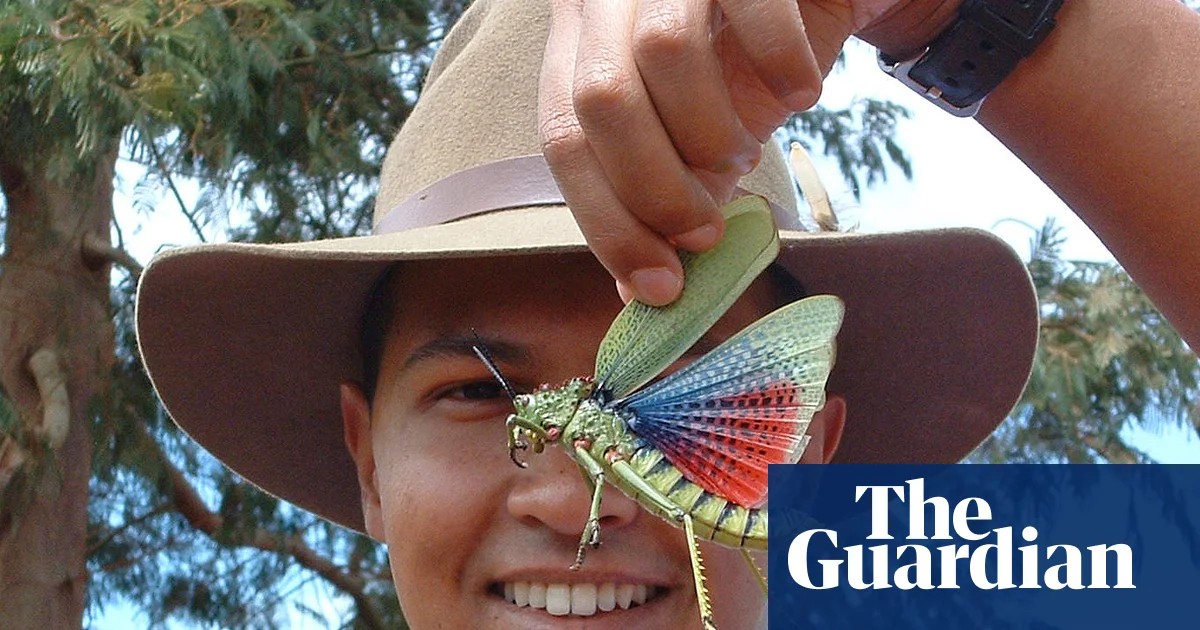
Dino J. Martins can’t look away from the small stuff. Growing up in western Kenya, this evolutionary biologist spent his youth knee-deep in the biodiverse scrub of Mt Elgon and Kakamega forests. He watched safari ants march in rivers of red across the plains. He observed bees pollinating endangered African violets next to maize. He saw male butterflies drinking salt from muddy puddles to woo their mates.
There was no TV. Just insects. And they were everywhere.
“We learned to look,” Martins says now. It is a skill we have collectively lost.
The Royal Entomological Society puts the number at 1.4 billion insects per human. Ninety percent of animal species. They are under our feet, in our food, within our lungs. We ignore them at our peril.
Today, Martins chairs the insect committee for Nature Kenya and holds a research professorship at Stony Brook University. But his current obsession? The monsters under the bed. Specifically, the parasites we prefer to pretend don’t exist.
His new book, Hidden Creatures, flips the script. No longer just the villains of the biological narrative. They are the architects. Without them, ecosystems collapse.
Why parasites matter more than you think
Most of us picture parasites as invaders. They aren’t just passing through; they are holding the entire house together. Martins, who has studied anthropology at Indiana and earned his doctorate in biology from Harvard, argues that to understand biodiversity, you have to love the creatures that are quietly consuming it from the inside out.
Take the dodo. Extinct. So was its specific tapeworm.
“When you lose a species,” Martins notes, “you lose a specific chapter of the story. You lose the intricate web.”
It isn’t just about sad feelings toward extinct birds. It’s about lost data. We are deleting biological instruction manuals that explain how immune systems evolve. We are removing the very lessons we might need when the next global pathogen arrives.
Parasites move between hosts. They hijack physiology. They force evolution in real-time. That is valuable science. Ignoring it because the organism looks “gross” is a luxury we can’t afford.
The hygiene hypothesis and hidden immunity
Let’s address the hookworm. You likely have one, or knew someone who did. It spends time in the intestines, engaging in what Martins vividly describes as frequent and vigorous sexual activity. It sounds gross. It is biologically efficient.
One in three humans hosts parasitic nematodes at any given moment. This includes hookworms, botflies, and leeches. Modern sanitation has scrubbed most of these out of daily life in wealthy nations. We like it that way.
But there is a cost.
“Complete removal of these biological entities has consequences we are just beginning to understand,” Martins argues. He points to the hygiene hypothesis: our over-sterilized environments might be starving our immune systems of the mild challenges they need to learn balance. Without parasites to regulate them, immune responses can turn inward. Autoimmune diseases. Allergies. The “misfirings” of modern medicine.
Some scientists now view parasites as part of a complex microbiome. Not good, not evil. Just functional. Necessary.
“We do not have a right to willfully oversee the extinction of every other species simply because they are inconvenient to our comfort.”
Dino J Martins
Food, factories, and the rise of resistance
The relationship between human behavior and parasite prevalence is direct. We changed the way we eat; now the bugs have to follow.
Fish farms create unnatural densities of hosts. It’s a buffet for parasites. Livestock operations push effluents rich with parasites into water systems. This runoff doesn’t just hurt wildlife. It creates a pressure cooker for evolution.
And what do we do when the parasites adapt? We pump the pipes with chemicals.
It’s an evolutionary arms race. We use albendazole to deworm populations. It helps, certainly. It has saved livelihoods. But it doesn’t prevent reinfection. You wash your feet, you walk on the dirt again, the larvae penetrate the skin, and you’re back to zero.
Worse, the chemicals kill off the sensitive bugs. The resistant ones survive. They multiply. They become the new superbugs.
“We cannot chemically outsmart evolution,” Martins warns. The use of broad-spectrum pesticides in agriculture often exacerbates the problem. You kill the pests and their natural predators in the same sweep, leaving an empty niche for resistant strains to fill.
The future of host-switching and vaccines
Is there a cure? Literally.
The Sabin Vaccine Institute is running clinical trials for hookworm vaccines. Promising, right? Maybe. Martins is cautious. Evolution has had billions of years to practice what vaccines do in weeks: adapt or die.
Some hookworms will evolve ways around the vaccine. The transmission won’t stop; it will just change. The long-term dynamic will shift, not disappear.
And this brings us back to the bigger picture: host-switching. What happens when a parasite jumps from a healthy wildlife population to humans or domestic animals because their natural habitat was destroyed? This is not a hypothetical. It’s how many emerging diseases arrive.
“If we destroy the reservoir hosts, do we not just accelerate the jump?”
Martins is a member of the Nature Kenya board. He knows the landscape. He knows that conservation isn’t just about saving tigers for postcards. It’s about preserving the complex, often disgusting machinery that keeps the atmosphere breathable and the diseases manageable.
Read the dark to understand the light
Hidden Creatures is not for the squeamish. It doesn’t flatter the reader’s desire for a sanitized nature. Instead, it offers a raw look at how nature actually works. It covers everything from the bionomics of leeches to the population dynamics of botflies.
The book argues for a shift in perspective. Stop viewing parasites merely as pests to be eradicated. View them as indicators. A diverse parasite population often means a healthy ecosystem. A sterile one means something has gone terribly wrong, usually by human hand.
Martins, winner of the 2015 Whitleyl Gold Award, writes for those willing to look deeper. Students of biology. Medics. Conservationists. Anyone tired of the superficial green narrative.
He doesn’t ask us to embrace the hookworm with open arms. Just don’t crush it before we know what it teaches us. The natural history is stranger, and more critical, than our disgust allows.
Hidden Creatures: Luscious Leaches, Bashful Botflies is out now in London and New York. You can find it if you look for it. The bugs certainly do.